Administrator
23 July 2026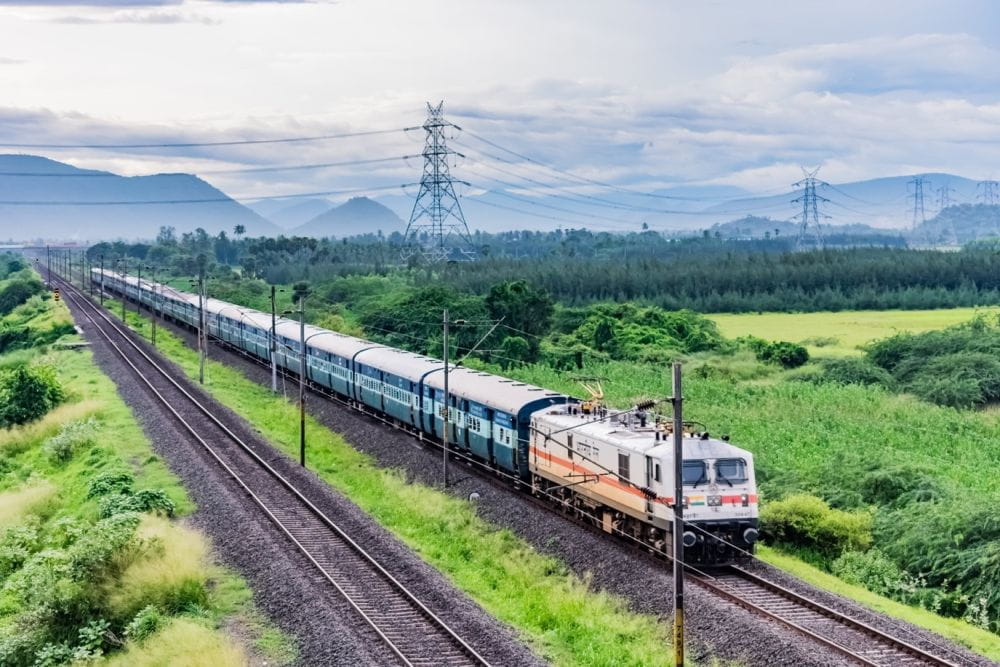
Electrification of the railway network on Indian Railways has been taken up in mission mode. So far, against the national percentage of about 99.6%, Jharkhand has recorded 100 % of Broad Gauge (BG) network electrification.
The electrification in the remaining network has been taken up. Electrification carried out during 2014-26 and before 2014 is as under:
|
Period |
Route Kilometer |
|
Before 2014 (about 60 years) |
21,801 |
|
2014-26 |
48,072 |
Further, all new line / multi-tracking projects are being sanctioned and constructed with electrification.
As per official records, Indian Railways (IR) has undertaken one of the fastest railway electrification programs in the world. While many countries prioritize electrifying only their busiest passenger and freight corridors, India has chosen to electrify its entire broad gauge network.
Indian Railways’ achievement in railway electrification stands out globally. According to the latest report of the International Union of Railways (UIC) of June, 2025, Jharkhand is one of 15 states where 100 percent of the Broad Gauge (BG) network was electrified.
Consider these facts about the Indian railway electrification in important railway systems :
|
Country |
Railway Electrification |
|
Switzerland |
100% |
|
India |
99.6% |
|
China |
82% |
|
Spain |
67% |
|
Japan |
64% |
|
France |
60% |
|
United Kingdom |
39% |
By network coverage, Indian Railways is now among the most extensively electrified large railway systems in the world. Indian Railways had electrified 99.6% of its broad-gauge network, completing one of the world’s largest infrastructure transformation programs in a decade.
Electric traction is not only environmentally friendly but also energy efficient. Reduction in CO2 emissions in transportation by railways as compared to transportation by road is as under (Ref:- NITI Aayog Report titled “Fast Tracking Freight In India”, June 2021)
|
Mode of Transportation |
CO2 emission for transportation of 1 tonne for 1 km |
|
Road |
101 gm |
|
Rail |
11.5 gm (about 89% less) |
Further, electrification of railway tracks reduces dependency on fossil fuels, decreasing diesel consumption, resulting in lower carbon emissions. Electrification enables better haulage capacity and higher train speeds, leading to reduced travel time and enhanced efficiency.
Reduction in IR’s diesel consumption for traction purposes by 185 crore litres, with about 108 crore litres consumption in 2024-25 as compared to 293 crore litres in 2015-16. This has resulted in a saving of precious foreign exchange for the Government of India exchequer, which would have otherwise been needed for the import of fuel, which has been saved due to electrification.
Electrified railways are well suited for integrating solar, wind & other renewable energy into traction power systems, making them most effective transport systems for utilizing renewable electricity. Indian Railways is committed to sustainable operations through near-total Railway Electrification combined with use of renewable energy sources, based on strategic power procurement planning, thus contributing to carbon footprint reduction.
Indian Railways aims to progressively meet its electric traction power requirements through renewable energy sources including solar, wind and hybrid systems (solar, wind and energy storage), thereby reducing the carbon footprints of IR. As of June, 2026, about 1161 Mega Watt (MW) of solar plants (both on Rooftops and on land) and about 103 MW of Wind power plants have been commissioned.
Mission 100% Electrification is a highly challenging project, as it involves electrifying railway lines that are already in operation and encountering various unforeseen challenges during execution. To expedite railway electrification work, various steps have been taken by Indian Railways, which include among others; formation of a Project Monitoring Group (PMG) portal to resolve the constraints being faced during commissioning, ensuring effective project monitoring mechanism, assured funding and enhanced financial powers to field units.
Zone-wise status of electrification is as under:
|
SN |
ZONE |
% Electrified |
|
1 |
Central Railway |
100% |
|
2 |
East Coast Railway |
100% |
|
3 |
East Central Railway |
100% |
|
4 |
Eastern Railway |
100% |
|
5 |
Konkan Railway |
100% |
|
6 |
Kolkata Metro |
100% |
|
7 |
North Central Railway |
100% |
|
8 |
North Eastern Railway |
100% |
|
9 |
Northern Railway |
100% |
|
10 |
South Central Railway |
100% |
|
11 |
South Coast Railway |
100% |
|
12 |
South East Central Railway |
100% |
|
13 |
South Eastern Railway |
100% |
|
14 |
West Central Railway |
100% |
|
15 |
Western Railway |
100% |
|
16 |
North Western Railway |
99.8% |
|
17 |
Northeast Frontier Railway |
98.7% |
|
18 |
Southern Railway |
98.7% |
|
19 |
South Western Railway |
96.1% |
State/UT wise status of electrification, including Bihar, Uttar Pradesh, Andhra Pradesh and Madhya Pradesh, is as under:
|
SN |
STATE |
% Electrified |
SN |
STATE |
% Electrified |
|
1 |
Andhra Pradesh |
100% |
16 |
Mizoram |
100% |
|
2 |
Arunachal Pradesh |
100% |
17 |
Nagaland |
100% |
|
3 |
Bihar |
100% |
18 |
Odisha |
100% |
|
4 |
Chandigarh |
100% |
19 |
Puducherry |
100% |
|
5 |
Chhattisgarh |
100% |
20 |
Punjab |
100% |
|
6 |
Delhi |
100% |
21 |
Telangana |
100% |
|
7 |
Gujarat |
100% |
22 |
Tripura |
100% |
|
8 |
Haryana |
100% |
23 |
Uttar Pradesh |
100% |
|
9 |
Himachal Pradesh |
100% |
24 |
Uttarakhand |
100% |
|
10 |
Jammu & Kashmir |
100% |
25 |
West Bengal |
100% |
|
11 |
Jharkhand |
100% |
26 |
Rajasthan |
99.8% |
|
12 |
Kerala |
100% |
27 |
Tamil Nadu |
98.3% |
|
13 |
Madhya Pradesh |
100% |
28 |
Assam |
97.9% |
|
14 |
Maharashtra |
100% |
29 |
Karnataka |
96.8% |
|
15 |
Meghalaya |
100% |
30 |
Goa |
91.4% |
This information was provided by the Union Minister for Railways, Information & Broadcasting and Electronics & Information Technology, Shri Ashwini Vaishnaw, in a reply to a question in Lok Sabha today.
*By Dharmendra Tewari/ Dr. Nayan Solanki/ Ritu Raj/ Manik Sharma