Administrator
09 June 2026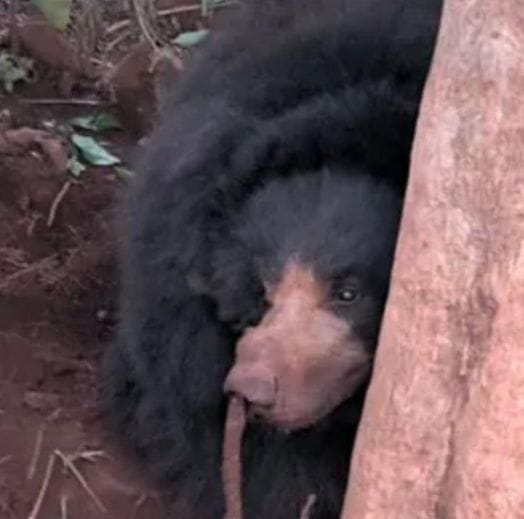
*WTI and the Jharkhand Forest Department rescued a sloth bear in Jharkhand. Picture courtesy Jharkhand Forest Department
A sloth bear was rescued from illegal captivity during the cruel practice of 'dancing bear' in Jharkhand's Dumka district.
The bear was rescued following a swift intelligence-led operation by the Jharkhand Forest Department with support from the Wildlife Trust of India (WTI).
The sloth bear (Melursus ursinus) is protected under Schedule I of the Wildlife (Protection) Act, 1972, making its capture, possession, and exploitation a serious criminal offence.
According to WTI, the operation began after the team identified social media posts allegedly showing a dancing bear in Jharkhand.
Using Open Source Intelligence (OSINT) techniques, trained personnel tracked the individuals involved, verified the authenticity of the content, and pinpointed the location of the suspected handlers, believed to belong to the Kalandar community, which was traditionally associated with dancing bears.
The intelligence was promptly shared with the Jharkhand Forest Department, which confirmed the group's presence in Dumka district and launched an enforcement operation.
Acting on the official's behalf, the Divisional Forest Officer (DFO) of Dumka quickly deployed a field team, leading to the successful rescue of the sloth bear before it could face further exploitation.
The rescued animal is currently under the care of the Dumka Forest Division and will undergo veterinary assessment and rehabilitation before further decisions are made regarding its future.
Officials, while briefing about the operation, said that the rescue was made possible through sustained social media monitoring, local intelligence networks, and close coordination between conservationists and forest authorities.
Dumka DFO Satwik, IFS, while highlighting the criminal activities in rural areas, said, "Possession of any wild animal or its use for exhibition and performance is strictly prohibited under the Wildlife (Protection) Act, 1972.
"Such acts constitute serious wildlife crimes and are punishable under the law. We remain firmly committed to curbing these illegal activities and ensuring the protection of wildlife."
WTI Chief Executive Officer Jose Louies further said that the rescue underscores the importance of collaboration in combating wildlife trafficking.
Louies said, "To date, WTI has assisted various state forest departments in saving 22 sloth bear lives from this cruel practice." The Dumka rescue serves as a reminder that effective conservation is often built on consistency, collaboration, and timely action."
"In this case, days of monitoring, intelligence gathering, and coordinated response converged to save a life and strike a meaningful blow against an illegal and exploitative practice," he further added.
Although India has made significant progress in eliminating the dancing bear tradition, conservationists warn that isolated cases continue to surface in parts of Jharkhand, Bihar, West Bengal, and the outskirts of western Uttar Pradesh, fuelled by illegal wildlife trade networks.
The latest rescue is being seen as another important step in the ongoing effort to eradicate the practice and strengthen wildlife protection across the country.