
Administrator
19 January 2026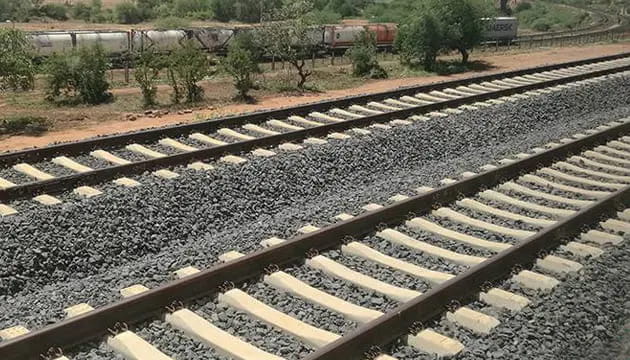
Indian Railways has tried to strengthen its track infrastructure and enhance safety standards through sustained investment and focused execution over the last eleven years. These efforts have contributed to safer, faster and more reliable train operations across the country.
During the financial year 2024–25, Indian Railways carried out track renewal over 6,851 track kilometres. In the current financial year 2025–26, more than 7,500 track kilometres of track renewal work are underway. Further, track renewal covering 7,900 track kilometres is planned for 2026–27, reflecting continued emphasis on asset reliability and safety.
Substantial chane has also been made in turnout renewal, which is crucial for smooth train movement. In 2024–25, 7,161 Thick Web Switches and 1,704 Weldable CMS Crossings were provided. In 2025–26, over 8,000 Thick Web Switches and more than 3,000 Weldable CMS Crossings are being provided.
Mechanised deep screening of ballast, essential for maintaining track stability and improving ride quality, has been carried out consistently. During 2024–25, 7,442 track kilometres of deep screening was completed, while over 7,500 track kilometres of deep screening work is being undertaken in 2025–26.
To support mechanized maintenance and improve productivity, Indian Railways has significantly expanded its track machine fleet. More than 1,100 track machines have been procured since 2014, enabling faster and more efficient maintenance of the railway network.

Safety fencing along railway tracks has been taken up on priority to minimize cattle run-over incidents and trespassing, thereby enhancing overall safety. About 15,000 kilometres of fencing have been provided so far, leading to improved safety on sections where trains operate at speeds exceeding 110 kmph.
As a result of these sustained efforts, Indian Railways claims to have achieved progress in upgrading tracks. The length of track permitting speeds of 110 kmph and above has increased from 31,445 kilometres (about 40 per cent of the network) in 2014 to 84,244 kilometres (about 80 per cent of the network) at present, enabling faster and more efficient train operations.