
Administrator
12 March 2026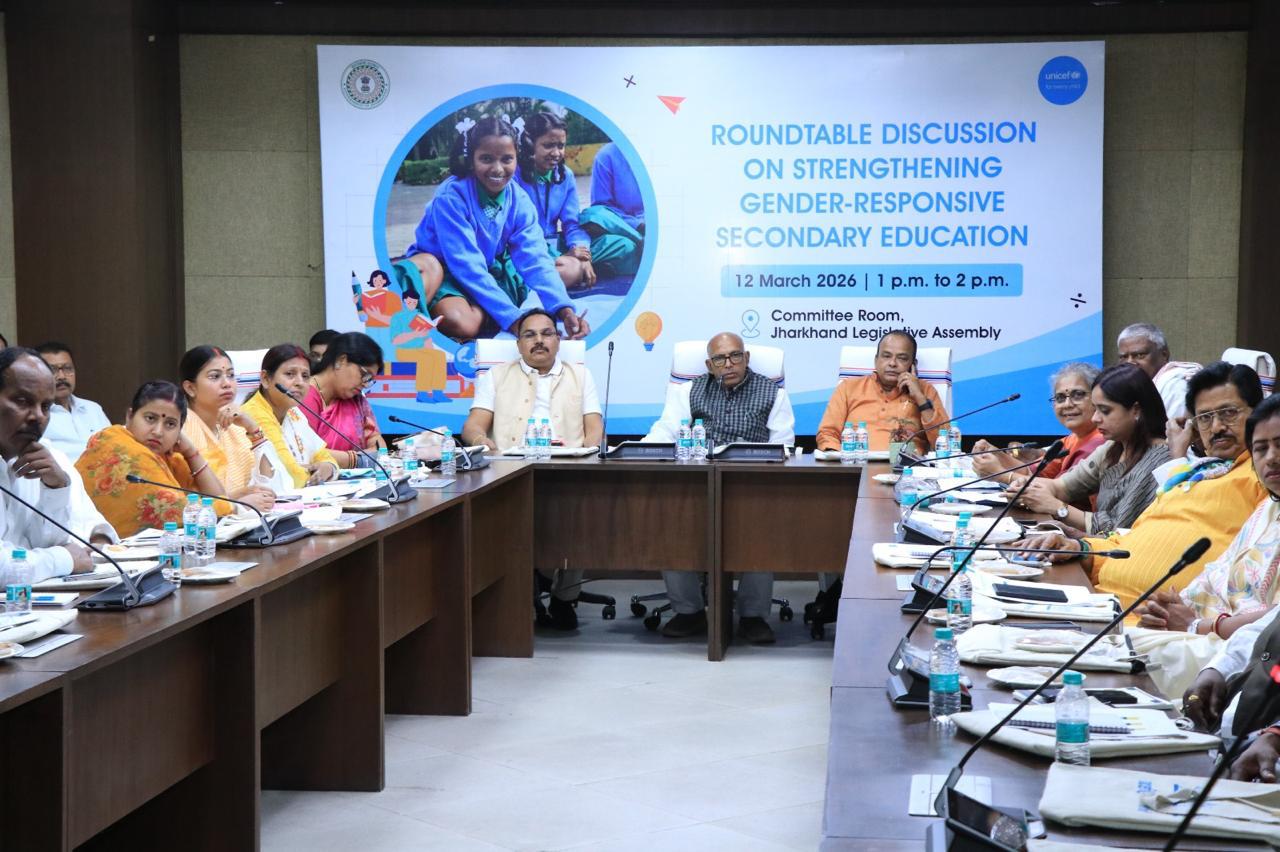
*Picture show the event inside Jharkhand Assembly complex on March 12,2026.
UNICEF Jharkhand, in collaboration with the Jharkhand Legislative Assembly, organised a roundtable discussion on “Strengthening Gender-Responsive Secondary Education” at the Jharkhand Legislative Assembly today, bringing together policymakers and legislators to deliberate on strategies to improve access, retention, and the quality of secondary education for adolescent girls in the state.
The roundtable was attended by Hon’ble Speaker of the Jharkhand Legislative Assembly, Shri Rabindra Nath Mahto, Hon’ble Minister of Health, Dr. Irfan Ansari, and over 35 Hon’ble Members of the Legislative Assembly from different political parties. Dr. Kaninika Mitra, Chief, UNICEF Jharkhand; Ms. Astha Alang, Communication, Advocacy and Partnership Specialist; and Ms. Parul Sharma, Education Specialist from UNICEF Jharkhand also took part in the discussion.
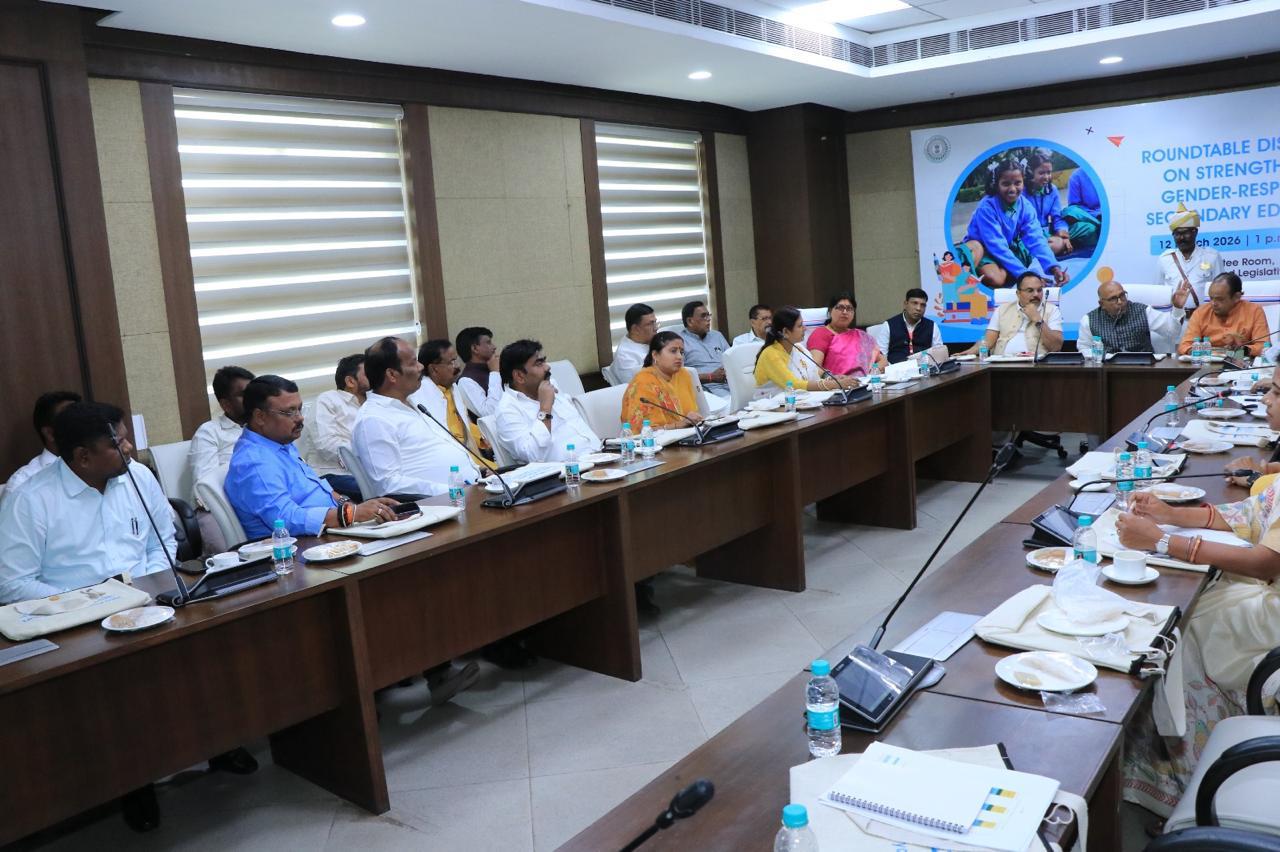
The discussion highlighted the critical role of secondary education for girls in advancing social and economic development, while identifying key policy and investment priorities to address existing gaps in Jharkhand’s education system.
Addressing the gathering, Shri Rabindra Nath Mahto, Hon’ble Speaker of the Jharkhand Legislative Assembly, emphasized the importance of ensuring that girls are able to continue their education without barriers. He said, “Girls’ education is central to the progress of Jharkhand. When girls complete secondary education, it not only transforms their own lives but also strengthens families, communities, and the overall development of the state.”
He further said, “As legislators, we have a crucial role to play in promoting policies and initiatives that support girls’ education. By strengthening schools in our constituencies, encouraging communities to prioritise education for girls, and supporting efforts that improve access, safety, and quality in schools, we can help ensure that every girl has the opportunity to continue her education and realise her full potential. Creating an enabling and supportive environment for girls’ education must remain a shared commitment for all of us.”
Speaking on the occasion, Dr. Kaninika Mitra, Chief, UNICEF Jharkhand, highlighted the transformative impact of investing in girls’ education. She said, “Secondary education for girls is one of the most powerful investments a society can make. It contributes to improved health outcomes, greater economic participation, and stronger, more resilient communities. Strengthening gender-responsive education systems will require sustained commitment, stronger partnerships, and focused investments to ensure that every girl is able to complete her education and thrive.”
She further added, “UNICEF remains committed to supporting the Government of Jharkhand and other partners in strengthening equitable and inclusive education systems. Through continued collaboration, evidence-based advocacy, and programmatic support, we aim to ensure that adolescent girls—especially those from the most vulnerable communities—have access to safe, inclusive, and quality secondary education and opportunities to realise their full potential.”
Highlighting the importance of collaboration with Legislatures, Ms. Astha Alang, Communication, Advocacy and Partnership Specialist, UNICEF Jharkhand, underscored the need for collective action in advancing girls’ education. She said, “Ensuring that adolescent girls have access to safe, inclusive, and quality secondary education requires coordinated action from policymakers, educators, communities, and development partners. Platforms like this roundtable provide an important opportunity to bring diverse stakeholders together to discuss solutions that can help girls stay in school and achieve their full potential.”
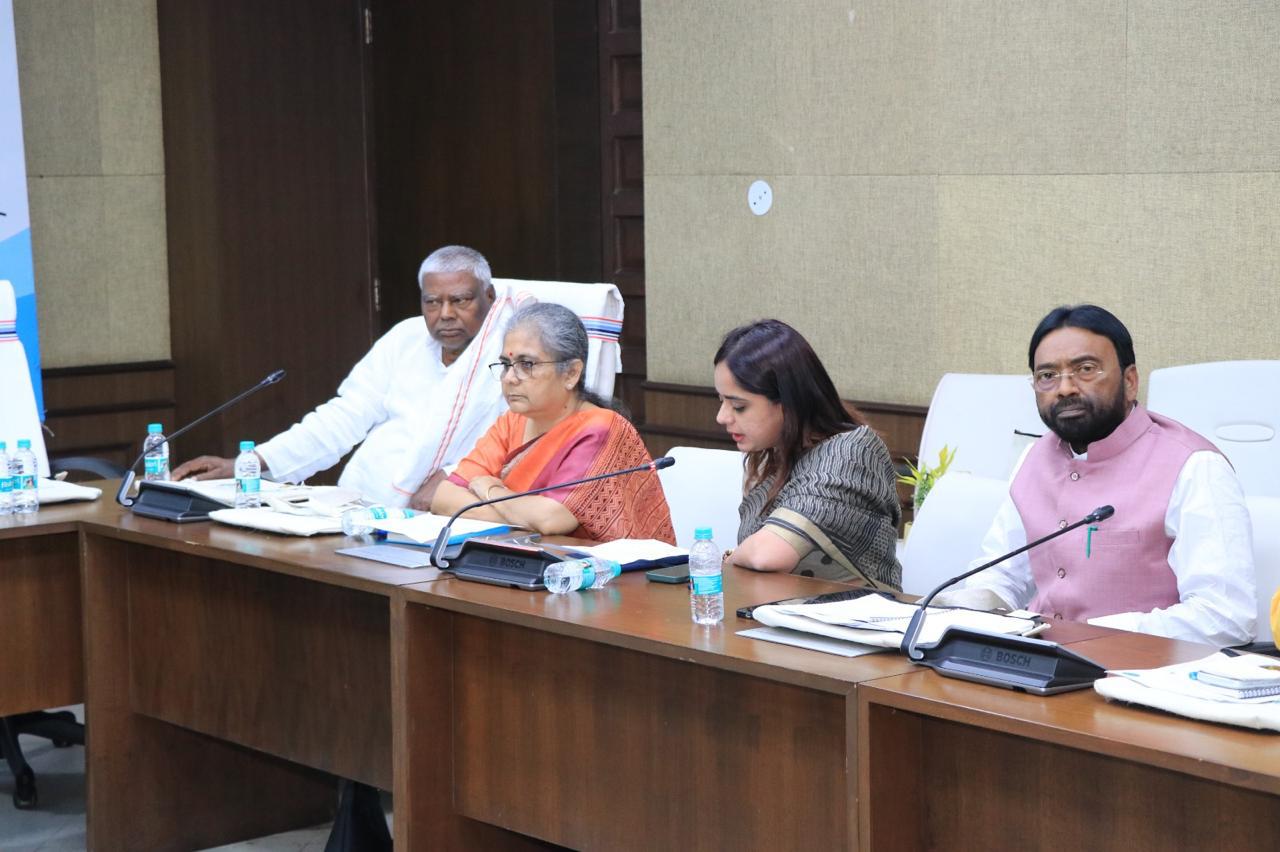
During the technical presentation, Ms. Parul Sharma, Education Specialist, UNICEF Jharkhand, outlined the current scenario and key challenges related to secondary education in the state. She noted that while enrolment has improved over the years, significant gaps remain in retention, transition to higher secondary education, and access to quality learning environments. She said, “Expanding the number of secondary schools, strengthening infrastructure, improving WASH facilities, and providing career guidance and psychosocial support are essential to ensure that girls not only enrol but also complete their secondary education.”
The roundtable also featured an interactive discussion with Members of the Legislative Assembly, who shared their perspectives and recommendations on addressing barriers faced by adolescent girls, including distance from schools, social norms, safety concerns, and limited access to quality teaching and learning resources.
The discussion highlighted the need for greater investment in secondary schools, teacher recruitment, career guidance, and community engagement, with the shared goal of enabling every adolescent girl in Jharkhand to complete her secondary education and build a brighter future.