
Administrator
20 March 2026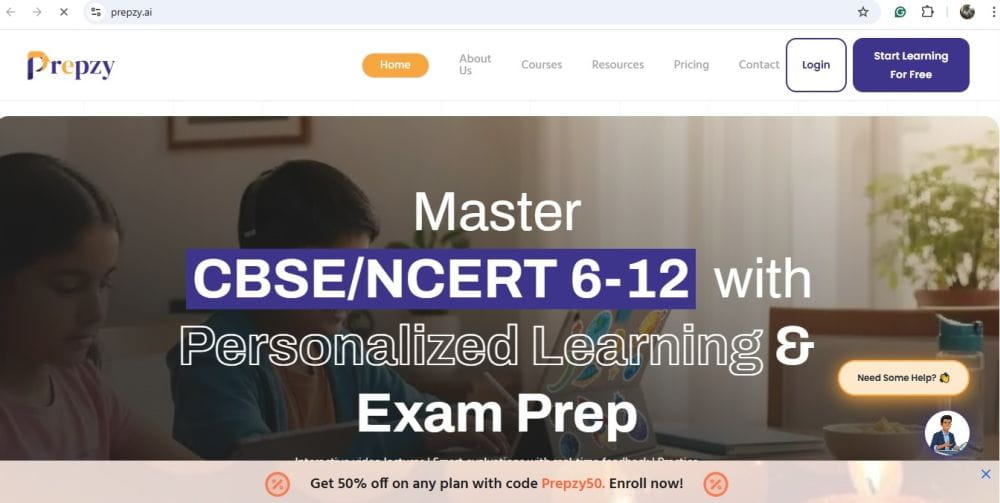
*https://prepzy.ai/
Every day, across cities and small towns, millions of students do exactly what is expected of them. They attend classes, underline textbooks, watch lectures late into the night, and solve problem sets with quiet discipline. From the outside, it looks like progress. But inside, a different story unfolds -
A doubt that lingers a little too long.
A concept that never fully settles.
A question that is never asked.
And even for those who succeed, another uneasy thought emerges - Is this enough for the world I’m stepping into?
Globus Learn Services India Pvt. Ltd., based in Chandigarh and led by founders including two former IAS officers now operating out of Tampa, begins precisely here.
In the space between effort and assurance and between achievement and actual readiness. What they have built is not just a company with two products, but a carefully constructed response to two silent failures of modern education: the inability to see learning clearly, and the inability to stand out meaningfully.
The first failure is intimate. Learning today is abundant, but directionless. Students are surrounded by resources, yet left alone with their uncertainty. They move forward, often without knowing whether they truly understand, whether they are improving, or where they stand.
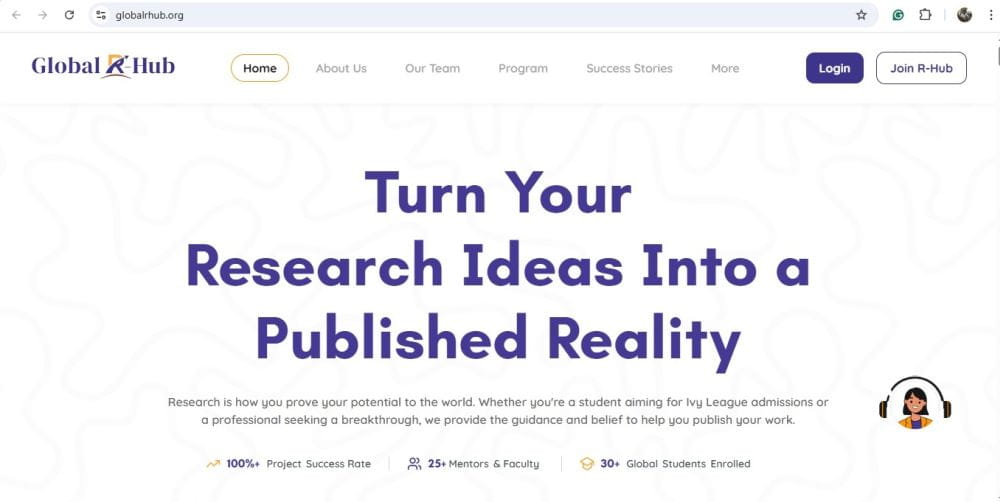
*https://globalrhub.org/
Prepzy enters this space, not as another source of content, but as a quiet recalibration of the learning experience itself.
It transforms static textbooks into fluid, AI-generated lessons. It places a responsive teacher in the student’s pocket - one that listens, answers, and explains in real time. It turns practice into feedback, and feedback into direction. But its most profound shift is less visible: it begins to read the student back to themselves.
Tracking patterns, time, accuracy, and progress, it reveals what was once invisible - the shape of a student’s own learning journey.
Slowly, something changes. Learning stops being a leap of faith. It becomes a path that is clear, iterative, and self-aware. Not just harder work, but smarter and more certain progress.
Thus, with that, something often lost in education quietly returns: confidence that is earned, not assumed.
But clarity, by itself, is not a differentiator anymore.
Because beyond the classroom, the world has moved on.
The benchmarks have shifted. The students who rise are not just those who know more, but those who can question, connect, and create. Yet most education systems introduce this way of thinking too late - after years of conditioning students to follow, not to explore.

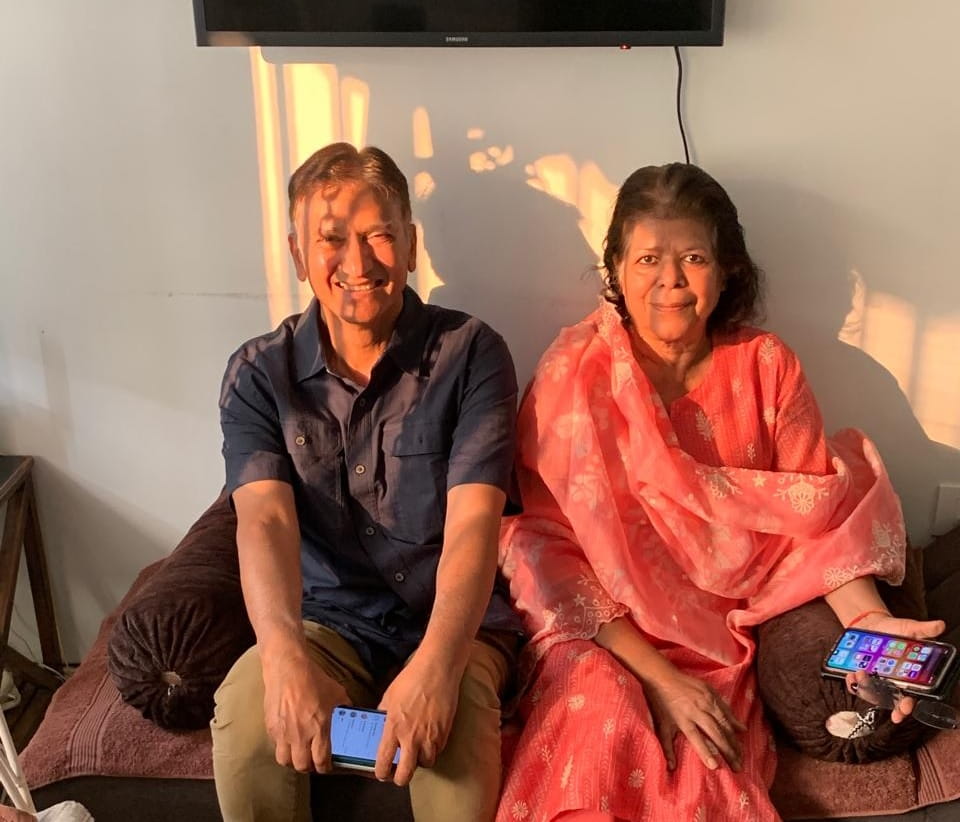
*(From L to R) Dr. Shivendu and Mridula Sinha
Global R-Hub is built for this second gap, the absence of early intellectual awakening.
Here, students are not asked to perform; they are invited to inquire. They begin by exploring ideas, learning how to ask better questions, and gradually move into structured research guided by mentors. Over time, they engage with real-world problems, develop independent lines of thought, and in some cases, produce work that contributes to academic discourse.
What emerges is not just skill, but identity. A shift from student to thinker. From a consumer of knowledge to a participant in its creation.
Seen together, Prepzy and Global R-Hub are not parallel offerings - they are sequential, almost philosophical. One teaches a student to understand their own learning. The other teaches them to extend that understanding into the unknown.
One builds clarity at scale, powered by artificial intelligence. The other builds depth, shaped by human mentorship. Between them lies a powerful continuum: from preparation to perspective, from performance to purpose.
At the heart of this vision are three founders whose own journeys mirror the transformation they seek to create. Dr. S. Shivendu, once an IAS officer of Jharkhand cadre and now a professor at the University of South Florida, has spent years studying how emerging technologies reshape systems of knowledge. Mridula Sinha,IAS officer( R), who is his wife, has worked at the highest levels of education policy, understanding its challenges not as theory but as lived reality.
Arun Reddy, shaped by his experience at Carnegie Mellon and his work across the US and India, carries the perspective of a student who has seen the global gap firsthand. What unites them is not just expertise, but a shared recognition: that students are working incredibly hard, but the system is not always working for them.
The timing of their work feels less coincidental and more inevitable. Artificial intelligence is redefining how learning can adapt to individuals. At the same time, global institutions are shifting their gaze - from scores to substance, from outcomes to originality. In this changing landscape, the ability to measure one’s own learning and the courage to pursue one’s own questions are no longer optional. They are decisive.
Global. earn stands at this intersection—not loudly, but with intent.
It is not trying to replace education. It is trying to complete it. To make learning visible where it was once opaque. To make curiosity actionable where it was once suppressed. And most importantly, to connect the two, so that a student who understands their progress is also empowered to shape their future.
Because in the end, the advantage will not belong to those who studied the most. It will belong to those who understood their learning deeply and had the confidence to take it further.