Administrator
26 March 2026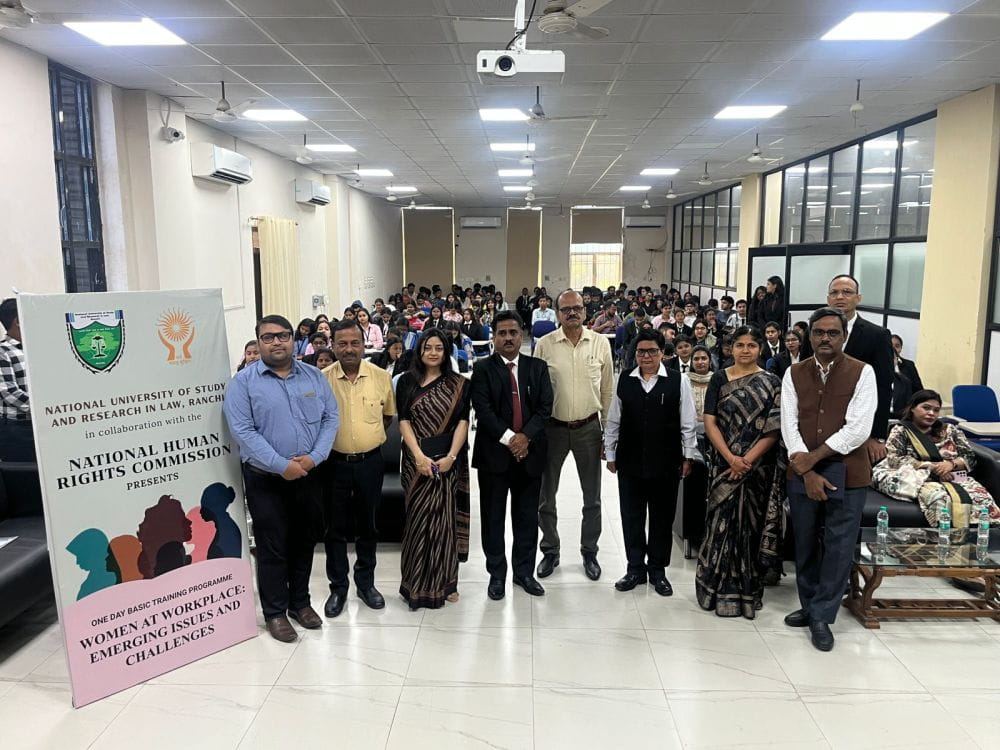
Ranchi: The National University of Study and Research in Law (NUSRL), Ranchi, successfully organized a One-Day Basic Training Programme on “Women at Workplace: Emerging Issues and Challenges” on March 25, 2026.
The programme was conducted with the support of the National Human Rights Commission (NHRC), New Delhi.
The training programme aimed to enhance awareness and understanding of gender justice, workplace equality, and mechanisms to address sexual harassment in contemporary work environments.
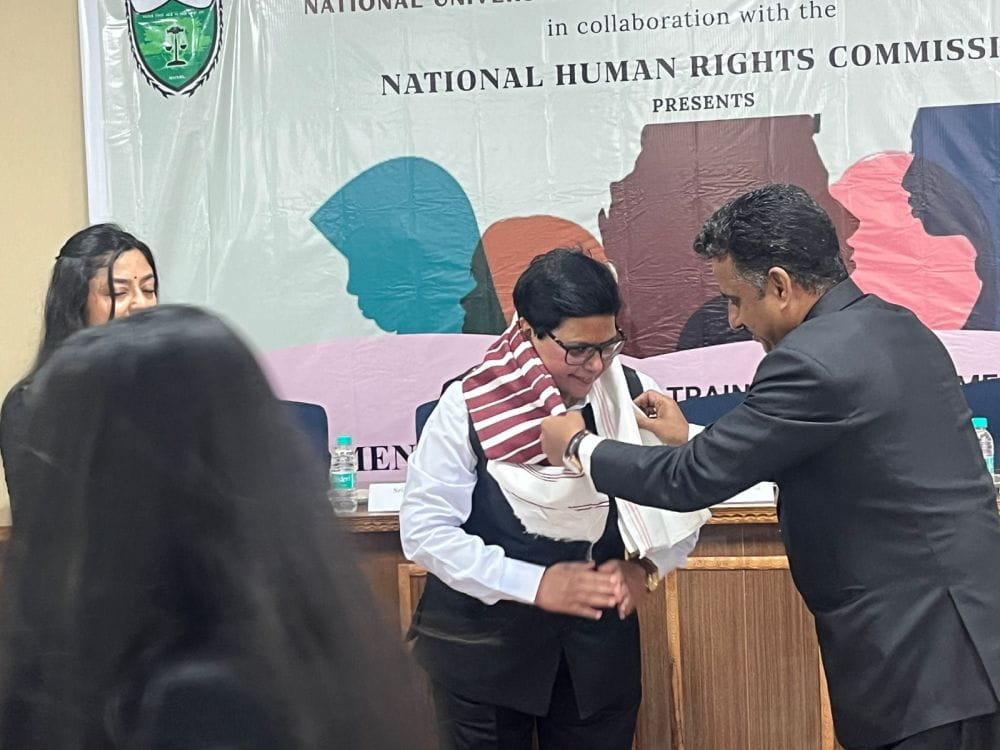
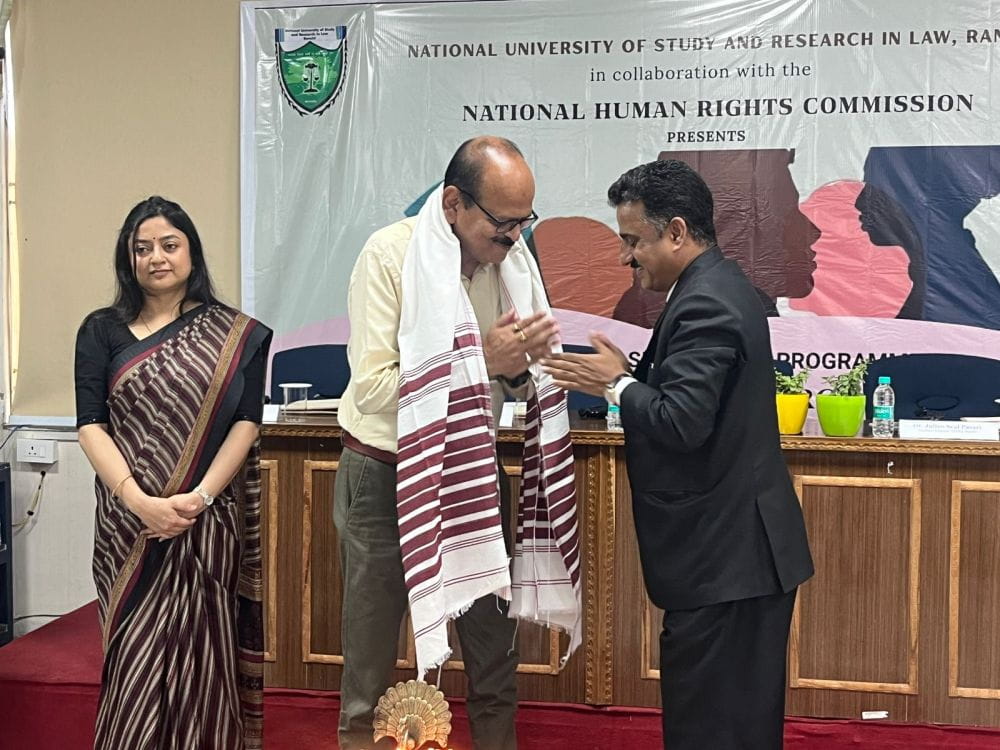
The programme commenced with registration at 09:00 AM, followed by an inaugural session. The session was graced by distinguished dignitaries, including Ms Kumari Ranjana Asthana, Principal District Judge and Member of JHALSA; Shri Ranjit Choudhary, Retired Judge, District Court; Prof. (Dr.) Ashok R. Patil, Vice-Chancellor of NUSRL, Ranchi; and Dr. Julian Seal Pasari, Programme Convenor.
The speakers highlighted the need for strengthening institutional mechanisms to address workplace discrimination and harassment, and highlighted the importance of law and awareness in creating gender-equitable workplaces.
The programme featured four academic sessions covering key dimensions of workplace gender justice:
Session one focused on feminist and conceptual foundations of workplace gender justice. Dr. Rabindra Kumar Pathak discussed gendered labour structures and critically examined workplace norms from a feminist legal perspective.
Session two addressed constitutional and international norms governing workplace equality. Prof. (Dr.) Syamala Kandadai and Ms. Dipshi Swara elaborated on dignity, substantive equality, and constitutional morality in workplace contexts.
Session three examined the legal framework addressing sexual harassment at the workplace. Dr. Vandana Singh and Dr. Julian Seal Pasari discussed the POSH Act, criminal law provisions, and institutional accountability.
Session four focused on emerging challenges of harassment in digital and hybrid workspaces. Dr. Suhani Sharma highlighted issues of cyber harassment and strategies for ensuring safe digital environments for women.
The programme concluded with an MCQ-based evaluation, participant feedback session, and valedictory ceremony. E-certificates were issued to all participants.
The training programme provided comprehensive insights into evolving legal, social, and institutional challenges faced by women at workplaces, while also offering strategies for prevention, accountability, and promotion of gender-sensitive work environments.