
Administrator
04 April 2026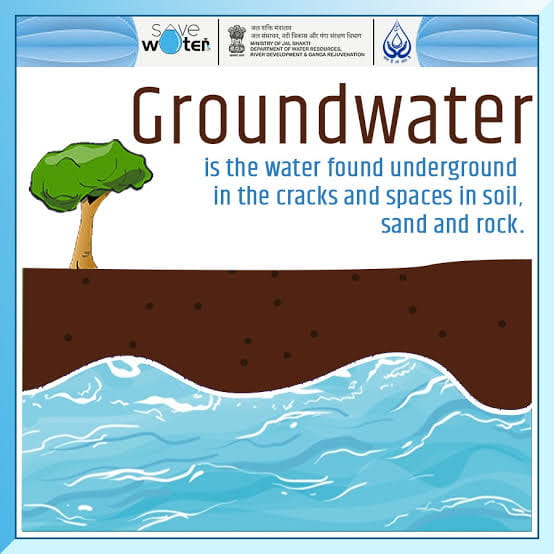
*Representational picture courtesy Facebook
Ground water level and quality monitoring in the country is being regularly carried out by the Central Ground Water Board (CGWB) under this Ministry and the respective State Governments. CGWB currently has a well spread-out country-wide network of around 27,000 monitoring stations for ground water level and around 20,000 stations for ground water quality. Additionally, the State Governments have their own monitoring stations.
Further, the Ministry has progressively adopted advanced digital technologies for efficient monitoring of groundwater regime across the country. Under various schemes like National Hydrology Project (NHP) and Atal Bhujal Yojana (ABY) around 22,000 Digital Water Level Recorders (DWLRs) with Telemetry have been installed across the country which transmit ground water level data to centrally located servers on real time basis.
Moreover, under the Jal Shakti Abhiyan of the Ministry, 712 Jal Shakti Kendras (JSKs) have been established at district level across the country to act as community centers for dissemination of knowledge and promoting local level dialogue on water/ground water related issues.
Although ‘Water’ is a State subject, the Central Government on its part facilitates the water conservation and sustainable ground water management efforts of the State Governments by way of technical and financial assistance through its various schemes and projects. The major steps taken by the government in this direction, for scaling up aquifer mapping, enhancing ground water conservation and recharge and ensuring long term sustainability of the resource in the country through community involvement, are provided below:
As a result of such cumulative efforts, the total annual groundwater recharge in the country has increased from 432 BCM in 2017 to 448.52 BCM in 2025. Further, the share of Safe assessment units has increased from 62.6% to 73.14%, while Over-exploited units have declined from 17.2% to 10.8% over the same period, indicating an overall improvement in groundwater status.
In order to facilitate the states in their endeavor towards proper regulation and management of ground water resources, this Ministry had drafted a Model ‘Groundwater (Regulation and Control of Development and Management) Bill’ providing a regulatory framework to curb indiscriminate extraction of ground water while also making provisions for rain water harvesting and artificial recharge. The Model Bill has been circulated to all States/UTs and so far 21 States/UTs have adopted it.
Further leading the path, Central Ground Water Authority (CGWA) has been established under this Ministry for regulation of ground water extraction at the central level. Apart from that, 17 States/UTs, are having their own regulatory mechanism/authorities. CGWA regulates ground water withdrawal in 19 States/UTs by way of issuing No Objection Certificates (NOCs) for ground water extraction for various purposes like industrial, infrastructure, mining etc. in accordance with its Guidelines dated 24.09.2020. The Guidelines have stringent provisions like imposition of Environmental Compensation (EC) charges and penalties for unlawful extraction of ground water.
The Government policies are aligned to meeting the Sustainable Development Goals (SDG) targets. In addition to the schemes and programmes mentioned above like Jal Shakti Abhiyan, Jal Sanchay Jan Bhagidari, NAQUIM etc. centered around water conservation, ground water recharge and aquifer protection, the schemes like Jal Jeevan Mission (JJM) for providing safe drinking water to every rural household of the country, Swachh Bharat Mission (SBM) for universal sanitation, AMRUT 1.0 & AMRUT 2.0 for building sustainable cities and a myriad other initiatives, the Government is ensuring an environmentally sustainable and climate resilient future for the country.
The information was provided by THE MINISTER OF STATE FOR JAL SHAKTI SHRI RAJ BHUSHAN CHOUDHARY in a written reply to a question in Lok Sabha March 2,2026.