
Administrator
10 April 2026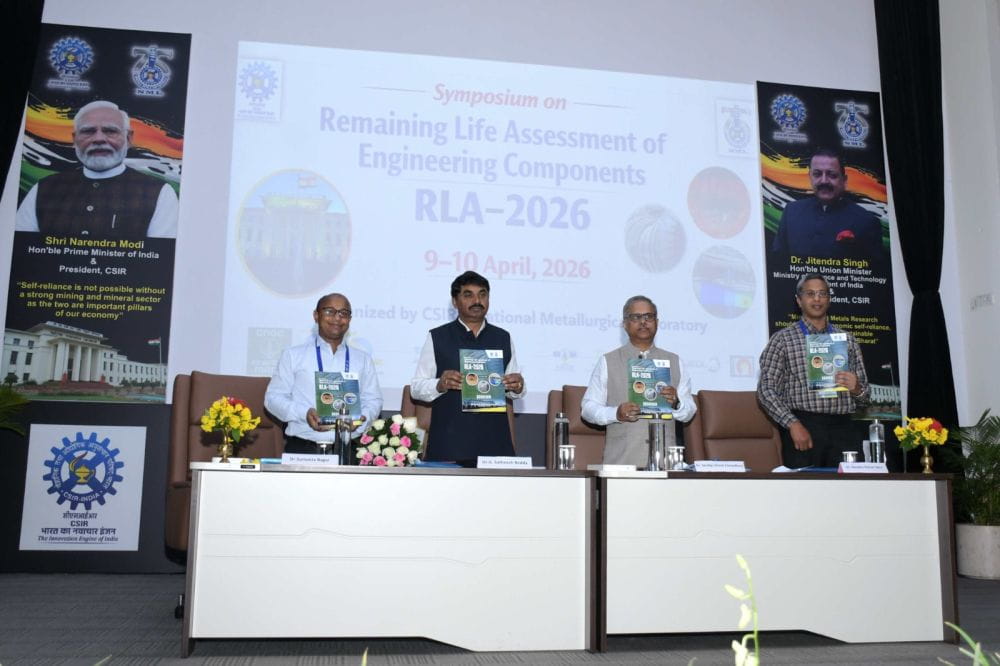
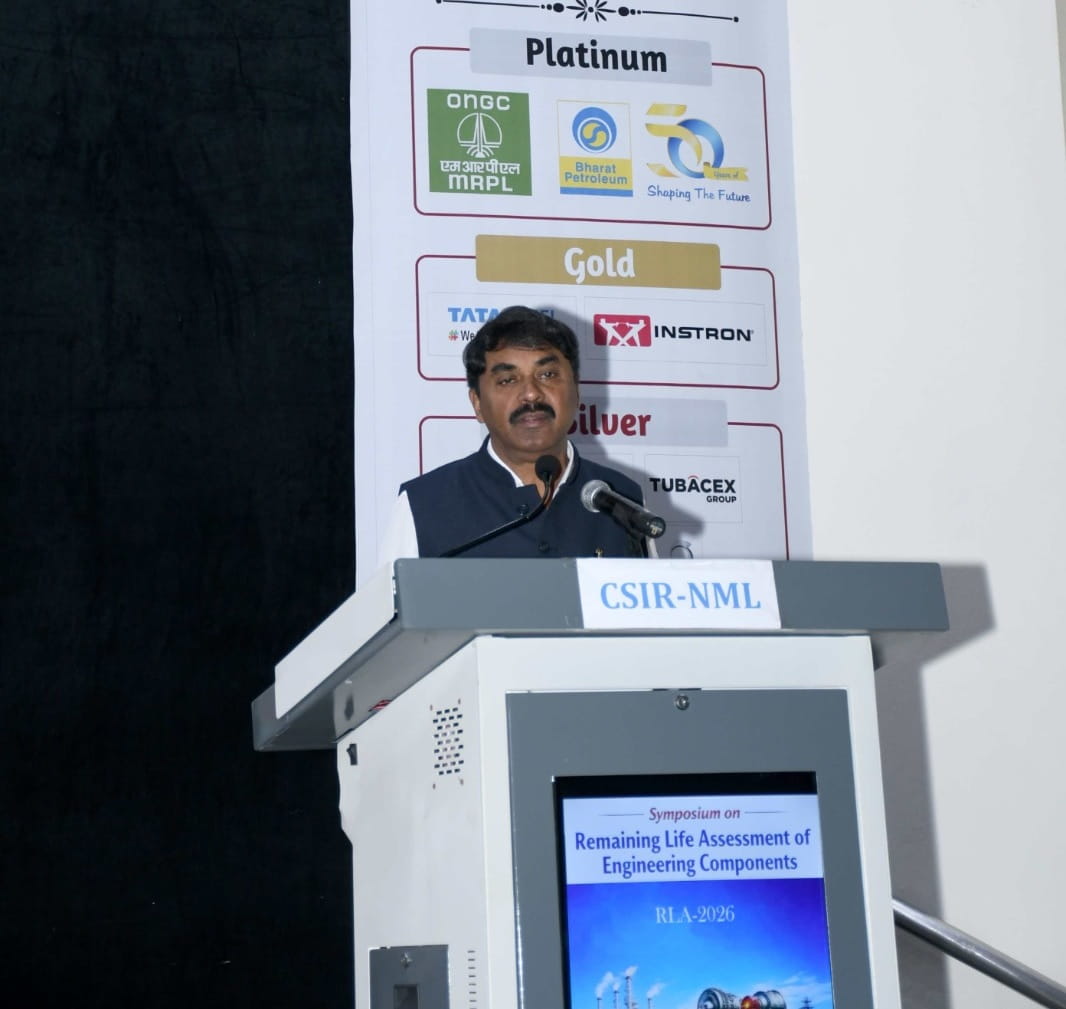
The two-day national symposium on “Remaining Life Assessment of Engineering Components (RLA-2026)” commenced today at the CSIR-National Metallurgical Laboratory, Jamshedpur, bringing together leading scientists, industry experts, academicians, and policymakers from across the country.
The symposium saw the participation of approximately 150 delegates, scientists, speakers from renowned organisations across India, including MRPL; ONGC; Tata Steel; Instron; Tubacex; Jayaswal NECO; JOEL; Insightzz; IIT Kharagpur; CSIR-CMERI Durgapur; NTPC-Netra; KISCO Castings India, Punjab; Central Power Research Institute; Mahindra Defence; Indian Oil Corp. Ltd.; Bharat Petroleum Corp. Ltd.; ProSIM R&D Pvt. Ltd., Bengaluru and many more.
The inaugural session was graced by Dr. G. Satheesh Reddy, Member of the National Security Advisory Board (NSAB), former scientific adviser to the Raksha Mantri and Honorary adviser to the government of Andhra Pradesh and former Chairman, DRDO, as the Chief Guest. The inaugural proceedings were presided upon Director of CSIR-NML, Dr. Sandip Ghosh Chowdhury, Dr.-Ing. Jitendra Kumar Sahu, Chairman of RLA-2026 and Dr. Sumanta Bagui, Convener of RLA-2026 by lighting the ceremonial lamp.
*Dr. Sandip Ghosh Chowdhury*, Director, CSIR-NML, welcomed the esteemed guests and delegates while highlighting the significance of the symposium. He noted that 60–70% of industrial structural components in India—particularly in the petrochemical, thermal power, and mining sectors—are currently operating beyond their original design life. Dr. Chowdhury emphasized that RLA plays a critical role in extending the life of these aging structures, ensuring their safe and continued utilization without the risk of catastrophic failure.
*Dr. J.K. Sahu*, Chairman of the 4th RLA-2026, has presented brief overview of the symposium’s objectives. He highlighted the pioneering role of CSIR-NML in the field of RLA, specifically its contributions to the thermal power, aerospace, and oil and gas sectors in assessing the structural integrity and longevity of critical components.
The inaugural address by the Chief Guest, *Dr. G. Satheesh Reddy* described Remaining Life Assessment as a strategic discipline essential to India’s industrial infrastructure. Dr. Reddy stressed its importance in ensuring the safety, reliability, and uninterrupted operation of vital assets such as boilers, turbines, pressure vessels, and piping systems. Dr. Reddy reiterated that RLA is indispensable for accurately predicting the safe usability of structural components that have already exceeded their intended service lives.