Administrator
15 May 2026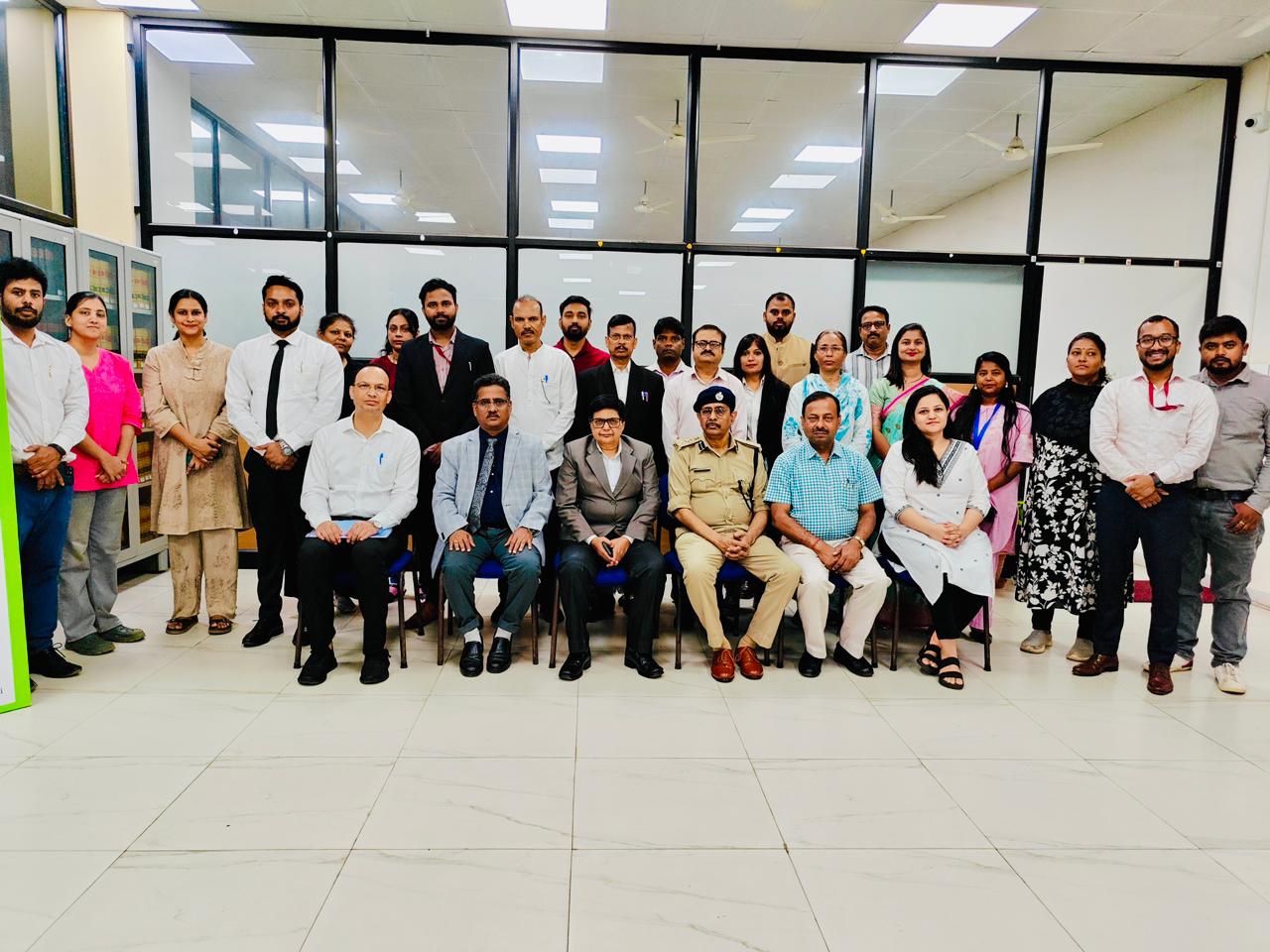
*The picture shows the participants Kumari Ranjana Asthana, Member Secretary, Jharkhand State Legal Services Authority (JHALSA); Shri Tushar Ranjan Gupta, Assistant Inspector General (AIG) Prisons; Prof. Dr. Ashok R. Patil, Vice Chancellor, NUSRL Ranchi; Ms. Saranga Ugalmugle, Program Coordinator, Access to Justice, NALSAR; representatives of LADCs from Ranchi and Khunti; and representatives from various NGOs working in related fields.
This disclosure was made by JHALSA Member Secretary,Kumari Ranjana Asthana at NUSRL Ranchi Consultation Program on Legal Aid Access
The National University of Study and Research in Law (NUSRL), Ranchi, under its ongoing project "Legal Aid Services and Continuing Legal Education for Undertrial Prisoners(UTs)," has successfully organised a One Day Consultation Program on 14 May 2026.
The theme was: "Issues and Challenges for Providing Legal Aid to Undertrial Prisoners."
The primary objectives of the program were to facilitate timely bail for undertrial prisoners, connect them with the mainstream, and empower them socially and economically by linking them with relevant government schemes.
The program was attended by Kumari Ranjana Asthana, Member Secretary, Jharkhand State Legal Services Authority (JHALSA); Shri Tushar Ranjan Gupta, Assistant Inspector General (AIG) Prisons; Prof. Dr. Ashok R. Patil, Vice Chancellor, NUSRL Ranchi; Ms. Saranga Ugalmugle, Program Coordinator, Access to Justice, NALSAR; representatives of LADCs from Ranchi and Khunti; and representatives from various NGOs working in related fields.
The event saw participation from approximately 50 attendees, including academicians, legal professionals, students, and institutional representatives.
The program facilitated extensive deliberations on pressing issues including bail procedures, legal representation, production before courts, prison overcrowding, and lack of awareness among prisoners about their legal rights.
*Kumari Ranjana Asthana ( Member Secretary, JHALSA*)
"The rising number of prisoners in jails is a serious problem requiring focused intervention by the State. Poverty, lack of awareness, and illiteracy are the biggest obstacles in securing timely bail for undertrial prisoners. A large proportion of undertrials(UTs) in Jharkhand come from tribal, rural, and economically weaker backgrounds, making access to justice even more challenging."
*Shri Tushar Ranjan Gupta ( Assistant Inspector General (AIG) Prisons*)
"Jharkhand is ahead of many states in prison administration. However, nearly 70% of the prison population consists of undertrial prisoners, while only 30% are convicts serving sentences. There is a clear need to do more for undertrials. Our full effort and cooperation goes towards ensuring that necessary help reaches every prisoner."
*Prof. Dr. Ashok R. Patil , Vice Chancellor, NUSRL Ranchi*
"The University, through its various centres, strives to serve society through education as well as through the other dimensions of law. Legal aid is not charity — it is a constitutional obligation arising from Articles 14, 21, and 39-A of the Constitution of India. Ensuring effective legal representation and timely assistance to undertrial prisoners is indispensable for upholding the principles of fairness, equality, and dignity in the criminal justice system."
*Ms. Saranga Ugalmugle , Program Coordinator, Access to Justice, NALSAR*
"There is much to learn from efforts being made in other states to deliver justice to prisoners. Addressing the challenges that emerge from these experiences requires collaborative and sustained action by all stakeholders."
Representatives from LADC of Ranchi and Khunti shared their ground-level experiences, explaining the challenges they encounter and discussing practical solutions to overcome them.
Participants suggested practical measures to strengthen legal aid mechanisms, improve coordination with prison administration, and enhance awareness among prisoners about available legal remedies. Developing sustainable strategies to reduce prolonged detention of undertrial prisoners was also a key focus of the deliberations.
The program concluded with a collective commitment that prison authorities, legal services institutions, and legal aid advocates will continue coordinated efforts to improve the condition of undertrial prisoners and ensure accessible, timely justice for all.
If you value our journalism, consider making a voluntary contribution to help us continue bringing news, stories and information to our readers.
Scan the QR code to contribute

Every contribution, big or small, is appreciated.