Administrator
01 June 2026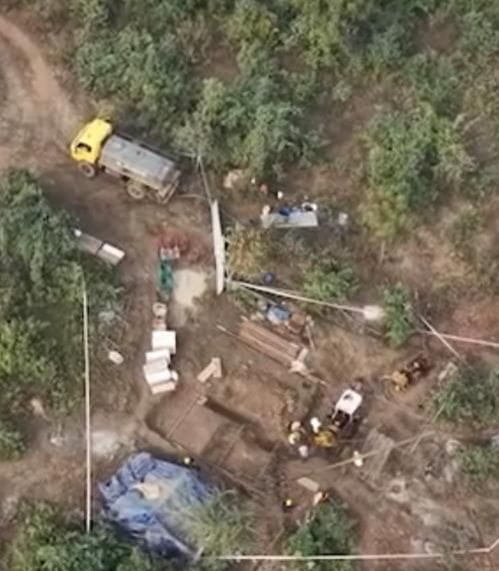
*Representational screenshot courtesy Instagram
As it is, critical minerals such as Lithium, cobalt, and nickel are vital for India's clean energy and EV goals. While India currently relies on imports for nearly 100% of its usable battery-grade Lithium, cobalt, and nickel, aggressive domestic exploration and the National Critical Minerals Mission ( NCMM) have revealed scattered domestic deposits in tribal inhabited forest areas of Odisha and Jharkhand.
Other states where critical minerals were being planned to be mined are J&K, Karnataka, Nagaland and Karnataka.
Aware of it, and in view of the lack of operational mining leases for production, India is actively investing ₹16,300 crore in the National Critical Minerals Mission( NCMM) to streamline domestic mining and processing after the Geological Survey of India had found critical minerals in Odisha and Jharkhand, among other states.
Observer has reviewed India's comprehensive critical minerals policy via the Ministry of Mines Roadmap and explored the detailed demand-supply scenarios in the NITI Aayog Critical Minerals Assessment.
Consider these facts.
Lithium Status: India is highly import-dependent, but large potential reserves have been discovered.
Jammu & Kashmir: An estimated 5.9 million tonnes of inferred lithium resources were found in the Salal-Haimana area of the Reasi district.
Karnataka: Exploration revealed smaller, preliminary Lithium anomalies in the Mandya and Marlagalla areas.
Jharkhand: Geological surveys identified Lithium and rare earth element (REE) potential in the Koderma, Giridih, and Hazaribagh districts. Now, the process has reportedly been initiated to mine lithium in these districts.
CobaltStatus: India's land-based cobalt reserves are relatively modest, usually found in association with copper and nickel ores.
Odisha: Accounts for about 69% of the country’s known cobalt resources, primarily located in the nickeliferous laterites of the Sukinda area in the Jajpur district.
Jharkhand & Nagaland: Small deposits and occurrences exist in the Singhbhum district (Jharkhand) and the Tuensang district (Nagaland).
Deep Sea: India is exploring multimetal seabed nodules, which contain an average of 0.3% cobalt.
Nickel-Status: India has modest to low nickel ore reserves, with the vast majority of resources being low-grade.
Odisha: Dominates the national nickel landscape, holding approximately 92% of India's total nickel resources. The Sukinda Valley in the Jajpur district is the primary source. Other States: Remaining deposits are scattered across Jharkhand, Nagaland, and Karnataka.
If you value our journalism, consider making a voluntary contribution to help us continue bringing news, stories and information to our readers.
Scan the QR code to contribute

Every contribution, big or small, is appreciated.