Administrator
06 July 2026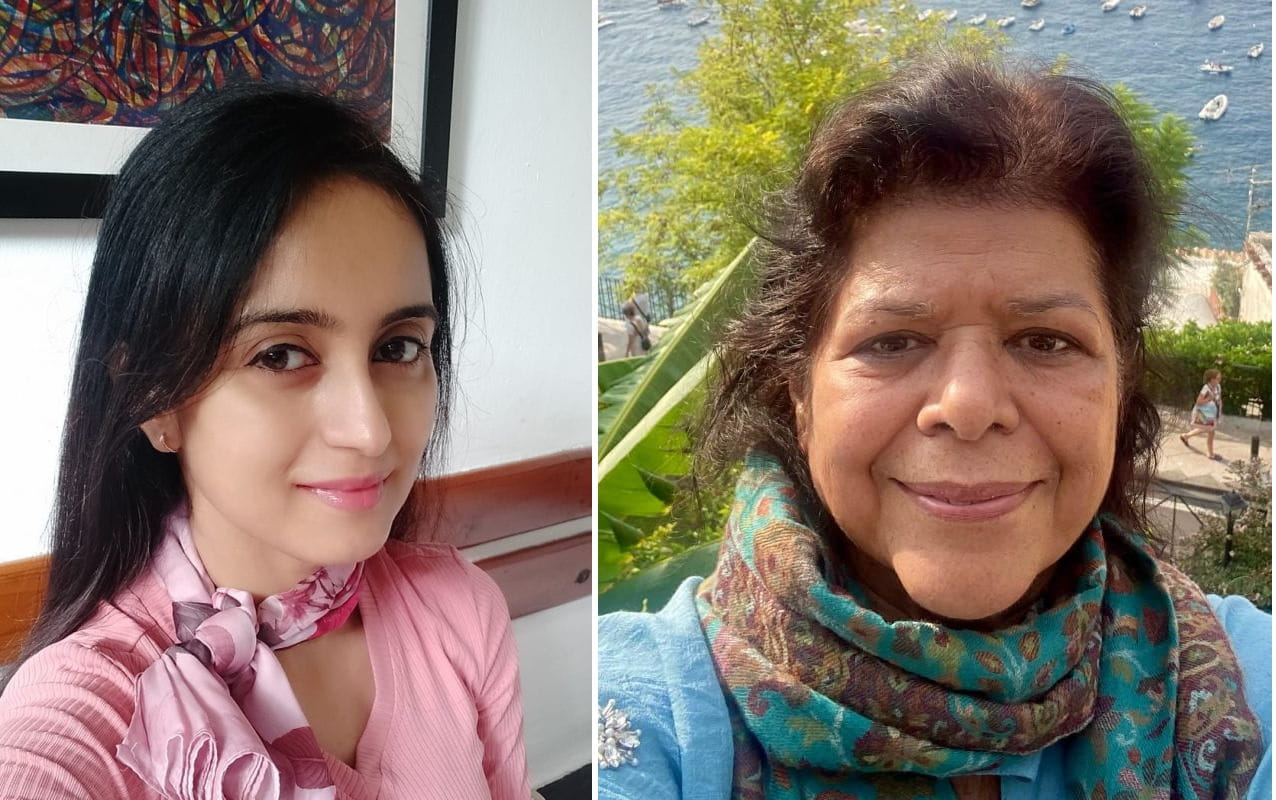
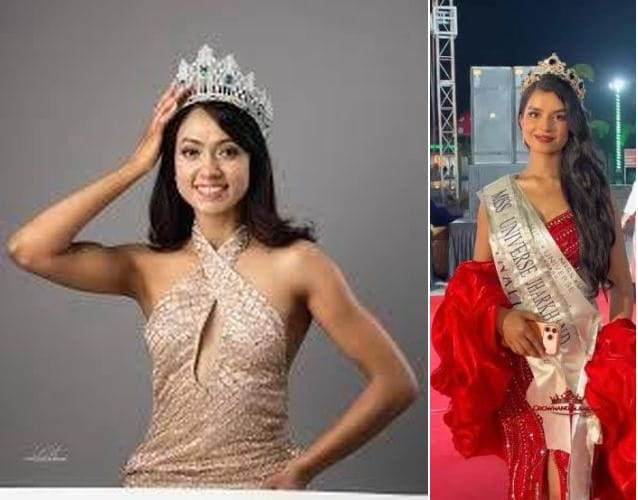
*(L) Smita Dey Tarafder and (R) Mridula Sinha
Her professional journey is worth a lesson for ambitious students who aspire to become ‘achievers’ in life.
A study conducted by JharkhandStateNews.com revealed that Mridula Sinha’s professional career began in Ranchi, the capital city of Jharkhand. She always had a strong desire to work directly with communities and help expand opportunities for those who needed them most. Her early passion led her to pursue a Post Graduate Diploma in Rural Management from Ranchi-based XISS and work in villages on issues related to the empowerment of disadvantaged communities. That experience shaped her understanding of education at the ground level.
Mridula later joined the Indian Administrative Service(IAS), Bihar turned Jharkhand cadre, in 1986 and spent decades working in policy roles that influenced education systems across the state. Over the years, she served as Principal Secretary for Higher Education and Technical Education in the Government of Jharkhand, among many other assignments at the highest levels of policy-making in this state of India.
Her work primarily focused on improving access, quality, and institutional development in education. Along the way, she also pursued advanced studies abroad at institutions including Columbia University, Emory University, and the University of Southern California. Those experiences appear to have motivated her to observe both the Indian and American education systems closely.
After retiring from IAS in 2017, she continued working in the development sector with international organisations and now serves as a public policy consultant. Her decades of experience working with education systems have given her a deep understanding of the challenges students face long before they reach university.
With her husband Dr.Shivendu and friend Arun Reddy, Mridula is learnt to have played a pivotal role in establishing two highly useful online education platforms, Prepzy and Global R-Hub, each going viral across the world now.These two digital-education platforms have a shared, ambitious goal. They want to change how students learn, how they measure progress, and how early they begin exploring ideas that shape their future.
Smita Dey Tarafder, a reputed Content Writer representing JharkhandStateNews.com, has interviewed Mridula Sinha. In reply to her question, she said,” You cannot educate a student if you cannot well educate yourself”
Excerpts of Smita Dey Tarafder- Mridula questions and answers are as follows.
Q.1)Mridula, what early experiences shaped your approach to leadership and public systems?
A-From a very young age, I was taught that empathy is the greatest virtue. My upbringing, combined with exposure to tribal villages, two years at the Xavier Institute(XISS), and training at LBSNAA, shaped a value system that became my guiding light in public administration.
Q 2)Mridula, in higher and technical education, where do you see the biggest disconnect between policy intent and institutional reality?
A- The disconnect is glaring: policy is largely imposed on institutions rather than developed in partnership with them. Ground realities are frequently overlooked. Both higher and technical education require exceptionally strong foundations to achieve excellence—foundations that depend on the school system and teachers. Yet, more often than not, they struggle to keep up with the ever-evolving challenges.
Q3)For both: Is the Indian administrative system fundamentally constrained, or is it a question of leadership within it?
A-I don't believe the system is fundamentally constrained. The opportunities are vast, but decisions must be made amid many unknowns. Given how extremely stressed the system is, strong leadership—capable of constantly providing direction and setting clear priorities—becomes absolutely critical.
Q4)Mridula, how did your professional identity evolve through this transition—from administrator to global academic and institutional leader?
A-Interestingly, the exposure gained in the IAS, combined with extensive experience across multiple sectors, makes one well-suited to tackle any public policy challenge, anywhere in the world. Since leaving the IAS, I have been actively engaged in the global policy environment, and I found this transition to be remarkably effortless.
Q5)Mridula, in education systems, how do you balance technological change with the need for institutional continuity?
A-I don't see much resistance to technology within institutions, provided they have the necessary infrastructure in place. Technology was widely embraced during Covid, and that acceptance has continued ever since
Q6)For both: Do you believe individuals are remembered for what they build, or for how they are perceived?
A-The most enduring legacy comes from building something meaningful while staying true to values that align perception with reality.
Q7)Mridula, do you see your roles as complementary or deliberately independent?
A-I think a combination of both.
Q8)Mridula, what can Indian education systems adopt—or consciously avoid—from global models?
A- Adopt: critical thinking, vocational training, continuous assessment, teacher development, and flexible curricula.
Avoid: excessive privatisation, over-reliance on high-stakes testing, rigid early tracking, and neglect of teacher pay and training.
*Note: Q stands for Question and A for Answer
If you value our journalism, consider making a voluntary contribution to help us continue bringing news, stories and information to our readers.
Scan the QR code to contribute

Every contribution, big or small, is appreciated.