Administrator
24 August 2026
Representational Pic
The Jharkhand High Court’s interim relief has brought candidates back to their official desks on Monday ( August 24, 2026) — but the larger dispute over alleged irregularities, cancelled examinations and the fate of government jobs remains unresolved
For some of Jharkhand’s newly appointed government employees, August 22 brought something that had seemed uncertain just days earlier: a return to work. But it did not bring back certainty.
Candidates who had cleared recruitment examinations, received appointment letters and joined government service are returning to their offices after the Jharkhand High Court temporarily stayed the state government’s cancellation orders.
The relief has allowed them to resume work while the legal battle over the examinations and their appointments continues. For them, the dispute is no longer an abstract argument over recruitment policy. It is about jobs they spent years preparing for — and which, almost overnight, they feared they had lost.
From Appointment Letters to Uncertainty
For many candidates, the journey to a government job had taken years of preparation, financial sacrifice and repeated attempts. The appointment letter was the point at which that uncertainty was supposed to end. Instead, the government's decision to cancel recruitment examinations turned that moment of achievement into another period of anxiety. Candidates who had already joined government service suddenly found their appointments under threat. Some were not even allowed to enter their workplaces before the written cancellation order was issued. The High Court's interim stay has now provided temporary relief. But the word temporarymatters.
The larger dispute over alleged irregularities and the government's cancellation decisions remains before the courts.
‘Why Should Honest Candidates Lose Their Jobs?’
The candidates do not dispute the need to investigate allegations of malpractice. Their argument is narrower and more personal: if wrongdoing occurred, those responsible should be identified and punished — but candidates who cleared the examinations honestly should not automatically lose their appointments. One candidate cited allegations including question-paper leaks, cheating and claims that some people paid large sums for government jobs.
His position was that an investigation should continue and that candidates were willing to cooperate, but those who were not involved in wrongdoing should not be made to bear its consequences. That distinction is now central to the legal dispute. The question before the court is not simply whether allegations surrounding an examination deserve investigation. It is also how the state should treat candidates who have already been selected and appointed when the integrity of the examination itself is under question.
A Recruitment Process Already Caught in Litigation
The JSSC-CGL 2024 examination has been under controversy from the beginning. The first examination, held in January 2024, was cancelled after a question-paper leak. A re-examination was conducted in September, after which candidates again raised concerns over alleged irregularities.The candidates now returning to work point to earlier judicial proceedings as part of their case.
According to their account, the Jharkhand High Court in December 2025 allowed the appointment process to proceed while the CID investigation continued, with the possibility of action against individuals if wrongdoing was subsequently established. The Supreme Court, they said, did not order cancellation of the recruitment process in January 2026.Appointment letters were issued on December 30, 2025, and candidates joined on December 31. For them, that sequence mattered: they believed the recruitment had crossed a legal threshold and that their appointments were secure. The subsequent cancellation shattered that assumption.

The Human Cost Behind the Legal Arguments
The uncertainty becomes more tangible in the stories of the candidates themselves. Naina Minch, a Block Welfare Officer, described the job as more than professional advancement. Her father died during the COVID-19 pandemic, and she had hoped that becoming a government officer would fulfil a dream associated with him. After years of preparation, she finally secured the post. Then came the cancellation. Now, as she prepares to return to work, the appointment remains protected only by an interim judicial order. Another candidate, Varsha Aind, said she had spent nearly six years preparing for her first government job. The prospect of losing it suddenly was, she said, deeply painful. She now says she has faith in the judiciary and wants the years of work put into the examination to be recognised.These accounts do not resolve the allegations surrounding the recruitment process.
They do, however, show what is at stake on the other side of the controversy.
Relief for One Group, Anxiety for Another
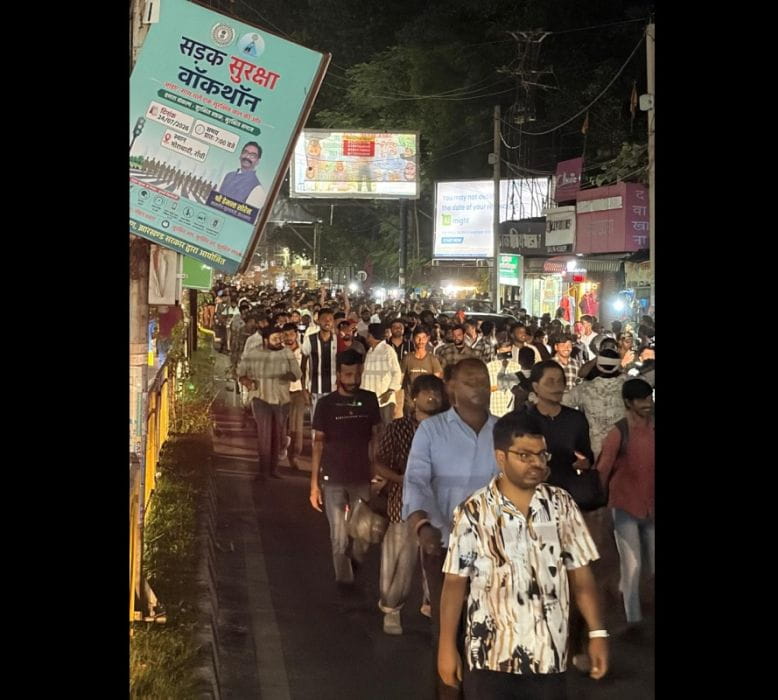
The High Court's intervention has created a difficult balance.The candidates whose appointments were threatened have received temporary protection. But the students who had demanded action against allegedly irregular examinations have a different concern. The government's cancellation drive had followed a prolonged agitation over recruitment irregularities. The state subsequently cancelled a large number of examinations and ordered investigations into others. The cancellations were among the principal demands of the protesting aspirants. The stay has therefore not ended the dispute. It has shifted its centre. The successful candidates are now back at work, while student protesters are questioning the government's handling of the cancellation orders and its position before the High Court. Fresh protests have already followed the court's intervention.
The Court Has Paused the Consequence, Not the Investigation
The distinction is crucial. The interim relief does not establish that the recruitment examinations were free of irregularities.Nor does it bring the investigations to an end. It temporarily protects selected candidates while the legal challenge proceeds. That creates space for both processes to continue: the allegations can be investigated, while the rights of candidates already appointed are examined through the judicial process. The court's intervention therefore places a judicial check on the state's sweeping response without, by itself, resolving the underlying question of whether malpractice occurred.
What the Candidates Are Returning With
The candidates returning to their offices are carrying more than appointment letters. They are carrying the memory of having spent years preparing for a single examination, the shock of seeing an appointment cancelled after joining service, and the knowledge that their future remains tied to a legal process that has yet to reach its conclusion. For now, the High Court's order has allowed them to work. It has not told them how the dispute will end. And that is why the return to office on August 22 is not quite a return to normality. It is a return to work while the question of whether that work can continue remains before the court.
The Larger Question
Jharkhand's recruitment controversy now rests on a difficult balance. The integrity of public examinations has to be protected. Alleged malpractice cannot simply be ignored. But neither can candidates who may have had no role in such wrongdoing automatically be treated as responsible for it.
The state must establish the facts. The investigators must determine where wrongdoing occurred. And the courts must decide what consequences can lawfully follow — for the examination, for the institutions involved and for the candidates who cleared it. Until then, the candidates can return to their desks. Their jobs, however, remain part of a larger legal and institutional question that is still unresolved.