Administrator
09 November 2026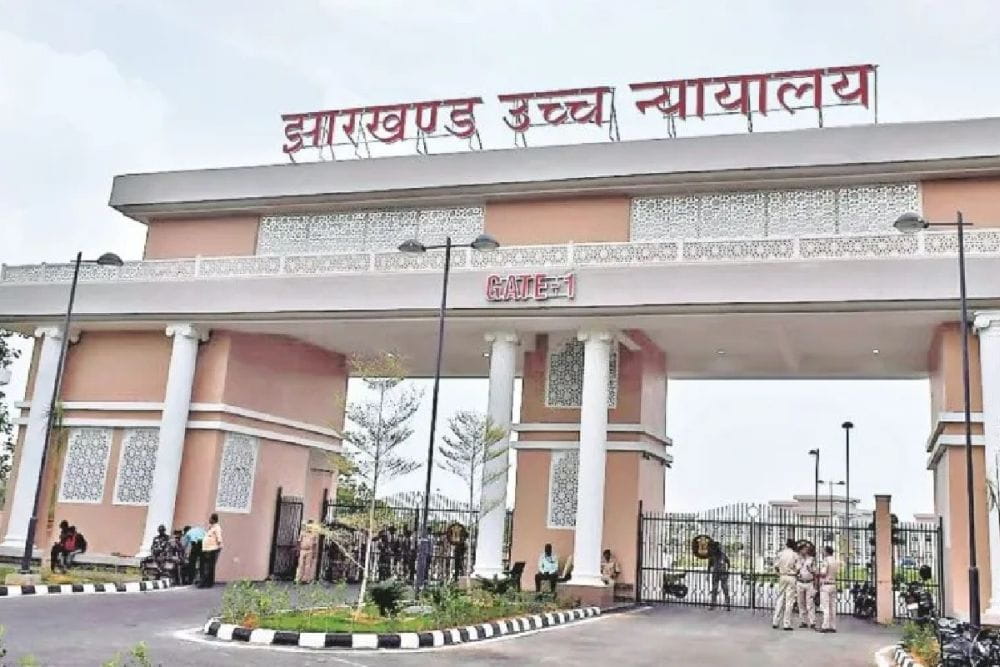
It’s a judgement worth taking note of. Every woman has the right to study and do a job after marriage. And her husband can not claim to have done any favour to her if the wife prefers to study and earn by doing a job, rules the Jharkhand High Court.
In a noteworthy judgement, the court held that pursuing higher education or a job after marriage is a wife’s right, not a favour from her husband, the Jharkhand High Court has held while granting her a divorce on the ground of cruelty.
A Division Bench of Chief Justice M. S. Sonak and Justice Manoj Prasad set aside the Jamshedpur Family Court’s 2019 judgment and decree and dissolved the marriage under Section 13(1)(i-a) of the Hindu Marriage Act, in a judgment pronounced on 5 November 2026.
“Pursuing higher education after marriage is not a privilege granted by the respondent, but a right which the wife is always entitled to exercise,” the court said, adding that a wife wanting a government or private job “cannot be considered ambitious or over-ambitious.”
Notably, the Family Court had dismissed her divorce suit mainly because the husband had “allowed” her to study and work, which it read as his liberal attitude. The High Court called this gender stereotyping. “The husband and wife are equal partners in marriage,” it said.
The couple married in 2004 at Jamshedpur and their daughter was born in 2007. The wife filed for divorce in 2015. Her appeal had been pending since 2019, and mediation failed before it was heard.
In her case, as recorded by the court, ₹1,00,000 and ₹75,000 in cash were given at the time of marriage, on the demand of the husband’s family, to buy a two-wheeler, and ₹1,50,000 more for furniture, utensils and gold jewellery. The husband later demanded ₹5,00,000 from her and her parents, and she was assaulted and abused when it was not paid. She, her father and a neighbour gave evidence.
The husband filed a written statement saying he had paid for her education, but he led no witness and did not cross-examine her or her witnesses.
His denials were vague, the court said, and under Order 8 of the Civil Procedure Code facts not specifically denied are treated as admitted. “Pleadings are not a substitute for proof,” it held, and found cruelty proved.
The court did not hold that stopping a wife from studying or working is, by itself, cruelty. It found cruelty on her unrebutted evidence of the dowry demand, the abuse and the assault. In any other divorce case, cruelty still has to be proved on that case’s own evidence. In a separate criminal case, the Supreme Court has held that general dowry allegations against in-laws cannot stand.
The court passed no order on alimony or maintenance, since none had been sought, but said the wife and her daughter can apply to a competent court. Such a claim looks at the husband’s real income — the Karnataka High Court has held that stock-option gains count as income and loan EMIs do not cut maintenance.
*Source: High Court of Jharkhand at Ranchi, F.A. No. 246 of 2019 (2026:JHHC:32647-DB), judgment pronounced 5 November 2026.

If you value our journalism, consider making a voluntary contribution to help us continue bringing news, stories and information to our readers.
Scan the QR code to contribute

Every contribution, big or small, is appreciated.