Administrator
14 November 2026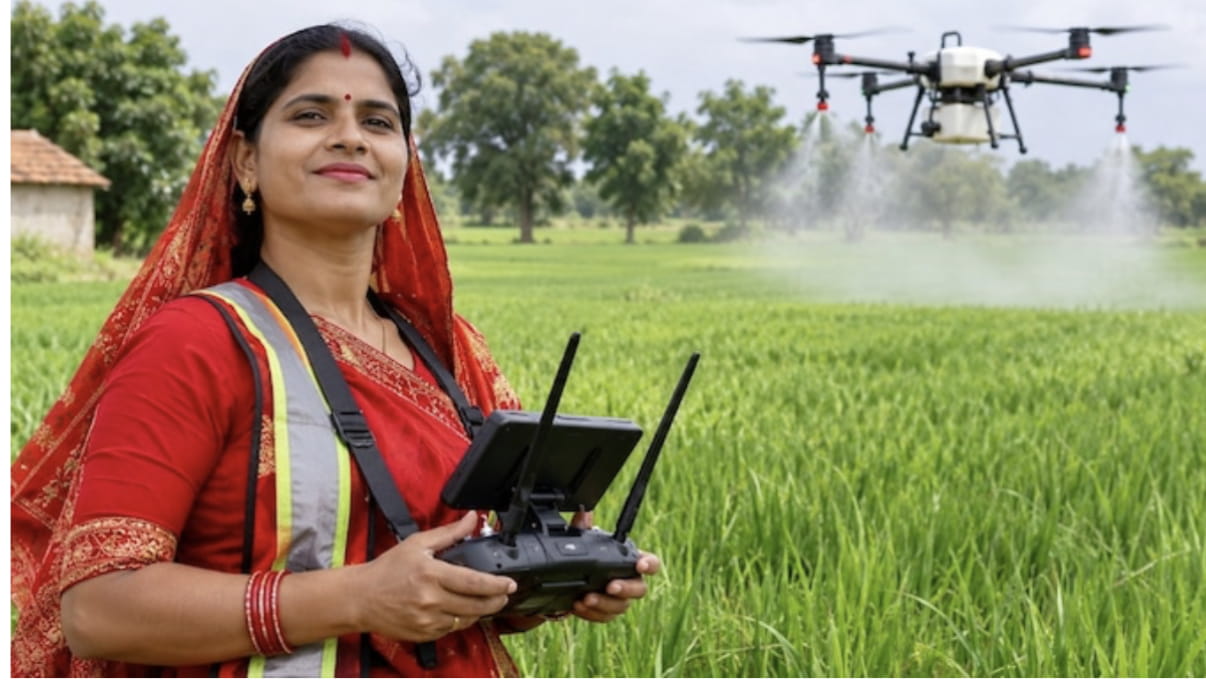
The Namo Drone Didi scheme aims to help women's self-help groups earn at least Rs 1 lakh extra annually through drone-based farming services. (AI-generated)
Sometimes, the biggest transformation brought by technology is not what it does to a profession, but what it changes in people's perception of those who practise it. Sharing the story of a woman from Jharkhand who is now popularly known as 'Pilot Bhabhi', Prime Minister Narendra Modi highlighted how the Namo Drone Didi initiative is taking modern agricultural technology into villages while giving rural women new skills, income opportunities and social recognition.
WHEN A NEW SKILL EARNS A NEW IDENTITY
Speaking at the Kisan Tak Bharat Agriculture Conference 2026 in New Delhi on November 12, the Prime Minister recalled his interaction with a woman drone operator from Jharkhand. She told him that her standing in the village had changed so significantly that people, including members of her own family, now addressed her as 'Pilot Bhabhi'.
The anecdote illustrated how women trained under the Namo Drone Didi initiative are challenging conventional perceptions about technology and women's roles in agriculture.

TECHNOLOGY TAKES ROOT IN RURAL FIELDS
Approved in November 2023 with an outlay of ₹1,261 crore, the scheme aims to equip 15,000 women-led self-help groups with agricultural drones. Selected groups receive 80% financial assistance, up to ₹8 lakh, along with pilot and assistant training. They can provide farmers rental services for spraying fertilisers and pesticides, creating an additional source of income.
BEYOND DRONES: WOMEN LEADING CHANGE
The conference also highlighted women such as Sabina Khatoon, who has trained around 80 women; Rekha Devi, who is extending drone training to local groups; and Sita Devi, whose agricultural drone services cover five districts. Kanti Devi of Uttar Pradesh is promoting natural farming and has built a network of over 500 women farmers.
THE REAL TAKE-OFF IS EMPOWERMENT
Jharkhand's 'Pilot Bhabhi' represents a larger rural transformation. Technology becomes meaningful when access to skills leads to economic independence, confidence and social acceptance. The next step must be to ensure that training translates into sustainable livelihoods, wider opportunities and lasting agency for rural women.
If you value our journalism, consider making a voluntary contribution to help us continue bringing news, stories and information to our readers.
Scan the QR code to contribute

Every contribution, big or small, is appreciated.