Administrator
23 November 2026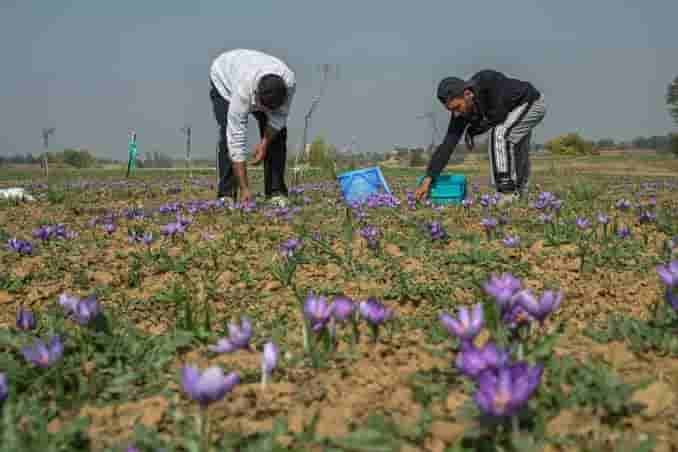
The National Green Tribunal’s intervention in Pampore has brought renewed attention to the fragile relationship between waste management, agricultural livelihoods and environmental protection.
Following allegations that municipal and plastic waste is being dumped near saffron-growing land, an expert committee has been tasked with assessing the damage and verifying whether the site meets statutory requirements.
Municipal waste dumping in Pampore—including reported dumping in Patalbagh—has damaged farmland and drawn rodents that eat underground saffron corms, alongside porcupine damage and land conversion.
EXPERT PANEL TO INSPECT THE SITE
The NGT, hearing a petition filed by environmental activist Raja Muzaffar Bhat, has constituted a joint committee comprising representatives of Sher-e-Kashmir University of Agricultural Sciences and Technology of Kashmir (SKUAST-K), the Union Environment Ministry and the Jammu and Kashmir Pollution Control Committee. The Deputy Commissioner, Pulwama, will coordinate the inspection.
The committee must examine the quantity of municipal and plastic waste dumped at the Patlibagh-Galander facility, verify the necessary permissions and environmental clearances, and assess its impact on surrounding saffron crops. It has been directed to submit its report within eight weeks.
FARMERS’ LIVELIHOODS UNDER PRESSURE
The petitioner alleges that untreated waste generates leachate that seeps into groundwater and flows towards the Jhelum, less than a kilometre away. The dumping site falls within a notified saffron-growing area protected under the Saffron Act, 2007. Rodents and porcupines attracted by the waste are also alleged to be damaging saffron corms.
A pollution control report cited in the petition refers to heaps of unsegregated waste, including biodegradable refuse and single-use plastics. Saffron cultivation has declined from 5,707 hectares in the early 2000s to 3,715 hectares by 2010, although the government says its Saffron Mission has helped stabilise the cultivated area.
PROTECTING A HERITAGE, SECURING A FUTURE
The committee’s findings must translate into accountability and corrective action wherever violations are established. Waste management cannot come at the cost of fertile land, farmers’ livelihoods or an agricultural heritage that demands protection.
If you value our journalism, consider making a voluntary contribution to help us continue bringing news, stories and information to our readers.
Scan the QR code to contribute

Every contribution, big or small, is appreciated.