Administrator
25 November 2026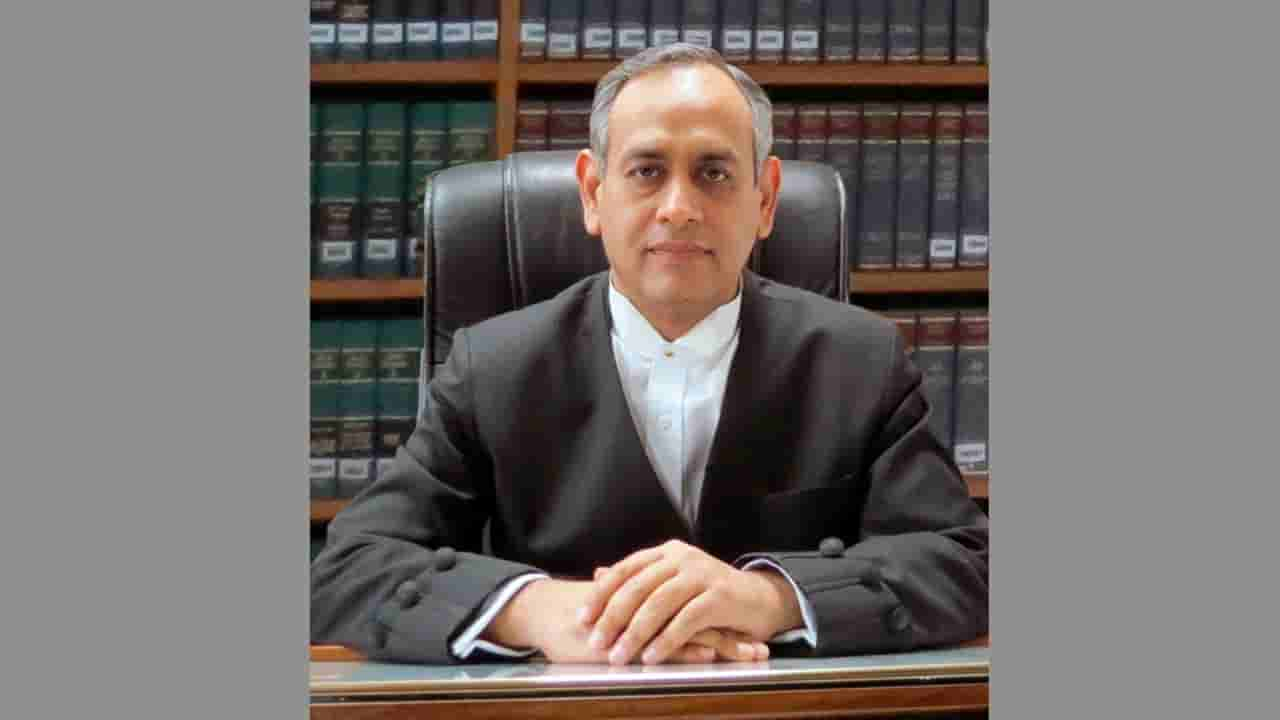
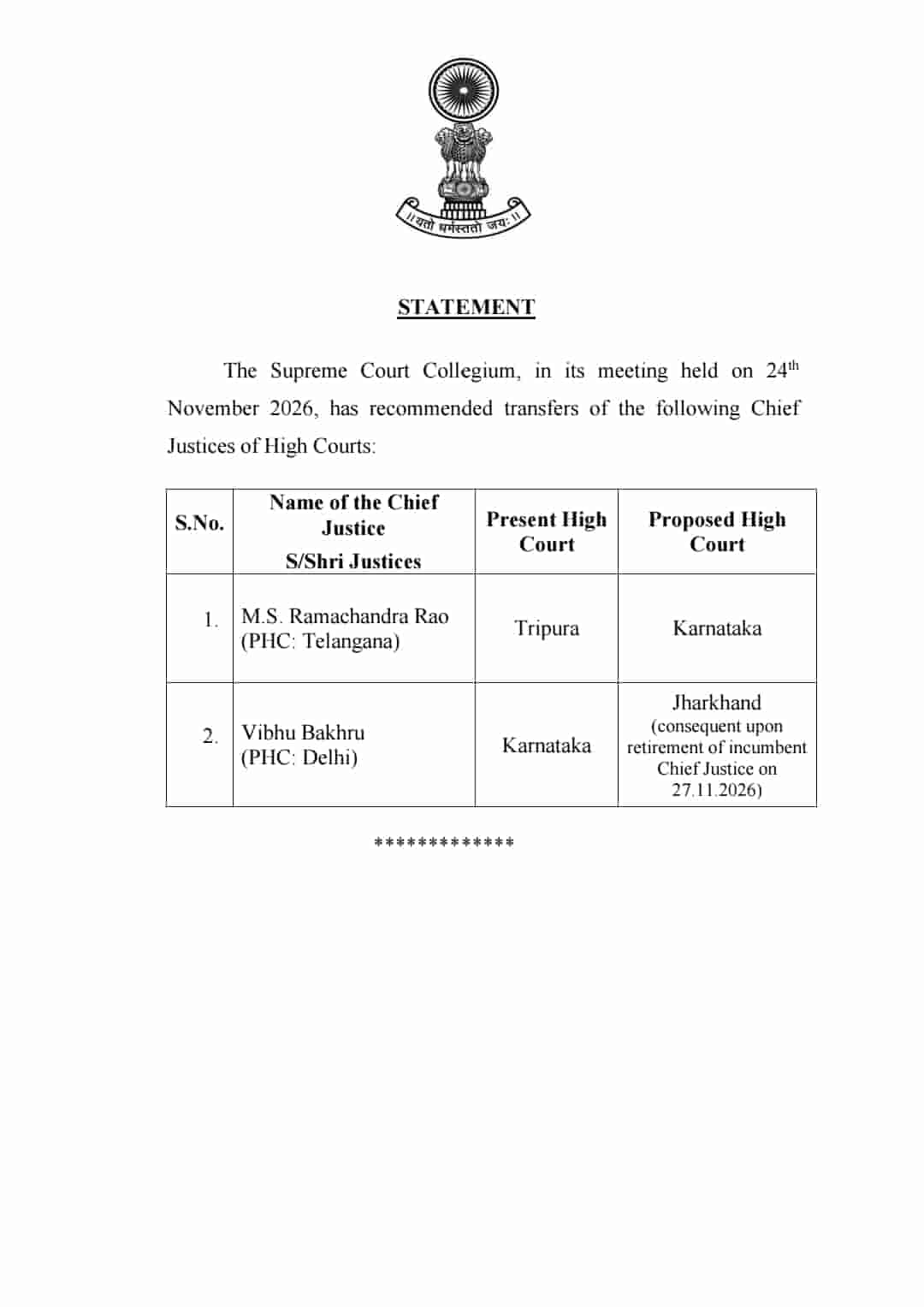
Justice Vibhu Bakhru has been recommended by the Supreme Court Collegium for transfer to the Jharkhand High Court as its next Chief Justice.
Justice Vibhu Bakhru is expected to be sworn in as Chief Justice of the High Court of Jharkhand after Justice M. S. Sonak who is currently serving as the Chief Justice of the Jharkhand High Court, retires on November 27.
On November 24, 2026, the Supreme Court Collegium recommended transferring Justice Vibhu Bakhru—currently Chief Justice of the Karnataka High Court—to the Jharkhand High Court.
The transfer is slated to follow the retirement of incumbent Chief Justice M. S. Sonak on November 27, 2026, after formal appointment procedures are completed.
Justice Vibhu Bakhru is a veteran jurist and Chartered Accountant who currently serves as the 35th Chief Justice of the Karnataka High Court.
Born on November 2, 1966, in Nagpur, he completed his schooling at Delhi Public School, Mathura Road, New Delhi.
He earned a B.Com (Honours) degree from the University of Delhi in 1987 and qualified as a Chartered Accountant from the Institute of Chartered Accountants of India in 1989.
He obtained his LL.B. degree from Law Centre-I, University of Delhi, in 1990.
He practiced before the Supreme Court of India, the Delhi High Court, the Company Law Board, and various tribunals, specializing in commercial, corporate, and arbitration matters.
He was appointed as an Additional Judge on April 17, 2013, and then became a Permanent Judge on March 18, 2015. He served in this court for over 12 years.
He served as the Acting Chief Justice of the Delhi High Court from December 5, 2024, to January 21, 2025.
He was sworn in as the Chief Justice of the Karnataka High Court on July 19, 2025.
Incidentally, Jharkhand Chief Minister Hemant Soren urged Chief Justice of India Surya Kant and the Supreme Court Collegium to swiftly appoint a successor to Jharkhand High Court Chief Justice M.S. Sonak ahead of his retirement on November 27, 2026.
In a letter dated November 12, 2026 (publicized on November 21), Soren warned that leaving the position vacant or relying on acting leadership harms administrative continuity and public trust. He highlighted that the court previously suffered a pattern of rapid turnover, featuring four Chief Justices and multiple acting tenures between late 2022 and early 2026.
If you value our journalism, consider making a voluntary contribution to help us continue bringing news, stories and information to our readers.
Scan the QR code to contribute

Every contribution, big or small, is appreciated.