
Administrator
10 June 2025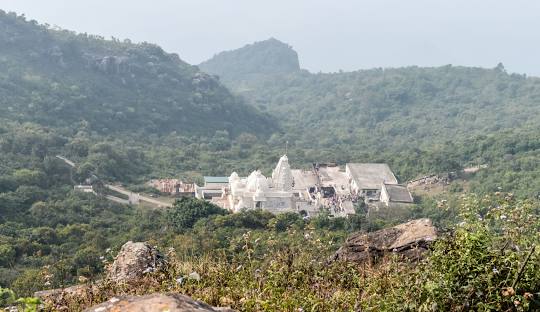
Responding to a Public Interest Litigation (“PIL”) filed by Jyot, a religious trust, the Division Bench of Chief Justice, M.S. Ramachandra Rao and Justice Deepak Roshan, directed strict enforcement of the Union of India’s Office Memorandum dated 05-01-2023 (“2023 Office Memorandum”) which recognized the sanctity of Parasnath Hill and its significance for the Jain community.
The court also directed ban on liquor, non-vegetarian food, injuries to animals and stay on tourism and eco-tourism activities on the Hill.
The PIL had sought protection of
the sanctity of the Parasnath Hill in the Giridih District of the State of Jharkhand.
Parasnath Hill holds immense religious importance for Jains. It served as a pivotal pilgrimage site. It is to Jainism what the Ram Janma Bhoomi is to Hindus,Bodh Gaya is to Buddhists, the Golden Temple is to Sikhs, Mecca is to Muslims, and the Vatican is to Catholic Christians.
For centuries, the Jains have revered the entire Parasnath Hill as the most sacred place of worship and it is considered a “Mahatirtha” by Jains.
This belief stems from the conviction that 20 of the 24 Tirthankaras and numerous Munis achieved nirvana there.
The Ministry of Environment, Forest and Climate Change by notification dated 02-08-2019 (“2019 Notification”) designated an eco-sensitive zone around Parasnath Hill. Further, it directed the Central Government and the State Government to specify other additional measures to give effect to this notification. Hence, the 2023 Office Memorandum was brought in under Section 5 of the Environment (Protection) Act, 1986, recognizing the significance and sanctity of Parasnath Hill for the Jain community and directing the State Government to take all necessary measures for the protection of the hill including the prohibition of, “(…) amongst others, activities such as the selling of liquor, drugs and other intoxicants; playing loud music or use loudspeakers; defiling sites of religious and cultural significance such as sacred monuments, lakes, rocks, caves, and shrines, damaging flora or fauna; causing environmental pollution; committing injurious acts to forests, water bodies, plants, animals, or disturbing the natural tranquility of such sites; coming with pet animals; and unauthorized camping and trekking on the Hill”.