
Administrator
25 July 2025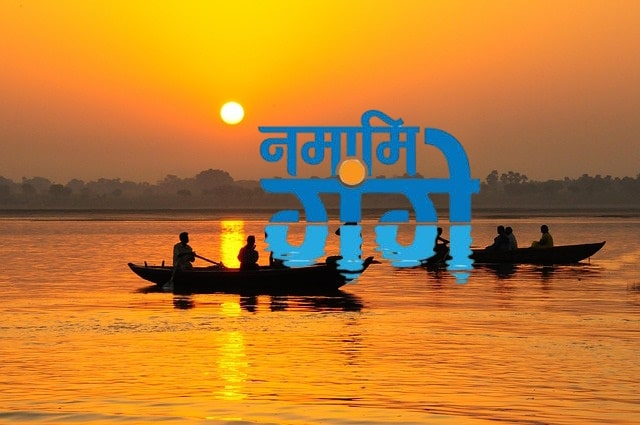
A total of 502 projects has been sanctioned under the Namami Gange Programme for the rejuvenation of the River Ganga and its tributaries.
A study of the written reply by Minister of State for Jal Shakti Sri Raj Bhushan Choudhary to a question in the Lok Sabha on Thursday( July 24,2025), revealed that out of these projects, 323 projects have been completed, 150 are currently under implementation, and 29 are at the tendering stage.
The Administrative Staff College of India (ASCI) was engaged as a Third-Party Agency (TPA) for the appraisal of the Namami Gange Mission (NGM). ASCI has observed the following in its report:
The main challenges in implementation of Namami Gange Mission are following:
In order to address and overcome these challenges, the National Mission for Clean Ganga (NMCG) has been actively involved in closely monitoring the status of the projects. NMCG regularly conducts comprehensive review meetings under the chairmanship of the competent authority and through the Central Monitoring Committee (CMC) to evaluate progress, identify potential roadblocks, and ensure timely resolutions.
Measurable outcomes of the implementation of the NGM is provided through the reports of the Central Pollution Control Board (CPCB) on pollution assessment of rivers of India. As per the report, the Priority River Stretches (PRSs) on the river Ganga, based on the assessment carried out in 2022 (using 2019 and 2021 data), are as under:
a. Uttarakhand does not fall under polluted stretches (BOD < 3 mg/l);
Further, the value of Dissolved Oxygen (DO), which is an indicator of river health, has been found to be within the acceptable limits of the notified primary bathing water quality criteria and is satisfactory to support the ecosystem of the river along almost the entire stretch of the river Ganga.
As per the biomonitoring conducted during 2024–25 at 50 locations along River Ganga and its tributaries, and 26 locations along River Yamuna and its tributaries, the Biological Water Quality (BWQ) predominantly ranged from ‘Good’ to ‘Moderate’.
The presence of diverse benthic macro-invertebrate species indicates the ecological potential of the rivers to sustain aquatic life.
Further, the population of Dolphins in the river Ganga has shown a marked increase over the past decade.
From an estimated baseline of 2,500–3,000 individuals in 2009, the population rose to approximately 3,500 in 2015 and further to around 6,327 individuals as per the nationwide survey conducted during 2021–2023.
This represents more than a twofold increase since 2009. In the Ganga basin, the 2021–2023 assessment across 17 tributaries confirmed dolphin presence in multiple rivers where they were previously unrecorded, such as the Rupnarayan, Girwa, Kauriyala, Babai, Rapti, Bagmati, Mahananda, Ken, Betwa, and Sind.