Administrator
21 April 2026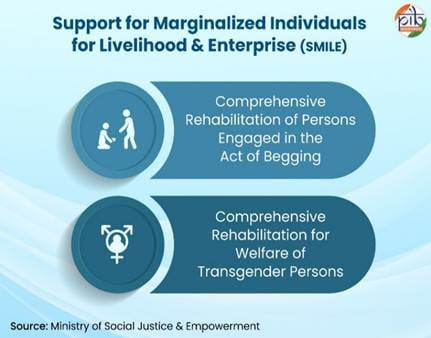
These communities are defined by the immense potential that can be unlocked through the right support and intervention.
India already has a strong ecosystem of welfare programmes — for health, housing, education, and livelihoods. What was missing was a dedicated bridge - one that could connect marginalised communities to these existing opportunities while addressing the barriers they face, such as lack of documentation, limited awareness, and restricted access.
SMILE — Support for Marginalized Individuals for Livelihood and Enterprise scheme —serves as that bridge. Launched on 12th February 2022 by the Ministry of Social Justice and Empowerment[1], it is India's first unified national framework designed to support these communities at every stage: from identification and rescue, through access to healthcare and education, to counselling, skill developmentand long-term economic independence.
The Investment Behind the Intent
The SMILE scheme has a total outlay of ₹365 crore for the period 2021–22 to 2025–26, with ₹265 crore allocated for transgender welfare and ₹100 crore for beggary rehabilitation[2]. Allocations rise progressively each year, reflecting the government’s commitment to scaling up both sub-schemes.
|
Year |
Transgender Welfare (₹ Cr) |
Beggary Rehabilitation (₹ Cr) |
Total (₹ Cr) |
|
2021–22 |
25 |
10 |
35.00 |
|
2022–23 |
46.31 |
15 |
61.31 |
|
2023–24 |
52.91 |
30 |
82.91 |
|
2024–25 |
63.90 |
33 |
96.90 |
|
2025–26 |
76.88 |
37 |
113.88 |
|
TOTAL |
265 |
125 |
390 |
Standing With India's Transgender Community

India has made significant strides in addressing the historical marginalisation of the transgender community through comprehensive legal protections, welfare schemes, and digital accessibility. This shift reflects growing awareness and efforts to promote inclusivity and equality in Indian society.
Recognising that this community deserves protection and support from the state, the Government of India enacted the Transgender Persons (Protection of Rights) Act, 2019, which prohibits discrimination and guarantees access to education, employment, healthcare, and other public services. The SMILE sub-scheme for Comprehensive Rehabilitation of Transgender Persons, is a key government initiative operationalised to align with the Act[3].
Key Components:[4]
Scholarships for Transgender Students
The scheme offers financial assistance to transgender students from Class IX through post-graduation (including secondary, higher secondary, undergraduate, postgraduate, and recognized technical/vocational courses under UGC, AICTE, or NCVT).
Eligibility requires a valid Transgender Certificate from the National Portal, full-time enrollment in a recognized institution (including approved distance/correspondence programs), and no receipt of other Central/State scholarships. It covers one academic year per class/level only (no repeated years).
Skill Development and Livelihood
PM-DAKSH (Pradhan Mantri Dakshta Aur Kushalta Sampann Hitgrahi Yojana) is a national skill development scheme providing vocational training and livelihood support to marginalized communities, including SCs, OBCs, EBCs, Safai Karamcharis, and transgender persons, to boost employability and income.
Training aligns with industry needs via National Skill Development Corporation (NSDC) and Sector Skill Councils, with entrepreneurship programs delivered by IIE and NIESBUD. It integrates with the PM-DAKSH IT platform and National Portal for Transgender Persons for transparent monitoring. On a pilot basis, 18 Entrepreneurship Development Programmes have been launched nationwide to train 1,800 transgender persons in business planning, market assessment, regulatory compliance, financial access, and linkages to incubation centers/banks.
Composite Medical Health
A comprehensive health package is provided in convergence with PM-JAY (Pradhan Mantri Jan Arogya Yojana / Ayushman Bharat), covering general healthcare as well as gender-reaffirmation procedures through empanelled hospitals.

and strict non-discrimination policies.
Garima Greh (Shelter Homes)
Piloted in 2021, Garima Greh shelter homes provide safe, dignified accommodation to transgender persons who face homelessness as a result of family rejection or social stigma. Each home offers food, medical care, recreational facilities, and on-site skill-building support, and is run by Community Based Organisations (CBOs) with financial assistance from the Department of Social Justice and Empowerment (DoSJE).
Transgender Protection Cells
Each State must establish a dedicated Transgender Protection Cell to monitor offences against transgender persons and ensure prompt registration, investigation, and prosecution of such cases. These cells act as the key enforcement mechanism for the rights under the Transgender Persons (Protection of Rights) Act, 2019, translating legal provisions into effective on-ground redressal.
National Portal and Helpline
The National Portal for Transgender Persons (transgender.dosje.gov.in) serves as the single digital gateway for issuing Transgender Certificates and Identity Cards, which are essential for accessing the SMILE scheme and other government entitlements.
All SMILE-funded Garima Grehs have been geotagged for monitoring and accountability[5].


Legislative and Policy Backbone:Other key central government interventions for transgender persons in India[6]:
Beyond Begging: The Road to Rehabilitation
The SMILE sub-scheme for Comprehensive Rehabilitation of Persons Engaged in the Act of Begging, is aimed at achieving the Government’s objective of Bhiksha Vritti Mukt Bharat (Begging-Free India) through comprehensive rehabilitation measures.

How Does the Scheme Work?
The scheme is run at multiple levels — Implementing Authorities (IAs) namely District Administration/ Urban Local Bodies/ Municipal Corporations and other agencies working in the field of beggary prevention. This ensures that help reaches people where they are, in a way that suits local needs.
What Does the Scheme Do?

The SMILE Beggary sub-scheme is currently operational in 181 selected cities across the country[7].Details of rehabilitation centres and shelter homes are collected, registered and monitored through the SMILE-Beggary National Portal.
Stories of Rescue and Rehabilitation
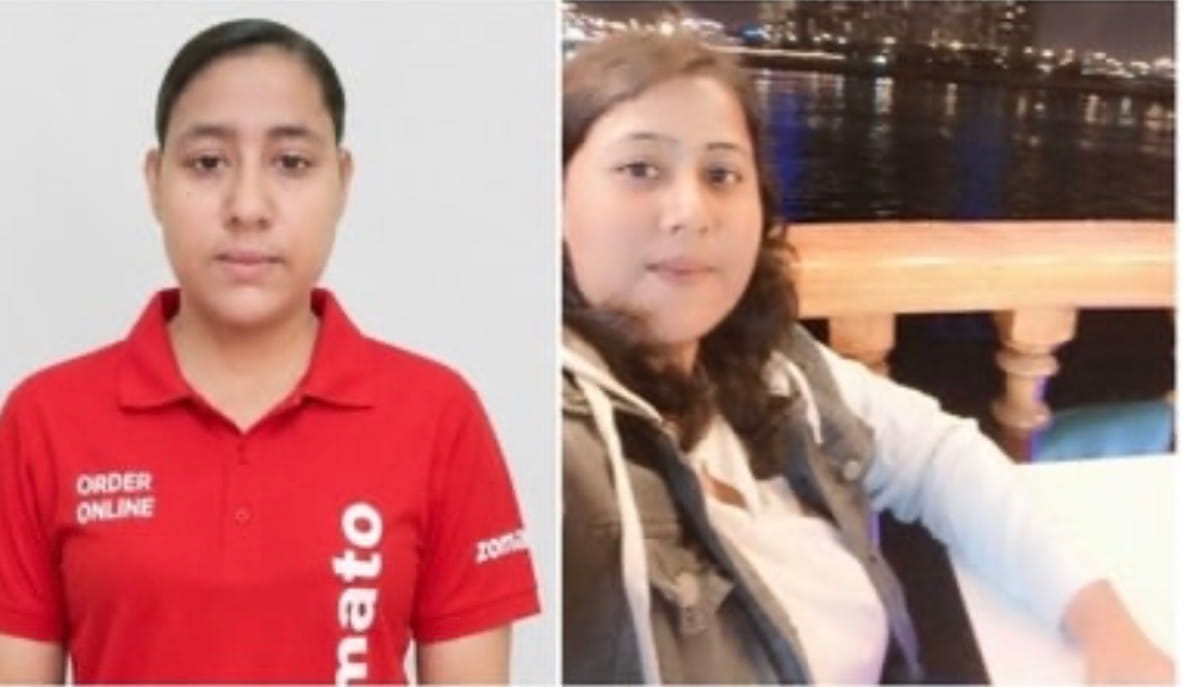
The SMILE scheme measures its progress in the number of cities covered, individuals identified, and persons rehabilitated. But behind every number is a journey — from the streets to self-sufficiency, from despair to dignity. Jyoti and Sunil are two such journeys.


The Road Ahead
SMILE represents a decisive shift in how India approaches the welfare of its most marginalised citizens — not through isolated schemes targeting single problems, but through a converged architecture that addresses identity, health, education, livelihood, and shelter in one coherent framework. The logic is deliberate: because exclusion is multi-dimensional, the response must be too.
What distinguishes SMILE from earlier welfare efforts is its insistence on structural change. Each component is designed not merely to provide relief, but to build the conditions under which relief is no longer necessary. The goal, ultimately, is not dependency on a scheme but full participation in society.
That ambition is reflected in the scheme's steadily expanding budget, its growing network of implementation partners, and the increasing number of lives it is reaching year on year. SMILE is, in the truest sense of its name, a programme built on the belief that dignity is not a privilege to be granted selectively — it is a condition that belongs to every person, without exception.
If you value our journalism, consider making a voluntary contribution to help us continue bringing news, stories and information to our readers.
Scan the QR code to contribute
Every contribution, big or small, is appreciated.