Administrator
25 April 2026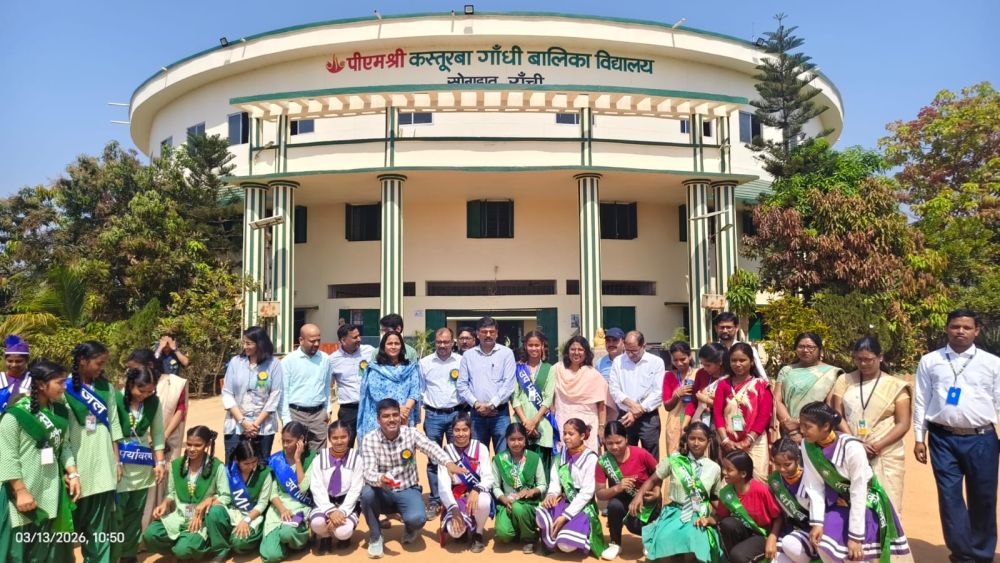
*Teachers - Students stand for a photo shot inside the green complex of the PM Shri Kasturba Gandhi Balika Vidyalaya, Sonahatu block, Ranchi district, Jharkhand
Kasturba Gandhi Balika Vidyalaya (KGBV), Sonahatu block in Ranchi district of India’s state of Jharkhand, presents a compelling case of how institutional commitment, when aligned with social purpose, can transform outcomes for girls in geographically and socio-economically challenging regions.
Situated in an elephant-affected rural belt, the school operates under conditions that would typically constrain access, continuity, and safety. Yet, its student achievements framed by competent teachers, suggest a model that not only overcomes adversity but converts it into resilience-driven excellence.
A key indicator of the school’s impact lies in its sports ecosystem, particularly in archery. Students such as Savita and Babita Kumari have not only excelled at the national level through Khelo India—securing significant financial rewards—but have also represented India internationally, winning gold medals.
This points to a structured talent identification and nurturing system, where exposure, coaching, and motivation are effectively aligned. The transition of AghaniKumari into a government role through the sports quota further demonstrates how athletic achievement is being leveraged as a pathway to economic mobility.
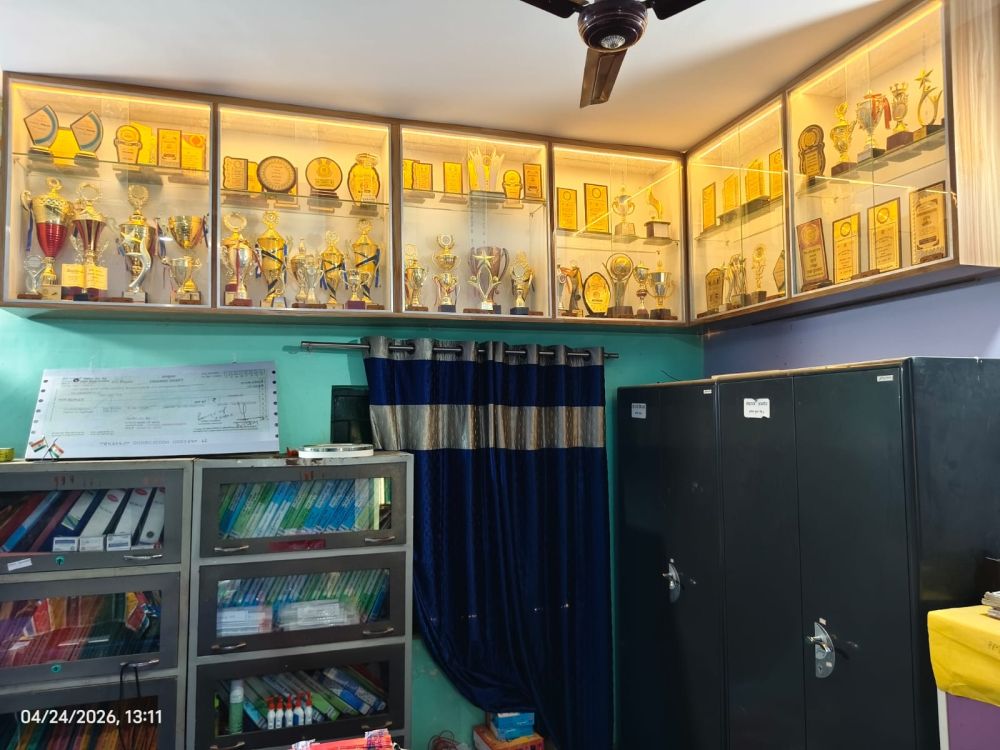
*A Room inside the PM Shri KGBV, Sonahatu, is surrounded by shelves filled with trophies, medals, and plaques, each one a testament to a students’ journey.
Beyond sports, the recognition of Savita Kumari with the National Bal Sahas Puraskar highlights the cultivation of courage, leadership, and social awareness among students. Her interaction with the Prime Minister reflects how such institutions can elevate voices from the margins to national platforms, reinforcing both aspiration and visibility.
Academically, the school’s consistency is striking. A 100% pass rate in matriculation and intermediate examinations over 14 consecutive years—predominantly with first-division results—indicates a deeply embedded culture of discipline, pedagogy, and accountability. This is not incidental success but sustained performance, likely supported by structured academic processes and close mentorship.
Equally significant is the school’s emphasis on holistic development and social reform. The prevention of approximately 20 child marriages is not just a statistic but evidence of behavioral change interventions, community engagement, and the assertion of education as a priority over entrenched social practices.
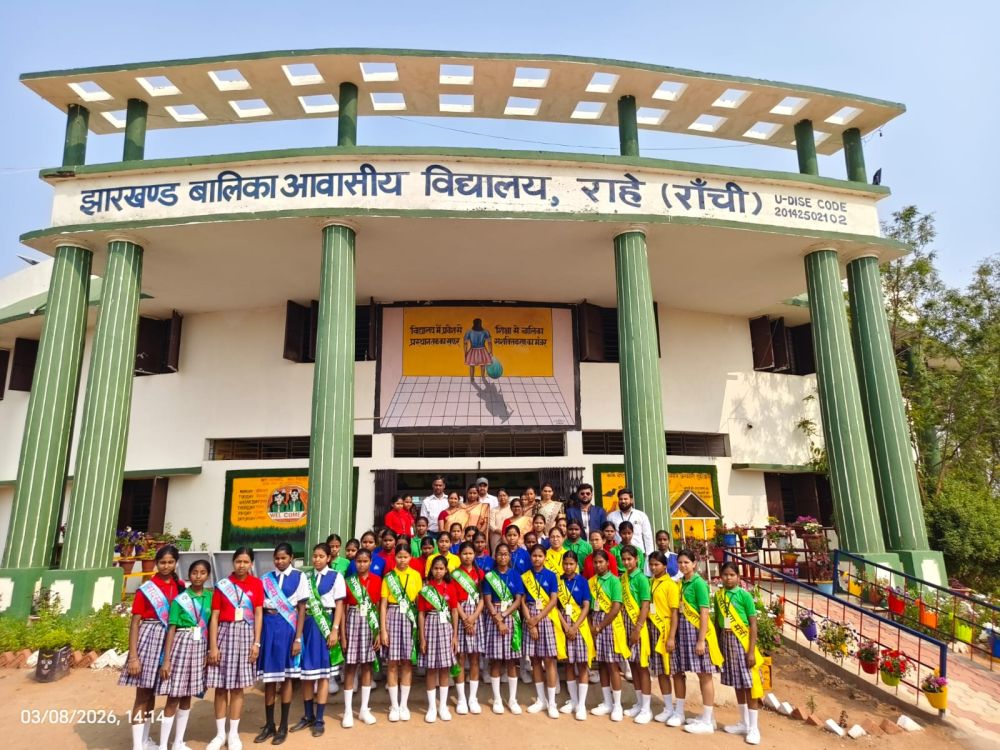
*Prize winner Pipe Band( Girls) Performers of KGBV, Sonahatu, Ranchi district of Jharkhand.
The presence of a Bal Sansad (Child Parliament), recognized even by visiting global representatives, suggests participatory governance and leadership training at the student level.
Institutional recognition further validates these outcomes. Multiple clean school awards, including national-level honors and a consistent five-star sanitation rating, reflect operational excellence and an environment conducive to learning. The recent designation as a PM SHRI school in the first phase underscores the school’s alignment with national benchmarks for quality education.
Finally, the post-school trajectories of students—over 50 engaged in government, private, and nursing professions across regions—serve as a measurable outcome of the institution’s long-term impact. These are not isolated success stories but part of a broader pattern of upward mobility.
In sum, KGBV Sonahatu exemplifies how a residential schooling model, when supported by strong leadership, community integration, and a focus on both academic and co-curricular excellence, can redefine possibilities for girls in underserved regions. Its achievements are not merely institutional milestones but indicators of systemic change.
If you value our journalism, consider making a voluntary contribution to help us continue bringing news, stories and information to our readers.
Scan the QR code to contribute

Every contribution, big or small, is appreciated.