Administrator
14 May 2026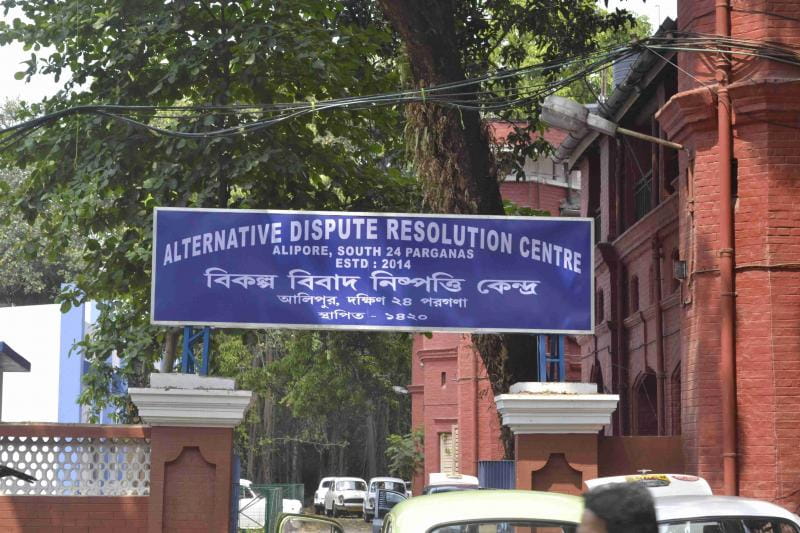
*Representational image. Picture courtesy increedalawfirm.com
Union Minister of State (Independent Charge) for Law and Justice, Shri Arjun Ram Meghwal on May 13,2026 virtually issued the first instalment of Rs 401.50 crore for Development of Infrastructure Facilities for District & Subordinate Courts”.
The fund was released for the FY 2026-27 through PFMS system to the States/UTs under the “CSS for Development of Infrastructure Facilities for District & Subordinate Courts” Scheme.
The scheme was connected with the Department of Justice, Ministry of Law and Justice, Government of India. A decision toward this end was earlier taken in a meeting held at Kartavya Bhawan-2, New Delhi.
The release of funds to States/UTs under the Scheme is part of the Department’s continuing efforts to strengthen court infrastructure of district and subordinate judiciary across the country by way of augmenting the efforts of State/UT Governments.
The representatives of the concerned High Courts and State/UT Governments attended the meeting through Video Conferencing.
Addressing the gathering, Union Minister of State (Independent Charge) for Law and Justice, Shri Arjun Ram Meghwal underscored the need and importance of adequate infrastructure for the judiciary with the vision of ‘ease of justice’.
He emphasised the motive and historic background of the Scheme focussing on making justice more accessible and citizen-centric. He also apprised all the High Courts and State/UT Governments that the sunset date for present tenure of Scheme was 31st March, 2026 and extension of the Scheme for a further period of 5 years i.e. from FY 2026-27 to 2030-31 is under process.
Considering the need for litigants/citizens, a new component namely ‘Waiting Hall for Litigants’ is also proposed to be introduced in the Scheme. For continuity, the Scheme has already been temporarily extended up to 30thSeptember, 2026 by the Ministry of Finance.
He further added that a “Judicial Infrastructure Advisory Committee” has been constituted by the Chief Justice of India on 12.05.2026 under the chairmanship of Justice Aravind Kumar, Judge, Supreme Court of India to ensure a unified infrastructural ecosystem on pan-India basis.
Delivering the welcome address, Secretary, Department of Justice, highlighted the need for development of infrastructure for district and subordinate courts across the country along with efforts being taken by Department of Justice in this direction since 1993-94.
A video was played bringing out Government of India constant endeavour to build a futuristic robust and modernised physical infrastructure for Judiciary. It further showcased the Schemes contours and the milestones achieved under it.
The video brought out that Rs. 12844.72 crore has been released since the inception of the Scheme with Rs. 9400.41 crore (73.18 %) released during last 12 years, in a prescribed fund sharing pattern, i.e. (Central: State) 60:40 for States other than North Eastern States, 90:10 for North Eastern and two Himalayan States and 100% for UTs.
This has led to construction of 6,345 Court Halls and 4,023 Residential Units till 31.03.2026 with 3,161 Court Halls and 3,245 Residential Units under construction.
Shri Meghwal also released three Action Research Reports commissioned by the Department of Justice under the non-Scheme for Action Research and Studies on Judicial Reforms. The objectives of the scheme are to promote research and studies on the issues related to the National Mission for Justice Delivery and Legal Reforms for which financial assistance of up to Rs.25.00 lakhs is provided by the Department of Justice
Shri Meghwal also released three e-books on North East documenting customary laws of tribal communities from the North-Eastern region of India.
The publications, developed in collaboration with the Law Research Institute of the Gauhati High Court, document the customary legal practices of communities such as the Hrangkhol and Biate of Assam and the Hajong of Assam and Meghalaya.
The initiative aims to preserve indigenous legal traditions and contribute towards strengthening legal literacy, documentation of indigenous justice mechanisms and wider public access to region-specific legal and cultural knowledge through digital and institutional platforms.
*Authored by Samrat/Pranab
If you value our journalism, consider making a voluntary contribution to help us continue bringing news, stories and information to our readers.
Scan the QR code to contribute

Every contribution, big or small, is appreciated.