Administrator
12 June 2026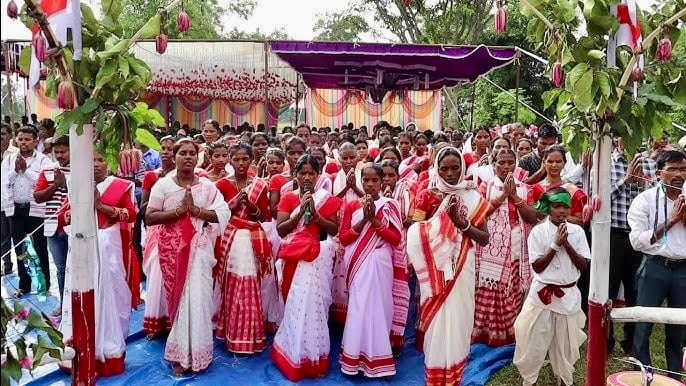
*Representational image
First, significant reality is more girls are staying in schools and entering higher education today. Financial inclusion seems to have expanded women’s access to banking and credit, strengthening livelihoods and economic independence. And better access to health, nutrition, sanitation, and clean cooking fuel has improved dignity and quality of life, investigation revealed.
Data accessed by JharkhandStateNews revealed that wimen are also becoming more visible in public and political spaces. Their participation in local governance, community institutions, and decision-making processes continues to grow.
Consider this.
Dignity at Birth: Protection and Early Childhood Care
Care at birth shapes the foundation of a child’s life and a mother’s well-being. Over the years, India has strengthened maternal and early childhood care through a combination of health services, nutrition support, and institutional delivery systems.
Beti Bachao Beti Padhao: A Decade of Empowering India's Daughters


Launched on 22nd January 2015, the scheme is an initiative of the Government. It aims to address the declining child sex ratio, prevent gender-biased sex selection, and promote the survival, protection, and education of the girl child.
The initiative focuses on improving institutional deliveries, increasing enrolment of girls in secondary education, reducing dropout rates, and strengthening antenatal care registration. It also promotes awareness on safe menstrual hygiene and management. The scheme has evolved into a national movement for girl child empowerment, focusing on mindset change and gender equality.
The scheme integrates strict enforcement of the PCPNDT (Pre-Conception and Pre-Natal Diagnostic Techniques) Act with sustained mass awareness efforts to challenge gender-biased social norms and drive behavioural change.The National Family Health Survey-5 (NFHS-5) marked a significant demographic shift in the sex ratio, recording 1,020 women up from 943 (Census 2011) for every 1,000 men in India’s population.
Pradhan Mantri Matru Vandana Yojana (PMMVY)
Recognising the importance of maternal health and early childhood care, PMMVY was introduced in 2017. It is a maternity benefit scheme to support pregnant and lactating women.
Under the scheme, women receive ₹5,000 in two instalments for the first living child and ₹6,000 for the second child (girl child only). Payments are linked to key health milestones such as early registration, antenatal care, and immunisation.
Direct Benefit Transfers ensure timely support, with provisions for fresh eligibility in cases of miscarriage/stillbirth. The assistance also acts as partial wage compensation. This helps improve maternal well-being, promotes institutional care, and advances gender equity.
Key reach and coverage:
|
Rakchi Sangma’s Journey to Safe Motherhood Rakchi N. Sangma is a homemaker and small farmer in Meghalaya’s Belpara village in North Garo Hills, barely managing to support her family. Things got more difficult during pregnancy with financial constraints and limited access to healthcare. She sought support under the PMMVY scheme and got much needed relief at the right time. The financial assistance enabled her to access nutritious food, regular antenatal check-ups, and essential medical care without additional financial burden. With proper care and continuous monitoring, Rakchi safely delivered a healthy baby at a healthcare institution |
Pradhan Mantri Surakshit Matritva Abhiyan (PMSMA)
For pregnant women, timely medical care can make a noticeable difference between a safe, healthy pregnancy and one with serious health risks. Launched in 2016, PMSMA addresses this need by providing free and quality antenatal check-ups at government health facilities on the 9th of every month. The initiative focuses especially on women in the second and third trimesters. This enables early identification and management of high-risk pregnancies.
Key reach and coverage:

Janani Suraksha Yojana (JSY)
Janani Suraksha Yojana provides conditional cash assistance and community outreach under the National Health Mission. The scheme encourages facility-based deliveries among poor pregnant women, particularly those from BPL households and SC/ST communities, while ASHA workers help connect beneficiaries to healthcare services. Together, these efforts have increased institutional deliveries, improved access to maternal healthcare, and reduced risks associated with home deliveries.
Janani Shishu Suraksha Karyakram (JSSK)
In 2014, the JSSK was extended to all antenatal & post-natal complications of pregnancy. Similar entitlements have been put in place for all sick newborns and infants (up to one year of age) accessing public health institutions for treatment. The key achievements of the programme are:
These investments show up in outcomes:
Education, Skills and Aspirational Growth
Since 2014, girls’ education has moved beyond basic access. The focus now is on continuity, progression, and meaningful outcomes across stages. More girls are staying in school, moving into higher education and acquiring valuable skills.
This transition is anchored in the National Education Policy (NEP) 2020. The policy addresses structural barriers that earlier limited girls’ educational journeys. Gender inclusion is embedded as a core principle across the education system.
School & Foundational Education
Samagra Shiksha and Kasturba Gandhi Balika Vidyalayas
Launched in 2018–19, Samagra Shiksha adopts a holistic approach to school education. It integrates learning from pre-primary to Class XII under one comprehensive framework. The scheme has strengthened access, infrastructure, digital learning, and student retention across the school system.
For girls, these improvements are especially important. Nearby schools, functional toilets, safe classrooms, trained teachers, and residential support all influence whether girls’ education continues beyond the early years.
School conditions today are far more supportive for girls. In 2024–25:

Continuity in schooling has also improved over time. Dropout rates have declined significantly across primary and secondary levels.
Within this strengthened system, Kasturba Gandhi Balika Vidyalayas (KGBVs) provide targeted support for girls who require residential schooling. They are part of the Samagra Shiksha framework and focus on girls from socio-economically disadvantaged groups such as SCs, STs, OBCs and others—especially in educationally backward blocks. Covering classes VI–XII, these residential schools provide a supportive environment for girls to learn and progress from elementary to higher secondary education.
The scale and reach of KGBVs are significant:
If you value our journalism, consider making a voluntary contribution to help us continue bringing news, stories and information to our readers.
Scan the QR code to contribute
Every contribution, big or small, is appreciated.