Administrator
17 June 2026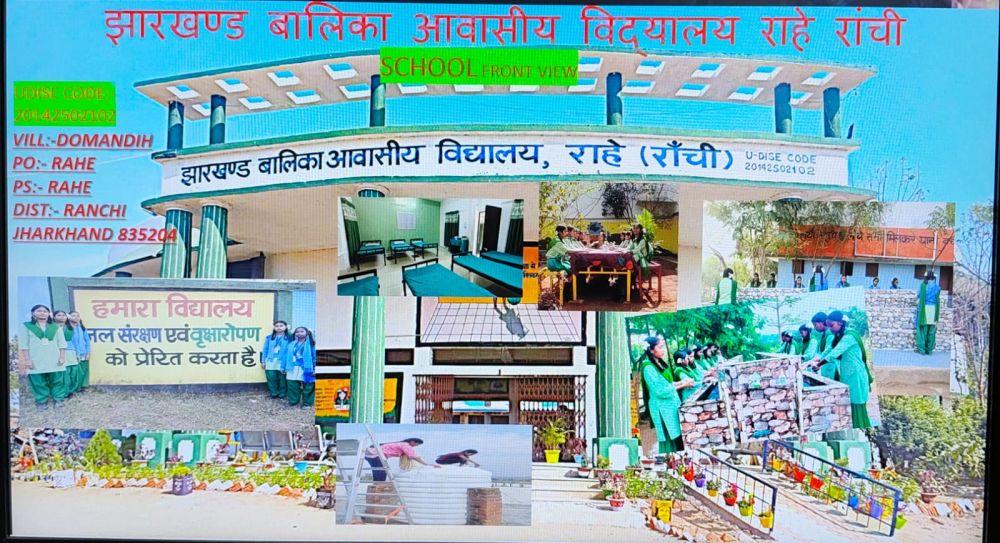
Great transformations rarely begin with grand resources. Sometimes, they begin with a simple decision: to change.
In the remote tribal village of Domandih, Rahe Block, Ranchi district, Jharkhand Balika Awasiya Vidyalaya (JBAV) set out to solve everyday challenges that many schools accept as routine—scattered waste, limited greenery, poor environmental awareness, water wastage, and inconsistent hygiene practices.
What followed was a remarkable journey that culminated in the school achieving Rank 1 in India in the Swachh Evam Harit Vidyalaya Rating (SHVR) 2025–26, securing an exceptional 99.20% score among thousands of governments and private schools from across the country.
The transformation was rooted not in infrastructure alone, but in participation. Led by Warden Bimla Kumari, with the support of former Warden Parameshwari Kumari, teachers, students, and the School Management Committee, the school embraced a shared vision of cleanliness, sustainability, and responsibility.
At the heart of the change was student leadership.
Through monthly meetings of the Bal Sansad, Jal Sena, and Eco Club, students became active custodians of their environment. They learned the principles of the 5Rs, promoted plastic-free practices, created seed banks, nurtured medicinal gardens, and practised segregation of dry, wet, electronic, and menstrual waste. Environmental awareness was no longer a lesson—it became a way of life.
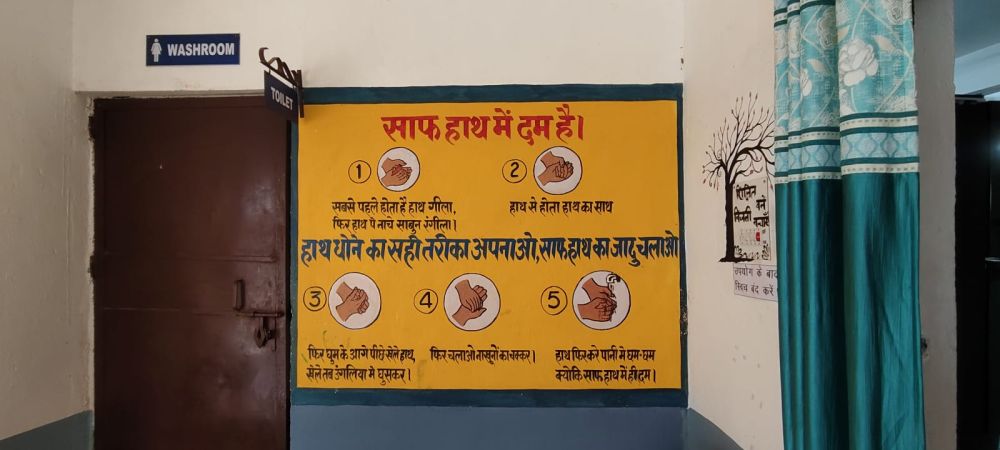
The school introduced a structured cleanliness action plan covering classrooms, hostels, bathrooms, and common spaces. Checklists ensured regular maintenance and the availability of soap, cleaning agents, towels, sanitary pads, and other essentials. Hygiene practices such as handwashing before meals, personal cleanliness, and responsible waste disposal became daily habits reinforced by both teachers and students.
Equally significant was the school’s commitment to creating inclusive and sustainable infrastructure. The campus now features 24-hour running water, dedicated facilities for children with special needs, separate bins for different waste streams, and handwashing stations designed according to students’ height. Student teams and teachers regularly monitor these facilities, ensuring that standards are maintained consistently.
Water conservation became another defining pillar of the school’s journey. Rainwater harvesting systems, soak pits, aerated taps, push-tap handwashing units, drip irrigation for the kitchen garden, water storage tanks, overflow collection systems, and awareness campaigns together created a culture of responsible water use. These efforts now help conserve approximately 205,000 litres of water annually.
Meanwhile, the campus itself underwent a visible transformation. Trees and plants replaced barren spaces. Educational murals brightened walls. A flourishing kitchen garden added greenery and purpose. Composting converted organic waste into manure, while energy-saving practices helped reduce electricity consumption. What was once an ordinary campus evolved into a living model of sustainability.
The impact extended far beyond physical improvements. Students became more disciplined, confident, and collaborative. Participation in cleanliness drives, plantation activities, sports, and cultural programmes strengthened teamwork and leadership. Parents, teachers, and community members worked together to improve attendance, facilities, and the overall learning environment.
The school’s achievement was formally recognised by the Department of School Education and Literacy, Ministry of Education, Government of India. Under SHVR 2025–26, the school received a National Certificate of Merit, an additional grant of ₹2 lakh to strengthen clean and green initiatives, and an educational exposure visit for its leadership.
Today, Jharkhand Balika Awasiya Vidyalaya stands as proof that excellence is not defined by geography. In a remote corner of Jharkhand, 350 girls, guided by committed educators and a determined community, built something larger than a clean campus. They built a culture.
And that culture earned 99.20%. More importantly, it created a blueprint for what every school can become when ownership, leadership, and purpose grow together.
If you value our journalism, consider making a voluntary contribution to help us continue bringing news, stories and information to our readers.
Scan the QR code to contribute

Every contribution, big or small, is appreciated.