Administrator
04 August 2026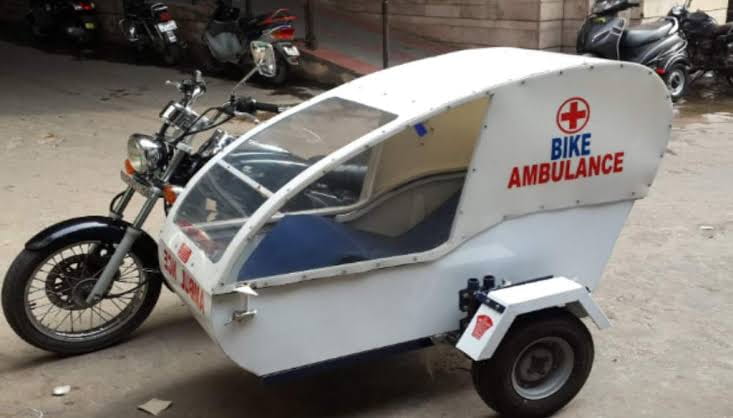
Representational Pic
Two-wheeled road ambulances can support rapid emergency response and last-mile access to medical care, in rural and remote locations as well as hilly terrain.
The Ministry of Road Transport and Highways has issued a draft notification proposing amendments to the Central Motor Vehicles Rules, 1989, to establish a regulatory framework for two-wheeled road ambulances.
At present, two-wheeled road ambulances are not regulated as a distinct vehicle category under the Central Motor Vehicles Rules. Consequently, there are no national requirements governing their construction, functional safety, patient-handling systems, type approval, registration and fitness inspection. The proposed amendments seek to address these gaps through the adoption of AIS-209 (Part 1):2026 – Construction and Functional Requirements for Life Support Two-Wheeled Road Ambulances.
Safety and functional framework: AIS-209 (Part 1):2026 defines a two-wheeled road ambulance as an L2-category vehicle fitted or attached with an ambulance accessory unit or patient-conveyance system. The standard provides for key construction and functional safeguards, including vehicle stability and braking performance, parking brake and gradeability requirements, rear visibility, coupling integrity, emergency conspicuity and warning devices, and safe patient loading, restraint and protection from environmental exposure.
The proposed framework is expected to bring greater safety and accountability to the design and operation of two-wheeled road ambulances. It will also support faster emergency response and improve access to emergency medical care in locations where conventional ambulances may encounter mobility or access constraints.
The comments on the draft rules will be examined after the expiry of 30 days from the date of the draft notification and thereafter the Rules under the Central Motor Vehicles Rules, 1989 (CMVR 1989)shall be finalized.
If you value our journalism, consider making a voluntary contribution to help us continue bringing news, stories and information to our readers.
Scan the QR code to contribute

Every contribution, big or small, is appreciated.