Administrator
22 June 2026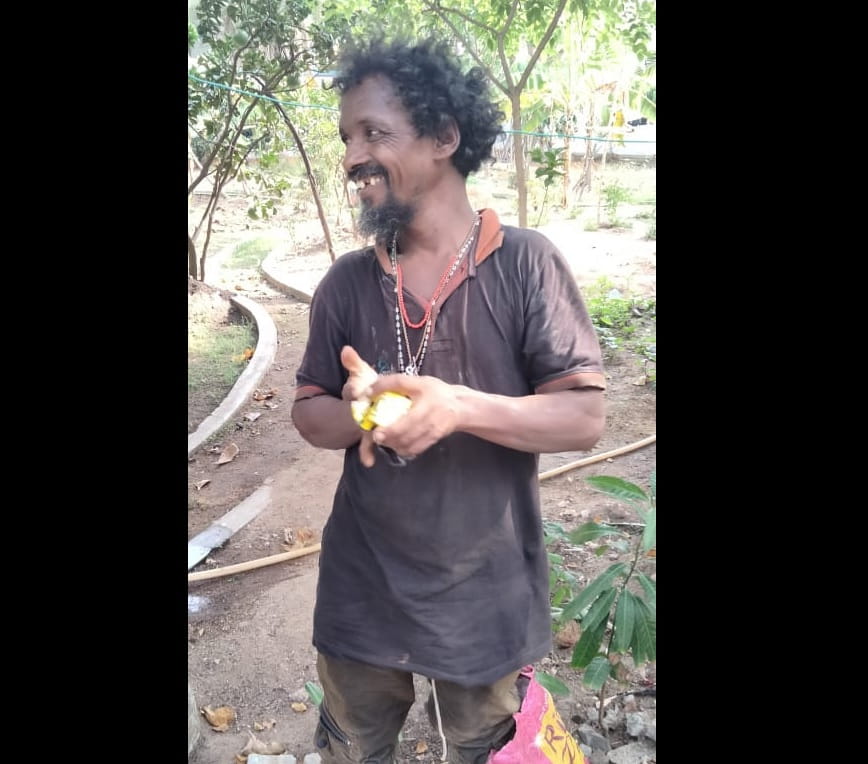
*Ramesh Ganjhu
Imagine living in the same bustling city as your long-lost father, separated by just a few kilometers, yet completely unaware of his existence for years.
This extraordinary coincidence became a reality for Nageshwar Gangu, culminating in an emotional reunion that proves technology’s greatest power lies not in entertainment but in human compassion.
The story began sixteen years ago in Benti, a small village in Jharkhand’s Chatra district. Following a minor family disagreement, Ramesh Ganzu walked away from his home. His wife, Munna Devi, and their two young sons, including Nageshwar, searched tirelessly, but Ramesh had vanished without a trace. Over the years, hope began to fade.
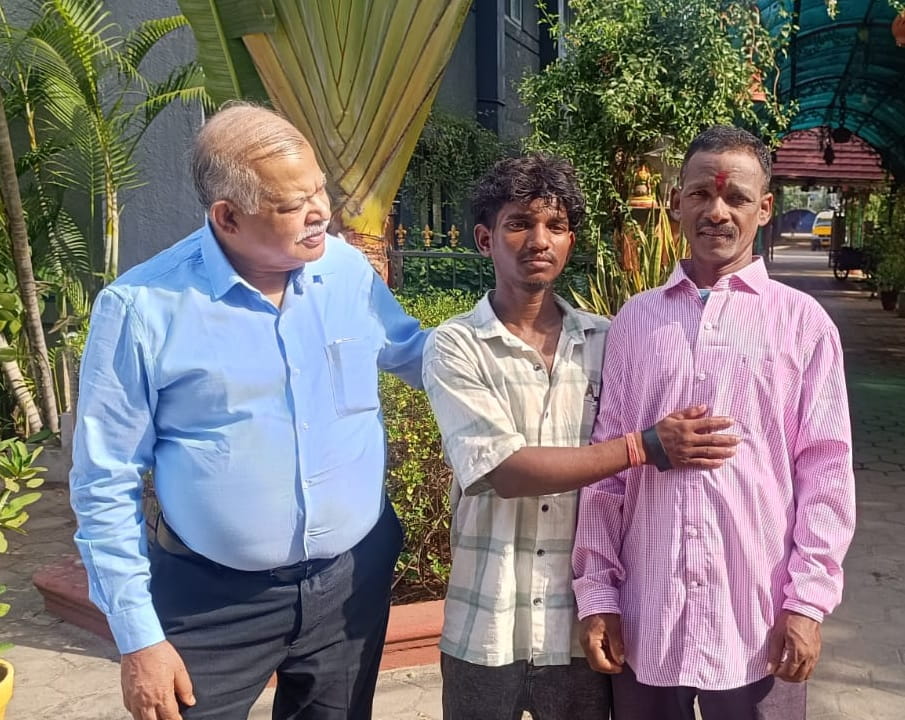
*Rescuers
Unbeknownst to his family, Ramesh had developed a severe mental illness alongside substance dependence. He wandered homeless across various cities, eventually becoming one of the thousands of invisible, destitute faces on the streets of Chennai.
His fate changed when three compassionate social workers from Udavum Karangal—a Chennai-based humanitarian organization founded by Shri S. Vidyaakar—spotted him in Poonamallee. Looking past his disheveled appearance, Mr.Mohan, Mr. Jacob, and Mr. Srinivasa Rao rescued Ramesh and admitted him to their psychiatric rehabilitation center.
Slowly, under dedicated medical care, the fog in Ramesh’s mind began to clear, and fragments of his past resurfaced. Piecing together his scattered memories, the social workers identified his roots in Jharkhand. They circulated his photograph and details across a sprawling interstate network of volunteer WhatsApp groups.
The digital message travelled hundreds of kilometers, eventually landing in a small provision store in Kalyanpur, Jharkhand. The shopkeeper recognized the family and immediately informed Munna Devi. Overjoyed and in disbelief, she contacted her elder son, Nageshwar.
In an unbelievable twist of fate, Nageshwar was working on the outskirts of Chennai. Within hours, digital communication achieved what sixteen years of painful uncertainty could not. Father and son were reunited.
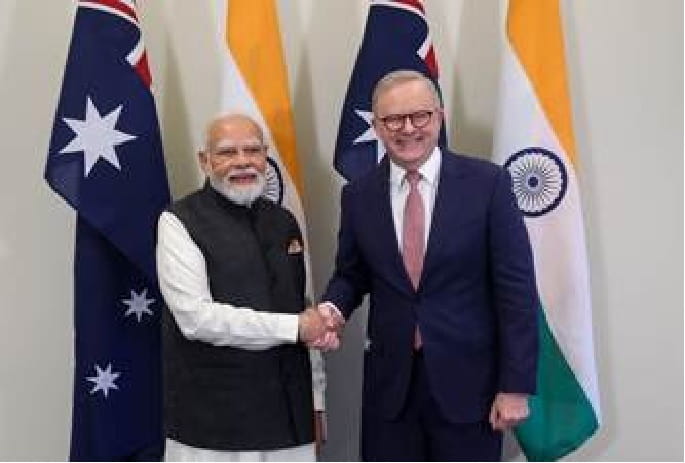
This heartwarming reunion on June 21, 2026 beautifully mirrors Prime Minister Narendra Modi’s recent vision shared at global forums like the AI Action Summit in Paris. He emphasized that for India, AI must stand for "All Inclusive Intelligence"—technology that reaches the very last person in society, protects human dignity, and serves the public good.
Today, much of our digital creativity is consumed by viral reels, online trolling, and fleeting entertainment. But Ramesh’s story serves as a powerful reminder that technology itself is neutral; it is up to society to determine whether it becomes a distraction or an instrument of deep transformation.
If the same digital skills used for social media trends were channeled into locating missing children, tracing abandoned senior citizens, or supporting disaster relief, the true spirit of "All Inclusive Intelligence" would be realized. When technology joins hands with empathy, it doesn't just connect devices—it reconnects broken lives.
---------------------------------------------------------------------------------------------------------
*Source of inputs: Salute to Angels who have been compassionate social workers from Udamum Karangal, a philanthropic organisation based out of Chennai, India. The organisation does service, taking care of orphans and other needy people, helping them in all forms of development. The founder of the organisation is Mr. Vidyaakar.
*The homecoming to a remote village, Benti in Jharkhand’s Chatra district, by Ramesh Ganjhu after almost 16 years of disappearance was confirmed by his wife Munna Devi.
Editor
If you value our journalism, consider making a voluntary contribution to help us continue bringing news, stories and information to our readers.
Scan the QR code to contribute

Every contribution, big or small, is appreciated.