Administrator
10 July 2026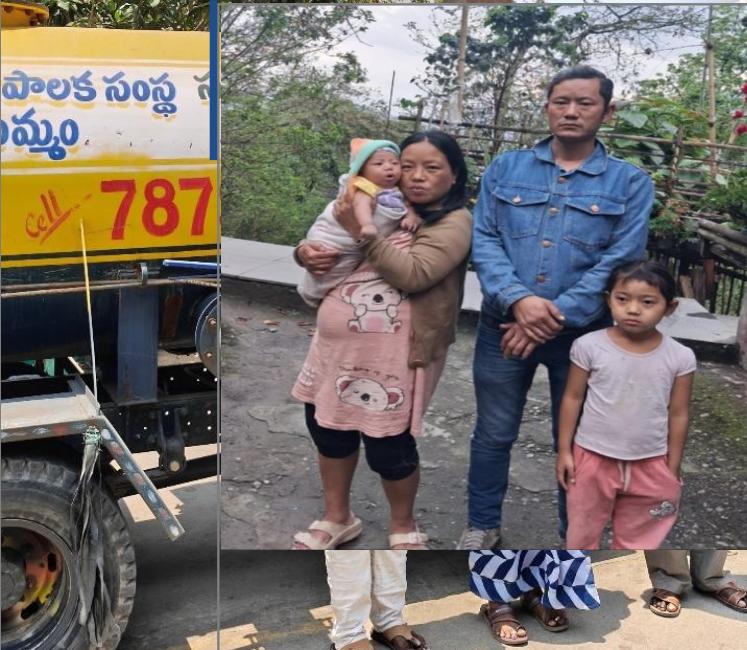
In a significant stride towards transforming the lives of urban sanitation workers, the NAMASTE scheme has reached more than 90,000 septic tank cleaning workers and over 2,50,000 waste pickers across the country.
The scheme offers a comprehensive package of support, including worker profiling, health coverage under PM-JAY, occupational safety training, provision of personal protective equipment and safety devices, and access to capital subsidy for sanitation vehicle loans.
One of the most notable achievements under NAMASTE has been the creation of India’s first-ever large-scale digital database of sanitation workers across urban India through building the capacity of 4800+ ULBs and parastatal agency functionaries.
For a workforce that has historically remained invisible within official systems, digital profiling and validation by ULBs, including Aadhaar authentication, has become the foundation for recognition, inclusion, and streamlined access to social entitlements.
Narratives of Change: Transition from Manhole to Machine Hole
This section brings together lived experiences and stories of resilience, dignity, and transformation emerging through the implementation of the NAMASTE scheme across India. They highlight how sanitation workers and their families are moving away from hazardous work towards safer livelihoods, improved social security, and greater economic independence.
“Manual cleaning of sewer and septic tanks was affecting our dignity and recognition. We wanted our children to have a better future. Today, my son drives the vehicle, and we no longer depend on unsafe work. Our work is now respected, our income is stable, and we feel proud of the change in our lives.”- Shakuntala Devi
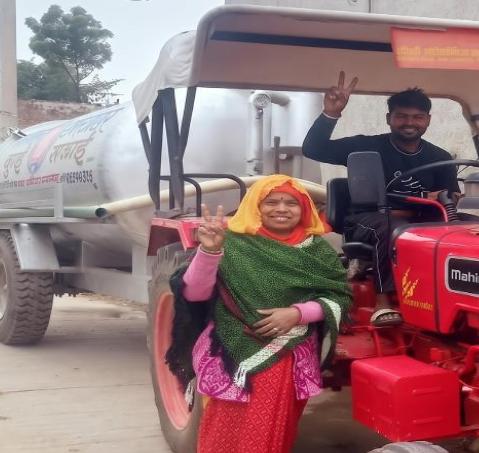
For years, Shakuntala Devi and her husband in Ratangarh, Rajasthan, were engaged in manual cleaning of sewer and septic tank through a private contractor, continuing an occupation inherited across generations.
With limited education and no access to safety equipment or social security, the family earned barely ₹ 15,000 per month. Despite these hardships, they were determined that their children would not continue in the same occupation.
Their journey began to change after being identified under the Shakuntala Devi and her son with Jetting Machine NAMASTE scheme, which provided an opportunity for the family to access capital subsidy and concessional loans.
With procurement of desludging machine and access to training, Shakuntala Devi’s elder son now independently operates sanitation vehicle using safe and modern methods, leading to not only assured but an increase in monthly income due to desludging services delivered through the procured machine.
The family has successfully transitioned towards manhole to machine-hole, running a dignified sanitation enterprise, improving their financial stability, reducing occupational health risks, and enhancing their social standing within the community.
For Sakuntala Devi and her family, the support under NAMASTE has not only increased their income. It has restored dignity to their work and ensured that the next generation will never have to undertake hazardous cleaning.
In Khammam, Telangana, Shivaratri Ramana, Shivaratri Gopi, and Shivaratri Mahesh were engaged in sewer and septic tank cleaning under informal and hazardous conditions, surviving on highly irregular earnings of around
₹8,000-12,000 per month.
Their livelihoods depended on physically demanding labour that exposed them daily to unsafe environments, with little access to protective equipment, social protection, or stable work opportunities.
Their transition began when they formed a common interest group and received support under the Swachhta
Udyami Yojana to procure a mechanized desludging vehicle and formally provide sanitation services through the Urban Local Body under a long-term desludging contract. Today, the enterprise generates a monthly net revenue of nearly ₹70,000 after expenses and loan repayments.
Moreover, the intervention has reduced their direct exposure to hazardous sanitation work. They now feel stability in their lives and are now more confident about their future, with safer working conditions, dignified livelihoods, and a renewed sense of security for their families.
Gopi, Ramana and Mahesh with desludging vehicle the enterprise generates a monthly net revenue of nearly ₹70,000 after expenses and loan repayments. Moreover, the intervention has reduced their direct exposure to hazardous sanitation work. They now feel stability in their lives and are now more confident about their future, with safer working conditions, dignified livelihoods, and a renewed sense of security for their families.
The story of Ramana, Gopi, and Mahesh is a powerful reminder that with the right support, sanitation workers can move from the margins to the mainstream, transitioning from hazardous, informal labour to dignified, stable livelihoods.
A Lifeline in Times of Medical Emergency: Impact of PMJAY coverage
For Nim Dorjee Bhutia, sanitation work was not just a job but the only means of supporting his family that depended entirely on his modest income of around ₹10,000 per month. Working in sewer line cleaning and maintenance in Gangtok, Sikkim, he routinely faced dangerous conditions, including exposure to toxic waste, heavy machinery, and unsafe work environments.
As the sole earning member caring for his elderly parents, wife, and children, even a temporary disruption in income could place the family in severe financial distress.
His life changed after being profiled under the NAMASTE scheme and enrolled in Ayushman Bharat PM-JAY, a critical entitlement under the scheme designed to provide financial safety net during medical emergencies. Shortly afterwards, a serious accident at work left his hand severely injured and required immediate surgery and prolonged hospitalization.
Nim Dorjee Bhutia with his family
For a family with limited savings and growing responsibilities, the medical expenses could have been devastating. However, the entire treatment of more than Rs. 1 lakh was covered under the scheme, allowing Nim Dorjee to recover without falling into debt. The experience brought more than financial relief, it gave the family a sense of security they had never experienced before and strengthened their trust that institutional support systems could genuinely stand beside sanitation workers in times of crisis.
Nim Dorjee's story is a stark reminder that for sanitation workers, the absence of social protection is a crisis waiting to happen. When support reached him in time, it didn't just cover a medical bill, it protected a family's future.
Way Forward
The scheme is now expanding its coverage to include additional hazardous job roles such as drain cleaners and FSTP/STP workers, while also extending implementation into rural areas. This expansion reflects the vision of ensuring that sanitation workers across the country irrespective of geography or role are recognized, protected, and supported.
The long-term vision of NAMASTE extends beyond being a welfare scheme to building a fully mechanized, accountable, and inclusive sanitation ecosystem where hazardous manual work is eliminated at its roots.
Achieving this vision will require sanitation workers who are visible, skilled, protected, and empowered; Urban and Rural Local Bodies that take responsibility for all sanitation workers within their jurisdictions; regulated and well-equipped private operators; and, equally important, a societal shift that recognizes and respects the dignity of sanitation work.
*The author, Shri Sudhansh Pant (IAS) is Secretary, Department of Social Justice & Empowerment, Ministry of Social Justice & Empowerment
If you value our journalism, consider making a voluntary contribution to help us continue bringing news, stories and information to our readers.
Scan the QR code to contribute

Every contribution, big or small, is appreciated.