Administrator
15 July 2026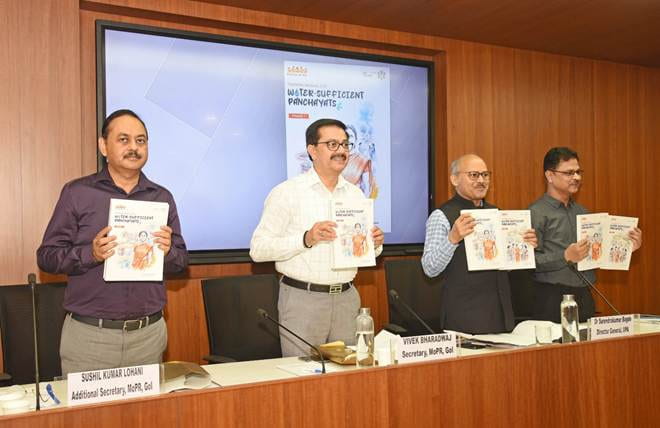
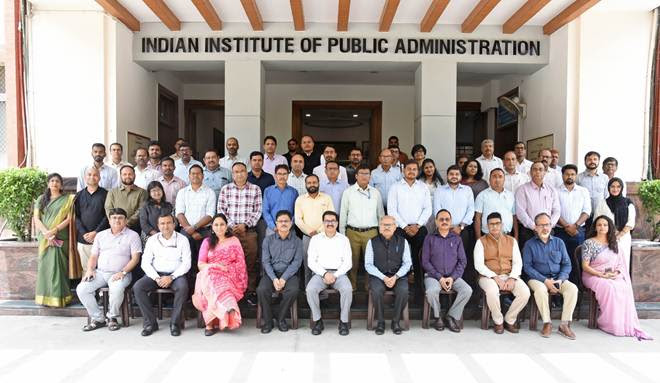
The Ministry of Panchayati Raj (MoPR) is organising the first National Level Training of Master Trainers on Water Budgeting and Water Security Planning by Gram Panchayats.
It is a four-day residential program from 13th to 16th July 2026 in New Delhi. The program marks the beginning of a nationwide capacity-building initiative to develop a pool of Master Trainers at the State, District and Block levels.
These trainers will support Gram Panchayats in preparing technically sound, evidence-based and community-driven Water Security Plans.
The initiative aims to strengthen the capacity of Gram Panchayats to prepare Water Security Plans through water budgeting, advancing the vision of 'Water Sufficient Gram Panchayats'.
On this occasion, the Ministry also released the Water Sufficient Panchayats Training Manual (Phase 1 and Phase 2), a practical guide to help Gram Panchayats prepare participatory, scientifically informed and climate-responsive Water Security Plans.
Delivering the keynote address, Shri Vivek Bharadwaj, Secretary, MoPR, highlighted water security as a critical pillar of sustainable rural development. He observed that Gram Panchayats and communities already possess deep, first-hand knowledge of their local water challenges and that the training is designed to convert this knowledge into structured action through water budgeting.
Shri Bharadwaj emphasised upon the need for community ownership and behavioural change while expressing confidence that this initiative would strengthen sustainable and participatory water governance at the grassroots that is future ready.
The National Level Training of Master Trainers focuses on strengthening water governance through scientific approaches, technological innovations and community-led planning.
Designed as an interactive, practice-oriented program, the training equips participants with practical skills in water budgeting, assessment of local water resources and demand, identification of suitable conservation measures, and preparation of climate-responsive and inclusive Water Security Plans.
It also focuses on integrating these plans with GPDPs and developing village-level implementation strategies. The curriculum includes post-training assessments and inter-phase assignments to support cascading capacity-building at the grassroots.
The first phase of the initiative will cover 10 States namely, Bihar, Chhattisgarh, Jharkhand, Karnataka, Madhya Pradesh, Maharashtra, Odisha, Rajasthan, Tamil Nadu and West Bengal across 100 Districts, 100 Blocks and 1,000 Gram Panchayats.
The inaugural batch comprises participants from Bihar, Chhattisgarh, Jharkhand, Madhya Pradesh and West Bengal, who will subsequently lead training programs at the State, District and Block levels to support Gram Panchayats during the forthcoming People's Plan Campaign (PPC).
If you value our journalism, consider making a voluntary contribution to help us continue bringing news, stories and information to our readers.
Scan the QR code to contribute

Every contribution, big or small, is appreciated.