Administrator
20 July 2026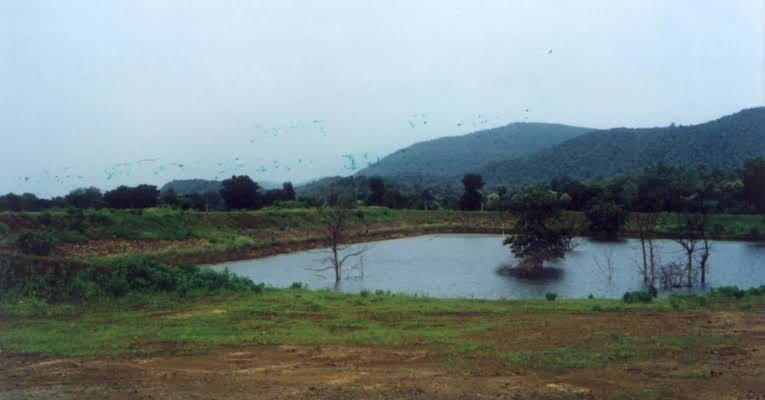
*Representational picture courtesy therainwaterharvesting.com
In the 135th episode of Mann Ki Baat on 28 June 2026, the Prime Minister called upon citizens to save every drop of rain and ensure that the momentum of water conservation continues across the country.
Responding to this call, a focused nationwide campaign was undertaken from 4 July to 4 August 2026 to intensify rainwater harvesting, groundwater recharge, restoration of traditional water bodies, plantation activities, and public participation.
The campaign has made impact across the country. Some Jharkhand farmers have started harvesting rain fed rivers water in Ormanjhi block of Ranchi district.At least five farmers were spotted harvesting rain water in their fields. according to a report based on telephone conversations with two dozen odd farmers in Jharkhand.
The move, according to the same report, has gained significance since monsoon rain was far below the normal level this year 2026 in Jharkhand.
However, in select pockets of Jharkhand ‘Catch the Rain’ campaign was learnt to be making some farmers enhance rainwater harvesting by digging wells to recharge ground water and restore traditional water bodies like ponds in Ranchi, East Singhbhum and Dhanbad.
Tasks people are supposed to perform:
Jal Sanchay Jan Bhagidari 1.0 (6 September 2024)
To further strengthen community participation in water conservation, Jal Sanchay Jan Bhagidari launched on 6th September 2024 in Surat, Gujarat.
Guided by the principles of Community, CSR, and Cost (3Cs), the initiative mobilized community participation, institutional support, Corporate Social Responsibility (CSR) contributions, and convergence with ongoing government schemes to accelerate water conservation efforts.
The initiative focuses on constructing low-cost groundwater recharge and water storage structures, revival of defunct borewells, and adoption of scientifically designed, locally appropriate solutions through a Whole-of-Government and Whole-of-Society approach.
Implemented from 1 April 2024 to 31 May 2025, JSJB 1.0 surpassed its target of constructing at least 10 lakh groundwater recharge structures, with more than 27 lakh artificial recharge structures reported across the country.
Jal Sanchay Jan Bhagidari 2.0 (2025)
Building on the success, JSJB 2.0 was launched on 1 June 2025 with a special focus on accelerating groundwater recharge in Over-Exploited and Critical districts through low-cost, hyper-local interventions.
Against the target of constructing at least one crore groundwater recharge structures by 31 May 2026, more than 1.5 crore structures have been reported nationwide, exceeding the target by over 50 percent. These reported structures are presently undergoing physical verification and field validation.
Recognizing outstanding contributions under JSJB 1.0, the Government honoured exemplary performers during the 6th National Water Awards held in November 2025.
Jal Sanchay Jan Bhagidari: Catch the Rain (2026)
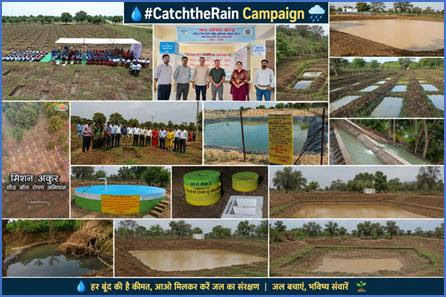
Jal Sanchay Jan Bhagidari: Catch the Rain (JSJB: CTR) was launched on 1st June 2026 enhancing the scope of the Jal Sanchay Jan Bhagidari (JSJB) initiative and simultaneously integrating it with the Jal Shakti Abhiyan: Catch the Rain (JSA: CTR) campaign.
With renewed emphasis on rainwater harvesting, groundwater recharge, water storage, and community participation, the campaign aims to transform every rainfall event into an opportunity for water conservation. It promotes locally appropriate, low-cost interventions and strengthens climate resilience through sustainable water management.
The campaign leverages convergence with several Central and State Government schemes, including:
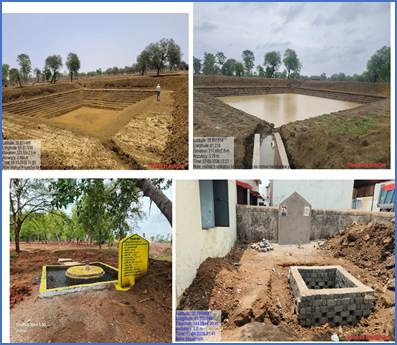
At its core, JSJB: CTR is driven by Jan Bhagidari, mobilizing Panchayati Raj Institutions, Urban Local Bodies, women's groups, youth, educational institutions, civil society organizations, and local communities to actively participate in water conservation efforts.
Jal Shakti Abhiyan: Catch the Rain (JSA: CTR)
Jal Shakti Abhiyan: Catch the Rain (JSA: CTR) was launched by Hon’ble Prime Minister Shri Narendra Modi on World Water Day (22 March 2021) with the theme “Catch the Rain, where it falls, when it falls.”
The campaign builds on the success of the Jal Shakti Abhiyan 2019, which was implemented in 1,592 water-stressed blocks across 256 districts and promoted rainwater harvesting, groundwater recharge, watershed development, rejuvenation of water bodies, and afforestation through a Jan Andolan approach. Since then, the campaign has been implemented annually with evolving themes and focus areas.
2021 – Catch the Rain, Where It Falls, When It Falls
2022 – Expanding Water Conservation Activities
2023 – Source Sustainability for Drinking Water
2024 – Nari Shakti se Jal Shakti
Women-led initiatives across the country demonstrated how community leadership can strengthen water security. Their contributions continue to be recognized through the Swachh Sujal Shakti Samman, celebrating exemplary efforts in water conservation, sanitation, and hygiene.
Jal Shakti Kendras (JSKs)
A key institutional component of the campaign is the establishment of Jal Shakti Kendras (JSKs) in districts across the country. These centres serve as knowledge and facilitation hubs for water conservation. They disseminate information on water harvesting techniques, provide technical guidance to local communities and district administrations, and support planning and implementation of water conservation activities.
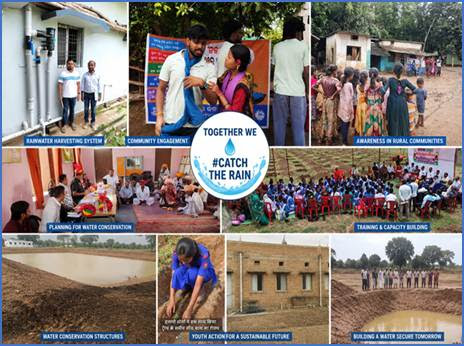
From Rainwater Harvesting to Rural Resilience
The water conservation seems to have emerged as a national priority and a people’s movement. Through initiatives such as the Catch the Rain and Jal Sanchay Jan Bhagidari, the Government has successfully transformed water conservation from a sectoral programme into a nationwide Jan Andolan driven by community participation, scientific planning, and convergence of resources.
By promoting scientific planning, local ownership, and collective action, the campaign is creating resilient water assets across rural India. As climate variability and water demand continue to increase, conserving every drop of rainwater remains essential for ensuring water security. It needs to further strengthen agriculture and support sustainable rural development, especially in water starved areas of the country such as Garhwa and Palamau in Jharkhand.
If you value our journalism, consider making a voluntary contribution to help us continue bringing news, stories and information to our readers.
Scan the QR code to contribute

Every contribution, big or small, is appreciated.