Administrator
06 August 2026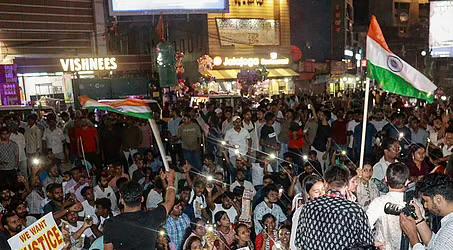
PART I
WHEN AN EXAMINATION BECOMES A QUESTION OF TRUST
As allegations surrounding recruitment examinations deepen, Jharkhand's job aspirants are demanding not merely another investigation—but one they believe can command public confidence.
A Protest That Has Outgrown the Examination Hall
For more than a week, Jaipal Singh Munda Stadium in Ranchi has ceased to be merely a sporting venue.It has become the epicentre of a movement led by young men and women who believe that the examinations meant to determine their future have instead become a source of uncertainty and distrust.
Since 29 July, job aspirants from across Jharkhand have maintained an indefinite sit-in, protesting alleged irregularities in the Jharkhand Public Service Commission (JPSC) examination and other state recruitment tests.What began as a protest over alleged paper leaks has steadily evolved into a wider campaign questioning the credibility of the state's recruitment process itself.As the movement has gathered momentum, its demands have become more specific—and more consequential.
From a CBI Demand to a Demand for Judicial Oversight
Initially, the protesters sought an investigation by the Central Bureau of Investigation (CBI), accompanied by a parallel inquiry by the Enforcement Directorate (ED).They alleged that the suspected recruitment scam involved large-scale financial transactions, making the matter far more than an administrative lapse.
Now, however, the students have placed a new demand before the government.
On Tuesday, 4 August, they called for the investigation to be handed over to an independent panel of retired High Court judges from outside Jharkhand, arguing that only such a body could inspire confidence among candidates.The demand reflects a growing belief among the protesters that the issue is no longer simply about identifying irregularities but about ensuring that the investigation itself is beyond question.
'We No Longer Have Faith in the Investigation'
The students' latest demand is rooted in what they describe as a loss of confidence in the ongoing inquiry being conducted by the Criminal Investigation Department (CID).The protesters allege that the Jharkhand Mukti Morcha (JMM)-led government is attempting to ‘whitewash’ the issue by allowing the state CID to investigate the allegations.For many of the aspirants gathered in Ranchi, credibility has become as important as the outcome of the investigation itself.According to them, restoring public trust requires an inquiry conducted by an institution perceived to be completely independent of the state administration.
The Experience That Shaped Their Distrust
Among those articulating the students' concerns is Vinay Mehta, a job aspirant from Hazaribag district.Speaking during the protest, Mehta said the students had "completely lost faith" in the ongoing CID investigation.He referred to the earlier JSSC-CGL paper leak investigation, claiming that the CID itself had concluded that answers to 135 of the 150 questions had been leaked, while 120 questions matched the examination paper exactly.
For Mehta, the findings of that investigation have become part of the reason students now seek an inquiry outside the existing state mechanism.He further alleged that despite candidates submitting documentary evidence through emails and WhatsApp, the authorities neither acknowledged nor acted upon those complaints.According to the protesters, this experience has reinforced their belief that any fresh investigation must not only be fair but must also be seen to be fair.
A New Demand Takes Shape
Against this backdrop, the movement has refined its principal demand.Rather than limiting themselves to calls for a CBI investigation, the protesters are now seeking either:
The students argue that only an external body can examine the allegations without raising questions about institutional impartiality.
For them, confidence in the investigation is inseparable from confidence in those conducting it.
The Question Before the Government
The movement has now reached a stage where the government's response is being judged not only by the actions it takes but also by the institutions it entrusts with those actions.For the protesters assembled in Ranchi, the central issue extends beyond alleged paper leaks or recruitment irregularities.They argue that the credibility of every future examination depends upon whether the present investigation is viewed as independent, transparent and capable of commanding public confidence.The protest, therefore, is no longer asking only what happened.
It is asking who should be trusted to find out.
……………….
PART II
FROM PROTEST TO PEOPLE'S MOVEMENT
As the agitation gathered momentum, the movement found new voices, new allies and a growing resolve to sustain the fight.
A Protest That Continued to Grow
As the indefinite sit-in at Jaipal Singh Munda Stadium entered another week, the movement showed no signs of losing momentum.Instead, it began expanding beyond a gathering of job aspirants into a wider public campaign supported by student organisations, civil society groups and individuals who viewed the controversy as a larger question of transparency in public recruitment.For the protesters, the movement was no longer limited to demanding an investigation.It had become a sustained assertion that the credibility of recruitment examinations must be protected through institutions capable of inspiring public confidence.
A Tribute to the Leader They Called 'Dishom Guru'
Even as demonstrations continued, the students announced that they would pay tribute to former Jharkhand Chief Minister Shibu Soren on his first death anniversary.The decision reflected the protesters' attempt to place their movement within Jharkhand's own political and social history rather than present it merely as an agitation against a recruitment examination.For many of the students, Shibu Soren represented a larger struggle for the rights and aspirations of the people of Jharkhand."Dishom Guru Shibu Soren is our source of inspiration," said Pawan Goswami, a protester from Palamu district."We will march to his residence today to pay homage to him."
The tribute, the protesters said, was intended to honour the ideals they believed had shaped the state's identity while continuing to demand fairness in opportunities for its youth.
'The Movement Will Remain Peaceful—But It Will Not Stop'
While reaffirming their commitment to peaceful protest, the students also made it clear that the agitation would intensify if their demands continued to go unanswered.Pawan Goswami said the protesters would continue their movement peacefully for the present.At the same time, he announced the next stage of the campaign."If our demands are not met, we will gherao the Assembly on August 10," he said.
The statement signalled that the agitation was entering a new phase—one that would increasingly seek to engage the state's political leadership directly.
Support Begins to Expand Beyond the Protest Site
Over the course of the week, the movement drew support from a growing number of organisations.The widening support suggested that concerns surrounding alleged recruitment irregularities were no longer confined to those who had appeared in a particular examination.Instead, they had begun resonating across a broader section of students and youth organisations.
AISA Announces an Assembly March
On Monday, the state unit of the All India Students' Association (AISA) organised a demonstration at Albert Ekka Chowk in Ranchi against the alleged recruitment scams.The organisation also announced an Assembly March on August 7, further expanding the calendar of protests.According to the organisers, AISA State President Neha Bora is expected to participate in the programme.The announcement indicated that organised student groups were beginning to formally align themselves with the movement.
Support Beyond Student Organisations
The protest also attracted support from outside traditional student bodies.On Sunday, the Cockroach Janta Party extended its support to the agitation.Its founder, Abhijeet Dipke, interacted with leaders of the movement through a video call, expressing solidarity with the protesters.Although representing a different political platform, the party's participation reflected the widening public attention surrounding the issue.The movement, initially centred on recruitment examinations, had begun drawing responses from diverse organisations and public figures.
A Hunger Strike at the Centre of the Agitation
As demonstrations continued, one form of protest came to symbolise the movement's determination.Devendra Nath Mahto, one of the leaders of the agitation, began an indefinite hunger strike at the protest site on Sunday night.
His principal demand echoed that of the larger movement:
A probe by central investigating agencies into the alleged irregularities in recruitment examinations.
The hunger strike transformed the protest from a continuous sit-in into a more urgent appeal, placing both physical endurance and institutional accountability at the centre of public attention.
The Protest Enters a New Phase
By this stage, the agitation had evolved beyond a reaction to a single examination.It now combined multiple forms of democratic protest—an indefinite sit-in, public demonstrations, support from student organisations, political expressions of solidarity and an ongoing hunger strike.The students maintained that their movement would remain peaceful.At the same time, they made it clear that they were prepared to expand the protest if their demands for an independent investigation continued to remain unmet.For the young men and women assembled in Ranchi, the issue was no longer simply whether irregularities had occurred.It was whether the institutions responsible for safeguarding merit could still command the confidence of those whose futures depended upon them.
………
PART III
THE POLITICAL BATTLE OVER A RECRUITMENT CRISIS
As students intensified their movement, the debate moved beyond examination halls and protest sites into the heart of Jharkhand's political discourse.
The Government Responds
As the agitation expanded and demands for an independent investigation gathered momentum, the Jharkhand Government sought to reassure the protesting aspirants that their concerns were being taken seriously.
The first significant response came from Kalpana Soren, JMM MLA and wife of Chief Minister Hemant Soren.Speaking to reporters, she described the state government as ‘very sensitive’ to the concerns raised by the students.According to her, the government was actively working towards finding a solution."The state government is working out ways to resolve their issues," she said.
Her statement sought to convey that the administration recognised the gravity of the situation and was engaged in addressing the students' demands.
The Opposition Sees Something Bigger
While the government appealed for patience, the opposition argued that the controversy extended far beyond alleged paper leaks.Leader of the Opposition Babulal Marandi described the movement as the result of years of frustration among job aspirants seeking what they believed was their legitimate right to fair competition.
According to Marandi, the issue should not be viewed merely as another examination controversy.
Instead, he alleged that it reflected a much larger crisis affecting the state's recruitment system."The current issue is not limited only to paper leaks in various state-level public examinations. It is a matter of selling public jobs by the state government," he alleged.The statement elevated the political stakes of the controversy by framing it as an issue of governance rather than examination management alone.
Questions Over the CID Investigation
Marandi also questioned the effectiveness of the ongoing CID investigation, arguing that earlier developments had already weakened public confidence.Demanding a CBI investigation, he referred to the JSSC-CGL examination, where, according to him, significant discrepancies emerged after the Jharkhand High Court directed the Commission to publish cut-off marks.
According to Marandi, the published data showed that certain selected candidates had scored fewer marks than candidates who had not been selected.
He alleged that these findings pointed towards clear irregularities in the recruitment process.Drawing a comparison with the ongoing controversy surrounding the 14th JPSC examination and the Excise Constable recruitment examination, he claimed that similar patterns had emerged once again.Based on these allegations, Marandi argued that the state government was attempting to shield the controversy by relying on the ongoing CID investigation.
Hemant Soren: 'The Government Is Serious'
Responding to the growing movement, Chief Minister Hemant Soren maintained that the government was approaching the issue with seriousness.Addressing reporters in Ranchi, he said the administration was carefully examining every concern raised by the protesting aspirants."With close scrutiny and complete seriousness, decisions addressing their demands and queries will be announced at the appropriate time. I am confident that the protesters will be reassured."
The Chief Minister urged restraint, indicating that the government intended to announce its decisions only after examining all aspects of the matter.
'Every Aspect Is Being Examined'
Referring specifically to the investigation, Soren stated that the agencies involved were examining every allegation in detail.According to him, the inquiry was actively investigating every instance where mistakes may have occurred."The way the investigation team is active, wherever any kind of mistakes have happened or are happening, all those things are being thoroughly examined, and after everything comes out, the government's decisions will also certainly come forward."
The government maintained that it would take appropriate decisions after the investigation had established the relevant facts.
Students Remain Unconvinced
Despite these assurances, the protesters continued to express distrust in the ongoing inquiry.They reiterated their allegation that assigning the investigation to the state CID amounted to an attempt by the JMM-led government to ‘whitewash’ the controversy.The students maintained that only an inquiry conducted by the CBI or an independent panel of retired High Court judges from outside Jharkhand could restore confidence in the investigation.
For them, the credibility of the investigating agency remained inseparable from the credibility of its eventual findings.
A Former Chief Minister Appeals for Dialogue
The issue also drew the attention of former Jharkhand Chief Minister Raghubar Das.
Addressing a press conference in Jamshedpur, Das urged Chief Minister Hemant Soren to engage directly with the protesting students and seriously consider their demand for a CBI investigation.He revealed that he had written personally to the Chief Minister.According to Das, the letter was not motivated by politics or by his former office.Instead, he said it reflected his own experience of student movements, recalling that his political journey had begun during Jayaprakash Narayan's movement in 1974.
'Students Do Not Take to the Streets Without Reason'
Das argued that the protests should not be dismissed as routine demonstrations.
According to him, students had taken to the streets because they believed serious allegations of corruption and irregularities had undermined public recruitment."The students have not taken to the streets without reason. They are protesting against serious allegations of corruption and irregularities in recruitment examinations."He urged the government to engage directly with the protesters and ensure justice, including giving due consideration to their demand for a CBI inquiry.
Concerns Over the Protest Conditions
Das also criticised the manner in which the agitation was being managed.
He alleged that despite conducting a peaceful protest, the students were not being provided basic facilities such as:
He warned that if these concerns continued to remain unaddressed, the movement could eventually develop into a much larger public agitation.
A Comparison with the NEET Paper Leak Case
Drawing a comparison with the NEET paper leak controversy, Das argued that the Union Government had responded swiftly by cancelling the examination, ordering a CBI investigation, and conducting a fresh examination within a short period.
He questioned why a similar approach had not been adopted in Jharkhand.
The comparison placed the state's recruitment controversy within the broader national conversation on examination integrity—a debate that has intensified across India following allegations surrounding several competitive examinations.
A Debate Beyond Politics
By this stage, the controversy had evolved into competing narratives.The government maintained that the investigation was progressing thoroughly and that decisions would follow after due examination.The opposition argued that only an independent investigation could restore confidence.The students insisted that the issue had already moved beyond administrative explanations and required institutions capable of commanding public trust.What united all three positions was the recognition that the controversy was no longer confined to a single recruitment examination.It had become a larger debate about transparency, accountability and the credibility of public recruitment itself.
……..
PART IV
THE INVESTIGATION, THE ARRESTS, AND THE TEST OF PUBLIC TRUST
As the protest gathered momentum, investigators widened their probe. Arrests followed, examinations were postponed, and one question came to dominate the debate: Can confidence in Jharkhand's recruitment system be rebuilt?
The Investigation Begins to Deepen
As demonstrations continued outside, the investigation into the alleged irregularities in recruitment examinations gathered pace inside government agencies.The Criminal Investigation Department (CID) expanded its inquiry into the alleged irregularities surrounding the Jharkhand Public Service Commission (JPSC) examinations, carrying out arrests, questioning senior officials and conducting raids across multiple districts.According to the investigation, the inquiry is examining allegations linked to recruitment examinations, including the conduct of the examination process and the role of those entrusted with administering it.
Eleven Arrests in the Case
The investigation has already resulted in significant action.According to the CID, eleven people have been arrested in connection with the alleged irregularities in the JPSC examinations.The arrests form part of the agency's continuing investigation into the recruitment process.The inquiry remains ongoing, and investigators have indicated that further action will depend on the evidence that emerges during the course of the probe.
The Main Examination Is Postponed
Amid mounting protests and an expanding investigation, the Jharkhand Public Service Commission postponed the Combined Civil Services Main Examination, which had originally been scheduled to be conducted between 25 July and 27 July.The Commission cited ‘unavoidable circumstances’ while announcing the postponement.For thousands of candidates who had prepared for the examination, the decision represented yet another delay in an already uncertain recruitment process.The postponement also reflected the extent to which the controversy had begun influencing the functioning of the Commission itself.
Former JPSC Chairman Under Investigation
The investigation has also reached the Commission's former leadership.The CID has questioned former JPSC Chairman L. Khiyangte four times since 28 July as part of its inquiry into the alleged recruitment irregularities.The repeated questioning marks one of the most significant developments in the investigation, indicating that investigators are examining decisions taken at the highest levels of the Commission.The agency has not publicly disclosed the contents of the questioning.
Raids Across Five Districts
As part of its investigation, the CID has conducted coordinated searches at 18 locations spread across multiple districts of Jharkhand.
The raids covered:
According to investigators, the searches form part of the broader effort to examine the alleged recruitment irregularities and gather evidence connected with the case.
The Students' Demand Remains Unchanged
Despite the arrests and the ongoing investigation, the protesters continue to insist that the inquiry should be transferred outside the existing state mechanism.They argue that confidence cannot be restored merely through arrests or administrative action.
Their principal demand remains unchanged:
An investigation either by the Central Bureau of Investigation (CBI) or by an independent panel of retired High Court judges from outside Jharkhand.According to the protesters, only such a mechanism can command public confidence and ensure complete impartiality.
The Government Urges Patience
The state government, however, has maintained that the investigation is proceeding with seriousness.Chief Minister Hemant Soren has stated that every aspect of the alleged irregularities is being examined and that decisions addressing the concerns of the protesting aspirants will be announced at an appropriate time.The government has urged the public not to draw conclusions until the investigation is completed.For the administration, the ongoing inquiry remains the appropriate mechanism for establishing the facts.
The Opposition Calls for Greater Accountability
Opposition leaders continue to argue that the existing investigation is insufficient to restore public confidence.They have renewed their demand for a CBI investigation, alleging that only an independent central agency can ensure credibility and accountability.The debate has therefore moved beyond allegations surrounding a single examination.It now centres on who should investigate those allegations—and whether the outcome of that investigation will be accepted by those whose futures depend upon it.
A Question That Extends Beyond Jharkhand
The developments in Jharkhand come at a time when competitive examinations across India are under unprecedented public scrutiny.From allegations surrounding NEET to controversies involving recruitment examinations in different states, questions about examination integrity, institutional transparency and accountability have increasingly entered the national conversation.Against this backdrop, the protests in Ranchi reflect concerns that extend beyond one Commission or one recruitment cycle.They speak to a wider expectation that public examinations must not only be conducted fairly but must also inspire confidence among those who dedicate years preparing for them.
The Road Ahead
For now, the protest continues.Students remain at Jaipal Singh Munda Stadium, determined to pursue what they describe as a peaceful movement for accountability and transparency.
The CID investigation is ongoing.The Main Examination remains postponed.Political parties continue to trade allegations and assurances.The government says decisions will follow after the investigation.The protesters insist that institutional trust can be restored only through an inquiry that is demonstrably independent.Whether the investigation ultimately confirms or rejects the allegations will be determined through due process.
But irrespective of its eventual findings, the movement has already raised a larger question that extends beyond any single recruitment examination.It asks how public institutions entrusted with shaping the futures of lakhs of young aspirants can rebuild confidence once that trust has been shaken.
In the end, the issue confronting Jharkhand is not simply about an examination, a recruitment process or a government investigation.It is about whether the institutions responsible for measuring merit can continue to command the faith of those who place their future in them.
…………………………………..
Based on PTI and agency reports
Source:
If you value our journalism, consider making a voluntary contribution to help us continue bringing news, stories and information to our readers.
Scan the QR code to contribute

Every contribution, big or small, is appreciated.