Administrator
07 August 2026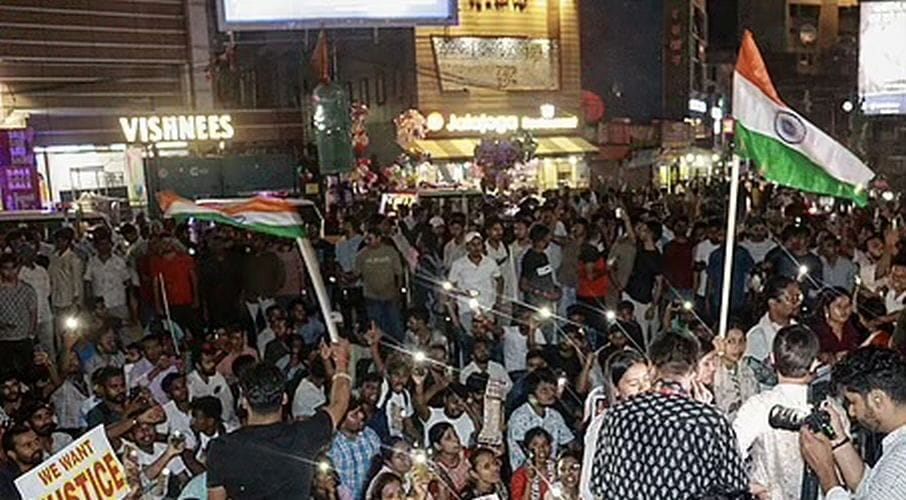
WHY?
Consider this:
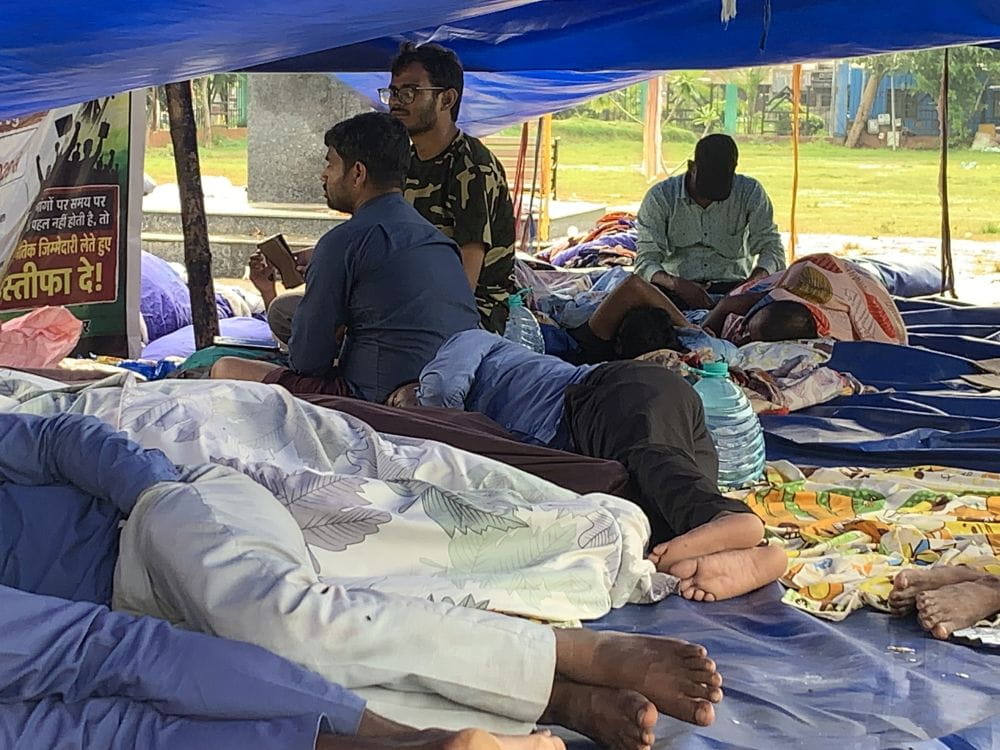
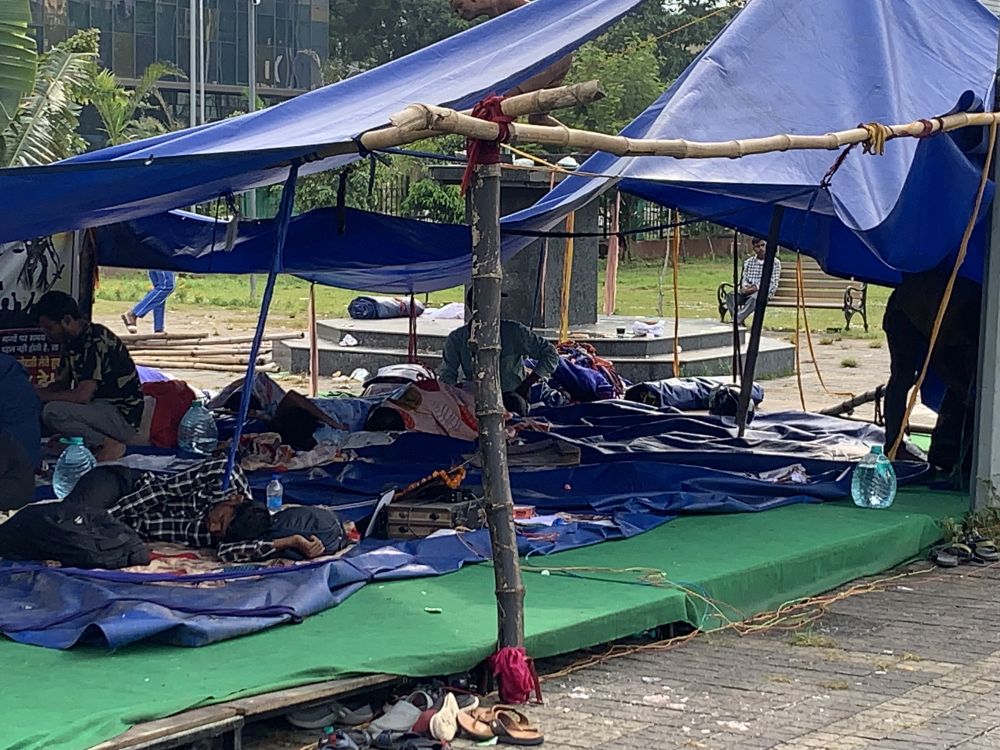
1. The Hemant Soren government is yet to hold talk with agitating students who have continued to hold dharna for the 14 the day on August 7.
2. The Congress leader and Leader of Opposition Hemant Soren telephonically talked to students.
3. All India Students Union( AISA), a student wing of the left wing party CPI (ML) Liberation has supported the students movement.
Keep politics behind. Inside Jharkhand's Recruitment Crisis—How Allegations of Examination Irregularities, a questionable Investigation by CID leaving its Chairman L. Khiangte go scot free after resigning on July 22,Political Scrutiny and an Unprecedented Student Movement,Have Reopened Fundamental Questions About Merit, Accountability and Public Trust in India's Competitive Examination System.
Politically, BJP workers staged a protest over the alleged Jharkhand Public Service Commission examination scam and alleged irregularities in the Jharkhand Staff Selection Commission examination, in Ranchi on July 24, 2026.
PART I
WHEN TRUST ENTERS THE EXAMINATION HALL
As India grapples with recurring allegations of paper leaks and recruitment irregularities, Jharkhand finds itself confronting a question that has shadowed its Public Service Commission for nearly a quarter of a century: Can merit survive without public trust?
A Crisis Larger Than One Examination
Across India, competitive examinations have increasingly become the subject of public scrutiny.
From recruitment examinations to professional entrance tests, allegations of paper leaks, procedural lapses and institutional failures have triggered protests, legal intervention and political debate.
Against this national backdrop, Jharkhand has once again found itself at the centre of a familiar controversy. The latest dispute surrounding the 14th Jharkhand Public Service Commission (JPSC) Combined Civil Services Examination is not being viewed by candidates as an isolated episode. Rather, it has reopened an enduring question that has accompanied the Commission almost since the state's formation in 2000.
Why does nearly every major recruitment examination conducted by JPSC eventually become the subject of controversy? That question now lies at the heart of an investigation, a student movement and an increasingly polarised political debate.
The Resignation That Changed the Conversation
The controversy acquired new urgency following the resignation of former Jharkhand Chief Secretary and JPSC Chairperson L. Khiyangte. His resignation came shortly after the Criminal Investigation Department (CID) interrogated him, conducted searches at both his residence and the Commission's former office and let him go what some protesting students say, ‘ scot free.’
Khiyangte and JPSC’s three members Smt. Ajita Bhattacharya, Dr. Anima Hansda and Dr.Jamal Ahmad were appointed by the Hemant Soren government.
The development transformed what had begun as objections raised by examination candidates into a wider public debate over the functioning of one of the state's most important constitutional institutions. The CID investigation has already led to the arrest of several individuals, including JPSC officials and employees associated with the private agency involved in conducting the examination.
At the same time, opposition parties have demanded that the inquiry be transferred to the Central Bureau of Investigation (CBI), while student organisations continue their protests, arguing that the credibility of the Commission itself is now under scrutiny.
The Fourteenth Examination—and the Questions That Followed
The immediate controversy began after the Commission declared the preliminary results of the 14th Combined Civil Services Examination. Against 103 advertised vacancies, the Commission shortlisted 2,204 candidates for the Main Examination. Instead of settling the recruitment process, however, the declaration of results generated a new series of questions from candidates.
The Questions Candidates Wanted Answered
Candidates raised multiple concerns immediately after the results were published. The first centred on the absence of category-wise cut-off marks, which were not released along with the results. The second related to the published merit list itself. Several candidates alleged that the merit list did not bear the signatures of the Commission's constitutional members, prompting questions about the procedure followed before the results were declared. These concerns quickly became the focal point of discussions among aspirants, adding to demands for greater transparency in the recruitment process.
When OMR Sheets Became the Centre of the Debate
The controversy deepened after several alleged OMR answer sheets began circulating on social media. One of the viral sheets was claimed to belong to a candidate from another state who had reportedly attempted only around 48 questions in Paper I—a figure that, according to candidates, would ordinarily produce marks significantly below the estimated qualifying threshold.
Yet the candidate was shown as having qualified. Similar allegations later surfaced regarding a backlog recruitment examination, where another candidate was alleged to have attempted only a limited number of questions but nevertheless appeared among the successful candidates. The authenticity of these viral OMR sheets has not been independently verified. Even so, they became the catalyst for widespread demonstrations outside the JPSC office, with candidates demanding explanations from the Commission.
From Questions to Investigation
As public pressure mounted, the Jharkhand Governmentdirected the CID to constitute a Special Investigation Team (SIT) and begin a formal investigation into the allegations.The move marked a significant shift in the controversy. What had begun as objections raised by unsuccessful candidates now entered the domain of criminal investigation.
At the same time, however, the decision also became a point of contention, with opposition parties and sections of the protesting students arguing that the inquiry should instead be conducted by an independent central agency.
An Examination Under Investigation—An Institution Under Scrutiny
For the students gathered outside the Commission, the issue is no longer confined to one examination or one recruitment cycle. Their questions now extend to the processes, safeguards and institutional mechanisms that govern public recruitment itself. The controversy surrounding the 14th JPSC examination has therefore become more than a dispute over a published result.
It has revived a debate that has persisted for more than two decades—whether repeated controversies have gradually eroded public confidence in Jharkhand's constitutional recruitment system. That debate, now unfolding simultaneously in investigation rooms, courtrooms, political platforms and protest sites, is likely to shape not only the outcome of the present controversy but also the future credibility of the institution itself.
PART II
A CONTROVERSY THAT REACHED THE INVESTIGATION TABLE
From viral OMR sheets to arrests, the inquiry widened beyond examination results to questions about the systems, agencies and individuals entrusted with conducting one of Jharkhand's most important recruitment processes.
Former Jharkhand Chief Minister Raghubar Das. During the five-year tenure of the Raghubar Das-led BJP government, no JPSC Civil Services examination was conducted.
The Investigation Finds Its First Major Lead
As the Special Investigation Team began examining the allegations surrounding the 14th JPSC examination, one arrest quickly became central to the inquiry. The Criminal Investigation Department (CID) arrested Abhay Tiwari, also known as Manoj Kumar Tiwari, a Block Supply Officer (BSO) posted in Godda district, alleging that he played a significant role in what investigators describe as a recruitment racket.
According to investigators, Tiwari functioned under the name Abhay while serving as a government official, while allegedly using another identity in connection with the private agency associated with the examinations. The allegations are part of the ongoing investigation, and no judicial findings have yet been made.
The Dual Role Under Investigation
Investigators allege that Tiwari simultaneously served as the Marketing Manager of TSR Data Processing Private Limited (TDPL), the private agency associated with conducting the JPSC examination. The agency itself had already attracted official scrutiny.
According to the investigation, TDPL had previously been blacklisted by the Jharkhand Government in connection with examination-related issues. Its role in the conduct of the present examination has now become one of the principal areas being examined by the CID.
The Inquiry Expands Beyond One Individual
The investigation has since widened considerably.Investigators are examining the recruitment of Tiwari's close family members, including his brother and sister-in-law, both of whom serve in government positions.
The CID is also examining the fact that Tiwari had earlier qualified in five separate examinations conducted by the Jharkhand Public Service Commission (JPSC) and the Jharkhand Staff Selection Commission (JSSC).
Investigators are assessing whether any connection exists between those recruitments and the present allegations. At this stage, the investigation has not reached any conclusion on those questions.
Allegations of a Middleman
The investigation has also uncovered allegations that Tiwari acted as an intermediary in the recruitment process.According to the CID, investigators are examining allegations that he demanded substantial sums of money from candidates seeking selection. These allegations remain under investigation, and the agency has not announced any final findings.
TDPL Comes Under the Scanner
While individual arrests became headlines, investigators increasingly focused on the agency itself. TSR Data Processing Private Limited (TDPL), a Lucknow-based firm associated with conducting the examination, has emerged as a central subject of the investigation.
The agency had previously been blacklisted by the Jharkhand Staff Selection Commission (JSSC) in May 2025 for non-compliance with contractual terms. Yet, according to the investigation, it was entrusted with another major examination only a month later. The agency has also faced blacklisting in Uttar Pradesh and other states.
These developments have prompted candidates and opposition parties to question how an agency that had already faced such action was again awarded responsibility for conducting one of Jharkhand's most significant recruitment examinations.
The Complaint That Predated the Controversy
The investigation has also brought attention to a complaint submitted months before the present controversy erupted.According to investigators, in January this year, an individual from Karnataka wrote to the JPSC Chairperson alleging irregularities involving approximately 500 OMR sheets connected to the Forest Range Officer (FRO) and Assistant Conservator of Forests (ACF) examinations. The complaint reportedly mentioned Abhay Tiwari along with two other individuals. Investigators are examining whether the then Chairperson, L. Khiyangte, was aware of these allegations and whether any action was taken against the agency.
These issues remain under investigation.
An Investigation Still in Progress
The CID continues to examine both the role of the private agency and that of JPSC officials in the conduct of the examination. At this stage, investigators have not announced their final conclusions. The inquiry remains active, with officials indicating that further action may follow as additional evidence is examined.
More Than a Criminal Investigation
The expanding inquiry has shifted public attention beyond allegations surrounding one examination. Questions are now being asked about procurement processes, oversight mechanisms, institutional safeguards and the systems through which constitutional examinations are conducted. The investigation, therefore, is no longer simply about identifying individual responsibility. It has become an examination of the institutional architecture designed to protect merit itself.
PART III
A HISTORY THAT REFUSES TO STAY IN THE PAST
For many aspirants, the controversy surrounding the 14th JPSC examination is not an isolated event but the latest chapter in a pattern they believe has repeated itself for more than two decades.
Not an Isolated Controversy
Among candidates, the current investigation is widely viewed within a much longer institutional history. Since the formation of Jharkhand, almost every major Civil Services examination conducted by the Jharkhand Public Service Commissionhas, at some stage, faced allegations or legal challenges.
The controversies have varied in nature but have repeatedly centred on issues including:
• Revised results
• Supplementary result lists
• Interview marks
• Reservation-related litigation
• Errors in answer keys
• Evaluation disputes
• Judicial intervention
For many aspirants, the present controversy is therefore seen less as an exception than as part of an established pattern.
The Shadow of the First Two Examinations
The earliest recruitment controversies continue to influence public perceptions today. The CBI investigation into alleged irregularities in the first and second Civil Services examinations remains ongoing. The issue returned to public attention last year following the death of Shalini Vijay, one of the toppers of the first JPSC examination and among those facing scrutiny in the CBI investigation.
She, along with her mother and brother, was found dead at their residence in Kochi shortly before she was scheduled to appear before a CBI Special Court. Police treated the deaths as a case of suicide. The CBI investigation into the recruitment case, however, continues independently.
Years Without Recruitment
The history of JPSC has also been shaped by long gaps in recruitment. During the five-year tenure of the RaghubarDas-led BJP government, no JPSC Civil Services examination was conducted. When the Hemant Soren Government assumed office in 2019, it announced plans to regularise recruitment and reduce the backlog. To achieve this, the Commission conducted the 7th to 10th Civil Services examinations together, followed by the combined 11th to 13th examinations.
Backlog Cleared, Questions Remained
Although the combined examinations were intended to accelerate recruitment, they too became the subject of protests. Candidates questioned delays in the declaration of results, raised concerns regarding evaluation and pursued legal remedies before the High Court. Repeated demonstrations demanding publication of results accompanied those recruitment cycles as well.
When a Recruitment Issue Became a Political Issue
What began as protests by examination candidates gradually entered the political arena. The Bharatiya Janata Party (BJP) and its youth wing, the Bharatiya Janata Yuva Morcha (BJYM), organised demonstrations outside the JPSC office before later protesting outside the Congress headquarters in Ranchi. The BJP accused the Hemant Soren Government of failing to ensure transparent recruitment and demanded that the investigation be transferred to the Central Bureau of Investigation (CBI), arguing that only an independent central agency could ensure a fair inquiry.
More Demands for Intervention
The Jharkhand Loktantrik Krantikari Morcha (JLKM)also called for the intervention of the Governor. The party demanded that the Main Examination be postponed until the allegations had been fully investigated.
The Commission's Position
The Commission has maintained that the preliminary examination results were published in compliance with the Jharkhand High Court's order dated 30 June.
However, according to the report, it has not yet issued a detailed public clarification addressing several questions raised by candidates, including:
• Category-wise cut-off marks
• The viral OMR sheets
• Alleged discrepancies highlighted after the results
These unresolved questions continue to shape public debate surrounding the controversy.
PART IV
THE BIGGER TEST
An investigation may determine individual responsibility. Restoring confidence may prove to be the more difficult challenge.
Recruitment Comes to a Halt
As the investigation continues, the Commission has postponed nine competitive recruitment examinations covering nearly 500 posts, including the Combined Civil Services Main Examination, until further notice. Officials have indicated that the CID investigation remains active and that additional arrests are possible as the inquiry progresses.
The Students' Demand Has Expanded
For candidates, however, the issue now extends beyond the 14th JPSC examination. They are demanding that the entire alleged recruitment scam be investigated by the Central Bureau of Investigation, while also seeking the resignation of the state's Education Minister. Their argument is that accountability must extend beyond one examination cycle if confidence is to be restored.
The Question That Remains
More than two decades after Jharkhand's formation, many candidates believe the central issue is no longer whether irregularities occurred in one recruitment examination. Instead, they ask whether public confidence in the state's recruitment system can still be rebuilt after years of recurring controversies. It is a question that extends beyond one Commission, one government or one investigation. It concerns the credibility of the institutions entrusted with selecting those who will one day administer the state itself.
The Road Ahead
The outcome of the CID investigation may or may not determine the legal course of the present controversy.
However, whether it ultimately confirms or rejects the allegations will emerge through due process. Yet another challenge will remain regardless of the investigation's findings. Every postponed examination delays appointments. Every unresolved controversy deepens uncertainty. And every erosion of confidence leaves lakhs of aspirants wondering whether years of preparation will ultimately be judged only by merit.
For the state government led by Chief Minister Hemant Soren challenge lies in restoring trust among students who demand accountability in the recruitment of aspirants for government jobs on the basis of merit.
And for the Jharkhand Public Service Commission, that may prove to be the most consequential examination of all—not one conducted in an examination hall, but one conducted in the court of public trust.
Inputs Based on reporting by Hindustan Times.
If you value our journalism, consider making a voluntary contribution to help us continue bringing news, stories and information to our readers.
Scan the QR code to contribute

Every contribution, big or small, is appreciated.