Administrator
07 August 2026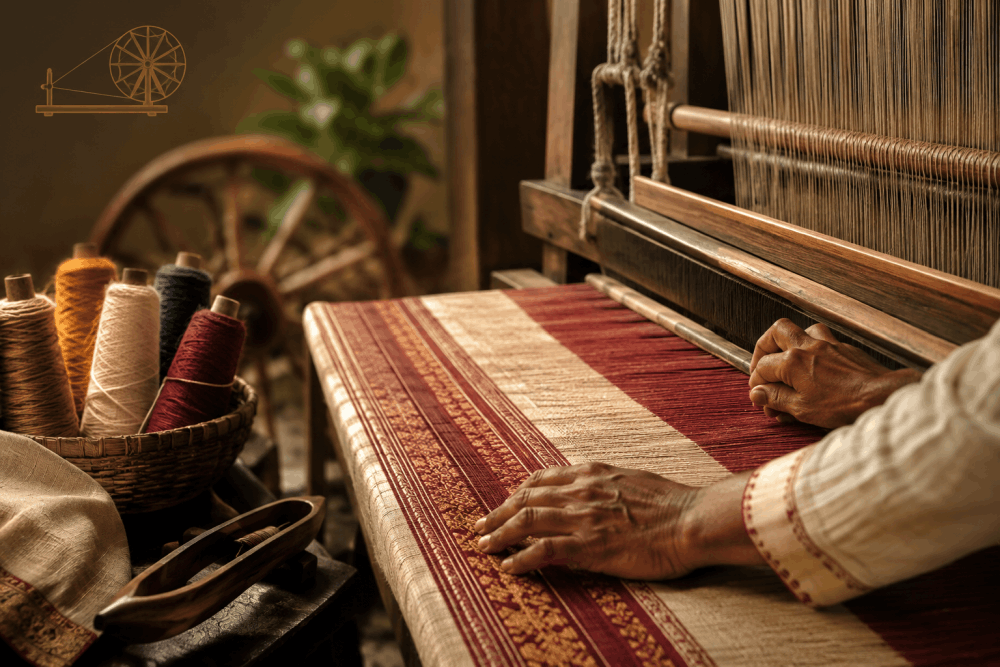
India’s handloom tradition has deep historical roots, with its earliest traces dating back to the Indus Valley Civilisation. Spinning and weaving find mention across the Rigveda, the Ramayana and the Mahabharata. The fine quality of Indian cotton and silk is also documented in these texts and in the works of Kautilya.
Over the centuries, weaving skills and techniques have been passed down from one generation to the next. These traditions have evolved through the distinctive practices of different regions across India. The institution of National Handloom Day in 2015 gave this long-standing heritage a dedicated national platform.
|
National Handloom Day National Handloom Day is celebrated annually on 7 August. It commemorates the launch of the Swadeshi Movement in 1905, which promoted indigenous goods and encouraged self-reliance. The occasion celebrates India’s weaving traditions and recognises the socio-economic and cultural contribution of handloom workers. In 2026, the observance marks an important point in this journey. It reflects the growing relevance of handloom among contemporary consumers and its greater visibility in global markets. |
Handloom weaving remains rooted in manual craftsmanship and household enterprises. Its identity is closely connected to the weaver, the region and the knowledge involved in creating each textile. At the same time, the landscape around handloom continues to evolve. Contemporary design, digital platforms and national and international showcases are connecting Indian weaves with newer consumers and expanding their visibility.
The People Behind India’s Handlooms
The Fourth All India Handloom Census 2019-20, the comprehensive official census of the sector, recorded around 31.45 lakh handloom households. It also counted 35.22 lakh handloom weavers and allied workers across the country. Of these, 8.48 lakh were allied workers engaged in pre-loom and post-loom activities such as winding, warping, dyeing and calendaring. Further, social and geographical patterns show that handloom is closely tied to rural livelihoods.\
|
Handloom Census
|
|
Recognising and Registering Handloom Workers Workers enumerated through the Census have been provided Pehchan/ e-Pehchan cards. To further extend this coverage, the e-Pehchan portal was launched in January 2025. It allows new and previously left-out workers to register, while existing workers can update details and download their cards. By July 2026, around 84,000 additional workers had been approved for e-Pehchan cards. |
A Sector Driven by Women
Women form the majority of India’s handloom workforce. They account for 25.46 lakh, or more than 72% of the total workers engaged in weaving and allied activities.
A Sector Supporting Diverse Communities
The handloom workforce included 4.84 lakh Scheduled Caste workers, 6.28 lakh Scheduled Tribe workers and 12.67 lakh workers belonging to Other Backward Classes.
Furthermore, the census recorded 28.20 lakh looms across the country. Of these, 25.30 lakh were situated in rural areas and 2.90 lakh in urban areas. Thus, placing nearly nine out of every ten handlooms in rural India.
An Ecosystem of Support for Handloom Weavers
The National Handloom Development Programme and the Raw Material Supply Scheme form the core operational support system for the sector.

NHDP was formulated for implementation from 2021-22 to 2025-26. It follows a need-based approach to the integrated development of the handloom sector, focusing on the welfare of handloom weavers.
NHDP components are implemented through Government handloom organisations, as well as national and State-level handloom corporations. Implementing agencies also include weavers’ cooperative societies, federations, Handloom Producer Companies and participating banks.
|
Handloom Producer Companies organise weavers into professionally managed, member-owned enterprises. Under NHDP, 200 HPC were formed during 2020-21 to 2026-27. |
The Programme delivers its wider support through the following key components:
SCDP supports small handloom clusters with funding of up to ₹2 crore to address their specific development needs. The assistance covers better looms, lighting and worksheds, alongside design, product development and marketing.
|
SCDP’s Impact |
|
Construction of Worksheds: Workshed construction under the Programme provides handloom beneficiaries with improved workspace infrastructure. Weavers receive a subsidy of up to 100% for constructing these worksheds. The intervention has recorded the following outcomes:
|
|
Electronic Jacquard: Electronic jacquards use digital controls to manipulate individual warp threads, enabling faster, more flexible and intricate weaving. Their introduction has improved productivity and earnings among handloom weavers.
|
Handloom Marketing Assistance provides weavers and handloom organisations with direct platforms to sell their products. It supports domestic and export promotion, setting up of Urban Haats and marketing incentives. Key achievements under various components include:
|
The Sant Kabir Handloom Award recognises outstanding weavers for exceptional skills and contributions to weaving traditions, community welfare and sector development. The award carries ₹3.5 lakh, a mounted gold coin, tamrapatra, shawl and certificate. The National Handloom Award honours craftsmanship, dedication and innovation and includes ₹2 lakh, a tamrapatra, shawl and certificate. |
The scheme provides handloom-sector loans at a concessional 6% interest rate for three years. This is further supported by government interest subvention of up to 7%. It also offers margin money assistance and covers credit guarantee fees. The Handloom Weaver MUDRA Portal supports the timely transfer of financial assistance.
The weavers’ welfare measures provide social security to handloom weavers and workers, along with scholarships for their children. These include:
|
Performance of PMJJBY and PMSBY
|
Under the Mega Cluster Development Programme, each mega handloom cluster covers at least 10,000 handlooms/clusters and can receive central assistance of up to ₹30 crore over five years.
Under the Programme, assistance of up to ₹12 crore is provided for product development, productivity, quality improvement, value addition and marketing.
The Scheme supports access to yarn by reimbursing freight charges on all types of yarn. It also provides a 15% price subsidy on specified yarns, subject to prescribed quantity limits.

|
NHDP and RMSS continue to be implemented in 2026-27, with budgetary allocations of ₹205 crore and ₹200 crore, respectively. |
The Next-Generation GST reforms recommended at the 56th GST Council meeting in September 2025 included measures supporting the handloom sector.
The Union Budget 2026-27 placed special emphasis on textiles through several new measures:
|
The ODOP Initiative promotes unique district products, balanced regional development and wider market access for local artisans and entrepreneurs. Read more: One District One Product (ODOP): A Journey from Local Streets to Global Shelves |
Reimagining Handloom through Design and Innovation
India’s handloom traditions remain rooted in regional fibres, techniques, motifs and generations of weaving knowledge. At the same time, the platforms on which these textiles are presented are expanding. Supported by government institutions and initiatives, regional weaving traditions are reaching new platforms.
Several recent showcases illustrate how traditional textiles are being presented through contemporary design and wider cultural platforms.
|
DC Handlooms and NIFT unveiled Vishwa Sutra at the61st Femina Miss India in April 2026. Presented in Bhubaneswar, the collection brought together 30 handloom weaves across India. Each was reinterpreted through inspiration from 30 countries, combining textiles with international silhouettes and influences. These pairings placed Indian handlooms within a global design narrative while retaining authenticity and regional identities.
|
|
Breathing Threads brought handlooms into contemporary fashion at Bharat Tex 2025. It presented 30 looks using fabrics woven across five states. These fabrics came from West Bengal, Madhya Pradesh, Uttar Pradesh, Karnataka and Rajasthan. Chanderi, Maheshwari, Jamdani, Khun, Banarasi, Kota Doria and Murshidabad weaves gained contemporary expression through textures and cording.
|
|
At IFFI 2025 in Goa, DC Handlooms united couture, culture and cinema in Handloom Sarees in Motion: 70MM on Runway. The show traced Indian cinema’s changing styles, from graceful 1940s drapes to experimental silhouettes of the 2020s. More than 40 sarees represented regional weaving traditions, including Tussar, Ikat Pashmina, Banarasi, Chanderi, Venkatagiri and Kuthampully. Several were hand-painted by award-winning artists using Pichwai, Pattachitra, Warli, Kalamkari, Madhubani, Gond and Bhil art.
|
Alongside these showcases, collaborative platforms are creating new spaces for experimentation across the handloom sector.
Expanding the Meaning of Design
These appearances demonstrate the widening visibility of Indian handlooms. Through fashion shows, pageants, cinema, textile exhibitions and collaborative design platforms, regional weaves are entering broader cultural and creative spaces. This growing visibility forms part of a wider story that also encompasses market access and India’s handloom export presence.
Strengthening Market Access and Buyer Confidence
Distinctive designs, small-batch production and eco-friendly processes have created strong demand for handloom products in domestic and international markets.
India’s handloom exports stood at ~₹1,330.96 crore in 2025-26. The leading export destinations during this period were the UAE, the United States, France, the United Kingdom and Spain.
As handloom products reach wider and more diverse markets, establishing their authenticity, quality and origin becomes increasingly important. Government-supported marks, branding systems, GI registration and legal safeguards help distinguish genuine handloom products and protect recognised weaving traditions. Digital platforms are also expanding market access.

Handloom Mark: Establishing that a Product is Handwoven
Launched in 2006, the Handloom Mark scheme gives handloom products a collective and distinctive identity. It promotes handwoven goods while assuring buyers that the product they purchase is genuinely handwoven and helps identify the product or its manufacturer more easily.
India Handloom Brand: Adding Quality Assurance
The India Handloom Brand was launched on the first National Handloom Day on 7 August 2015. It promotes niche handloom products with high quality, authentic traditional designs, zero defects and zero environmental impact. The certification covers natural-fibre products with assured fast colours, skin-friendly dyes and social compliance.
GI Tags: Protecting the Identity of Regional Weaves
The GI Act, 1999 protects registered geographical indications from unauthorised use. Registered users may approach police authorities against illegal manufacture or marketing, while State Handlooms and Textiles Departments have been advised to strengthen protection.
|
A GI tag identifies goods originating in a specific territory whose quality, reputation or characteristics are linked to that geographical origin. |
Legal Protection for Reserved Handloom Products
The Handlooms Act, 1985 protects weavers and India’s cultural heritage from encroachment by powerlooms and mills. It reserves 11 specified textile articles for handloom production.
Government agencies inspect powerloom units to prevent the production of items reserved exclusively for handlooms.
The Future is Handwoven
National Handloom Day 2026 offers a moment to look beyond the endurance of a tradition towards the possibilities ahead.
Indian handlooms carry the memory of place, community and skill, yet their story continues to find new expression with each generation. Their growing presence in contemporary life shows how heritage can remain relevant without losing its character.
As the world discovers more of India through its weaves, handloom continues to connect inherited knowledge with new aspirations. It carries regional identities from the hands of the weaver to a wider world.
If you value our journalism, consider making a voluntary contribution to help us continue bringing news, stories and information to our readers.
Scan the QR code to contribute
Every contribution, big or small, is appreciated.