Administrator
16 August 2026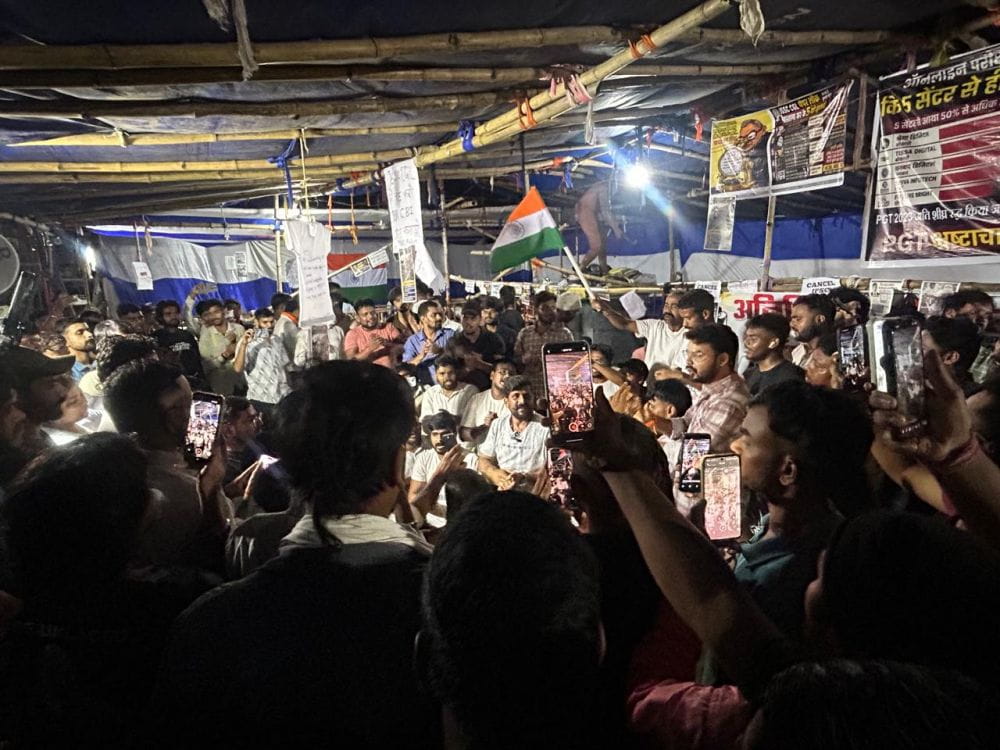
Vacancies are announced. Aspirants prepare for years. But protesters allege that the real contest can begin before the examination—with question papers allegedly sold in advance and results manipulated afterwards. As the agitation over JPSC and JSSC examinations grows, the demand is no longer only for cancellations, but for a reckoning with the system itself.
For thousands of young people in Jharkhand, a government examination begins with a familiar ritual. A vacancy is announced. An application is filed. Months—and often years—are spent preparing. Families contribute money, time and patience. Candidates postpone other plans and organise their lives around the possibility of securing one of the few government jobs available.
But what happens when the examination that is supposed to determine that future is itself alleged to have been compromised?
That question now lies at the heart of the growing protests over recruitment examinations conducted by state-run bodies, including the Jharkhand Public Service Commission (JPSC) and the Jharkhand Staff Selection Commission (JSSC). Students and job seekers supporting the protests allege a modus operandi that begins even before the examination takes place and can continue after the answer sheets have been submitted. Their allegation is stark: questions are sold before the examination; results are subsequently manipulated; and candidates who pay large sums are declared successful and eventually employed.
Those who cannot pay, they say, are left behind. The protesters have given this alleged system a name that captures what they believe is being taken from them: ‘Naukri Chori’— the theft of jobs.
The Alleged Modus Operandi: From Vacancy Advertisement to Paid Selection
The alleged pattern, as described by protesters and job seekers, begins with the most ordinary part of the recruitment process: the advertisement of vacancies. A government body announces available posts. Thousands of candidates enter the race. But according to the allegations, the integrity of that race can be compromised even before candidates enter the examination hall.
The questions are allegedly sold in advance.
Once the examination is over, the alleged manipulation can take another form. Protesters allege that examination results are manipulated and that candidates who have paid substantial sums—sometimes running into six or seven figures—are declared to have cleared the examination and subsequently secure employment. The allegation, if established, would fundamentally alter the meaning of a competitive examination. The examination would no longer be simply a test of preparation, knowledge and ability. It would become a process in which financial capacity could allegedly determine who moves forward.
And that leaves the candidate who cannot pay in a particularly unequal position.
Yet, according to the allegations, none of that can compete with money if the outcome itself can be purchased.

The Other Side of the Equation: Those Who Cannot Pay
The most consequential aspect of the allegations is not only what happens to those who allegedly benefit. It is what happens to everyone else. Every government vacancy represents an opportunity. In Jharkhand, however, the number of people seeking those opportunities runs into lakhs, while the number of available vacancies may be in the hundreds or fewer. That makes every selection process intensely competitive. For the candidate who has spent years preparing for a handful of vacancies, losing an opportunity because another candidate allegedly paid for it is not simply a disappointing examination result.
This is why allegations of examination manipulation have resonated so widely among students and job seekers. The issue is not only whether a particular question paper was compromised or a particular result was manipulated. It is whether the very opportunity to compete fairly has been compromised.
The Human Face of the Crisis
The human consequences of this prolonged uncertainty are visible in individual cases. A Deccan Herald report highlighted the case of a Jharkhand aspirant who had cleared an examination but was still without a job and continued his hunger strike from an ICU. The case presents a particularly difficult question: what does it mean when even clearing an examination does not necessarily bring an aspirant to the promised destination of employment? For candidates caught in prolonged recruitment disputes, the examination is never merely an examination.
And when the process is challenged by allegations of irregularity, all those investments are placed in uncertainty.The ICU hunger strike is therefore not simply an individual episode. It is one reported manifestation of a much larger frustration among aspirants who believe that the recruitment system has failed to provide the certainty and fairness they were promised.
When Hundreds of Vacancies Meet Lakhs of Job Seekers
The scale of the competition makes the controversy even more consequential. At a time when the number of unemployed people and job seekers runs into lakhs, government vacancies can number only hundreds or fewer.
The mathematics is unforgiving. Thousands of candidates can spend years competing for a very small number of positions. The margin between selection and rejection can therefore be extraordinarily narrow. In such a system, the allegation that money can influence who gets selected is not a minor procedural complaint. It strikes at the foundation of the competition. If even a portion of the available positions were allegedly diverted through manipulation or payment, every legitimate candidate displaced from the process would represent a lost opportunity.
That is the context in which the protests have expanded.
Why the Protest Has Spread Beyond One Examination
The anger is no longer confined to one recruitment examination or one recruitment body. Hundreds and thousands of students and job seekers have supported or joined protests demanding the cancellation of several examinations conducted by state-government-run bodies, including JPSC and JSSC. Their demands include the cancellation of examinations in which they allege irregularities and a Central Bureau of Investigation (CBI) probe into those examinations. The demand for a CBI investigation reflects a larger concern among protesters: that allegations involving examination agencies, financial transactions, question papers and results require an investigation that can independently establish the chain of events. For the students, cancellation is therefore only one part of the remedy.
They also want accountability.
Who was responsible?
How did the alleged manipulation occur?
Who benefited?
Who enabled it?
And, most importantly, can the system be redesigned so that the same allegations do not recur in the next examination?
The Meaning of ‘Naukri Chori’
The phrase ‘Naukri Chori’ has acquired significance within the protests because it describes the alleged crime not simply as examination fraud, but as the taking away of someone else’s legitimate opportunity. A question-paper leak can be described as an examination offence. Result manipulation can be described as an administrative or criminal offence. But for the student who prepared honestly and still lost the opportunity to be selected, the consequence is more direct.
A job has been taken away.
That is the logic behind the phrase.
It captures the belief that a public post—which should have been awarded through a transparent and merit-based process—can allegedly be diverted to someone who has the financial means to influence the outcome. The distinction matters because a government job is not merely a private commercial transaction. It is a public position, filled through public institutions and funded ultimately by public resources.
The integrity of the selection process therefore affects not only the candidates but the credibility of the state itself.
The Cost to Merit
The deepest concern raised by the protesters is ultimately about merit.
Competitive examinations exist to create a common ground. A candidate from a wealthy family and a candidate from a modest background are supposed to sit for the same examination, answer the same questions and be judged according to the same standards. The examination is meant to reduce the importance of circumstance by allowing preparation and ability to determine the outcome.
Allegations of question-paper sales and result manipulation reverse that principle. They suggest a system in which financial capacity can potentially become an advantage over preparation. The candidate who can pay moves ahead. The candidate who cannot pay remains behind. And the entire promise of merit-based recruitment begins to lose credibility.
A Crisis That Extends Beyond JPSC and JSSC
That is why the current agitation should not be viewed solely through the lens of a single examination controversy. The protests have brought together a wider community of young people who have experienced, or fear experiencing, uncertainty in government recruitment. Their concerns extend across examinations conducted by state recruitment institutions. The common thread is trust.
Candidates need to believe that the vacancy advertised is genuine, that the examination will be conducted fairly, that the answer sheets will remain secure, that the evaluation will be impartial and that the final list will reflect merit rather than influence. Without that trust, even a technically well-conducted examination can struggle to command legitimacy.
The Demand for a CBI Probe
The demand for a CBI investigation is therefore central to the movement. Students and job seekers are seeking a probe into examinations where they allege irregularities have occurred.For them, an independent investigation would serve two purposes. First, it would establish the facts: whether questions were sold, whether results were manipulated, whether money changed hands and whether candidates were improperly favoured. Second, it would establish responsibility. A recruitment system cannot be repaired merely by cancelling an examination if the mechanisms that allegedly compromised it remain intact. The protesters therefore want the investigation to go beyond the immediate examination and examine the larger chain of responsibility.
The Question Jharkhand Cannot Avoid
The controversy ultimately raises a question that extends beyond one state, one examination or one generation of aspirants. When public-sector employment is scarce and the number of job seekers is vast, the recruitment examination becomes one of the most important gateways to economic security for young people. That makes the integrity of the process a matter of public interest. If allegations of examination manipulation are allowed to persist without credible investigation, the damage extends beyond those directly affected. It affects every candidate preparing for the next examination. It affects families deciding whether to invest another year in preparation. It affects public confidence in recruitment institutions. And eventually, it affects the credibility of the people selected through those institutions.
Beyond Cancellation: The Need to Restore Trust
The cancellation of an examination may address an immediate problem. An investigation may establish responsibility.Arrests, where warranted, may address individual culpability.But none of these, by themselves, can restore a recruitment system’s credibility. That requires a process in which candidates can see that vacancies are genuine, examination agencies are properly scrutinised, question papers are secure, answer sheets are protected, evaluation is transparent and results cannot be altered without detection. Most importantly, it requires a system in which a candidate does not have to wonder whether someone else’s money can outweigh years of preparation.
That is ultimately what the students are asking for.
Because when vacancies number in the hundreds while job seekers number in the lakhs, every legitimate selection matters. And if the allegation is that those opportunities can be bought, then what is at stake is not merely the integrity of an examination. It is the integrity of the promise that the state makes to every young person who sits down to compete.
That is why the protests over JPSC and JSSC have become a larger fight over ‘Naukri Chori’: who gets a government job, how it is earned, and whether merit still has the final word.