Administrator
31 August 2026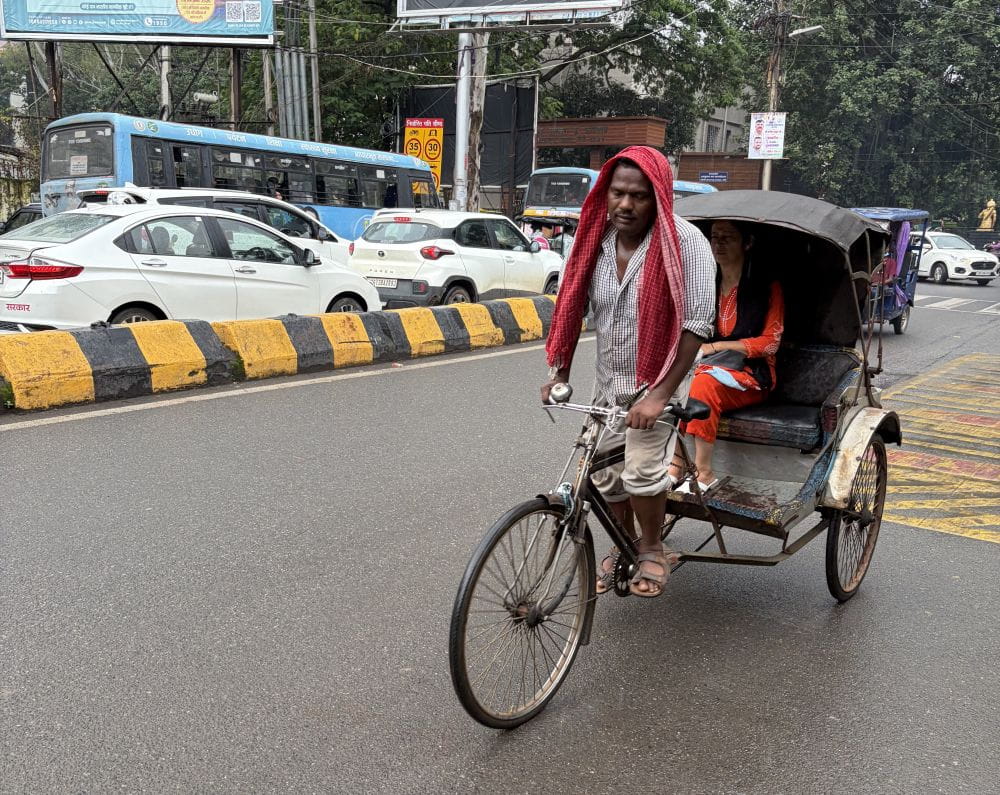
*Sudhir Paswan, Rickshaw puller
Sudhir Paswan paid Rs 70 to the owner and pulled the rickshaw throughout the day. He earned Rs 500 - 600 and, after paying to its owner, earned the rest to make a living.
Paswan is not an odd case. Most pullers are poor workers from neighboring villages in Ranchi, the capital city of Jharkhand, who rely on this daily wage for survival.
Successive state governments have neither criticised nor supported the practice as "inhuman" or "barbaric.” No attempt was made to ban rickshaw pulling as it was a mode of self-employment for them.
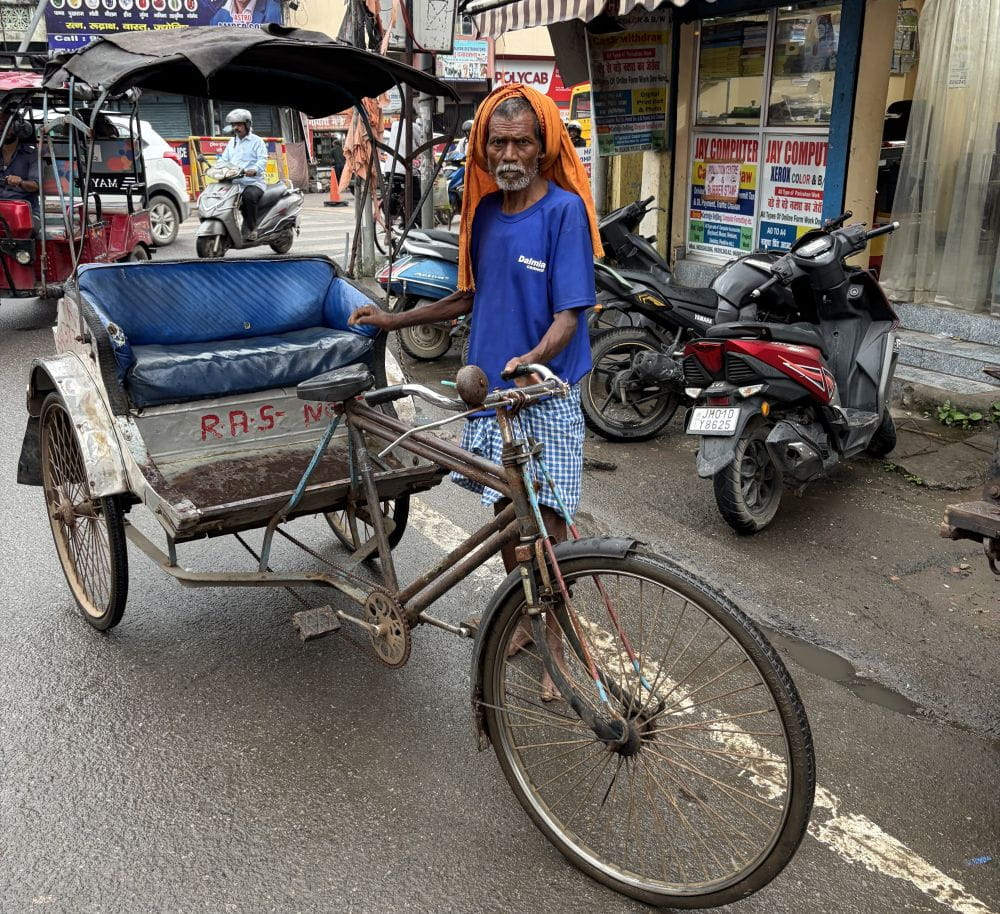
*Rickshaw puller
In this city carrying umpteen colonies and mohallas where three- and four-wheelers are not affordable for lower- and lower-middle-class families, residents and unions defend them as an affordable transport option and a cultural heritage.
However, moneyed people own dozens of rickshaws and provide them to pullers on rent.
No new licenses have been issued in decades, meaning the aging current pullers represent the absolute final generation of this trade.
At the same time, change is visible. Man-pulled rickshaws in Ranchi are fast becoming extinct due to modernization, business efforts to phase them out, and competition from battery-operated e-rickshaws.
Only a few man-pulled rickshaws remain on the streets, down from historical highs.
Ranchi, like Patna and Kolkata, has always been known as the last city in the world where these unlicensed manual transport vehicles still operate.
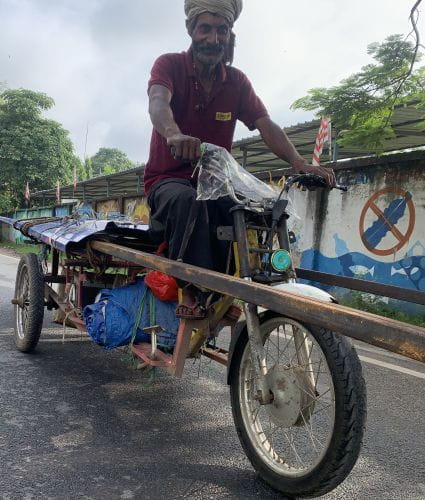
*Battery pulled rickshaw
They are being fast overwhelmed by Battery-powered e-rickshaws (locally called 'Totos'), auto-rickshaws, and app-based cabs that have largely replaced them for daily commuting.
Asked why his rickshaw was not replaced by a battery-powered rickshaw, Paswan said, “The owner did not do so. I don’t have money to buy it.”
A battery-powered rickshaw owner said that he has taken a loan of Rs 1 lakh to buy a battery-powered rickshaw and earned more than Rs 1,000 every day.