Administrator
02 September 2026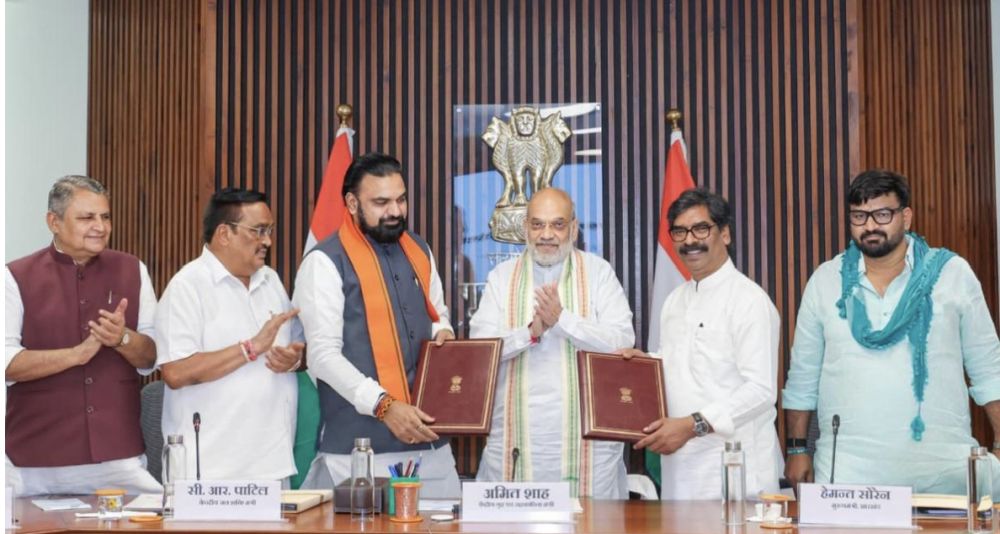
For a Sone river water-sharing dispute that has endured for nearly 25 years, signing the MoU is an important milestone—but not the final measure of success.
The agreement will acquire its real significance only when its provisions translate into dependable water availability, functioning infrastructure and greater water security for communities across both States. The challenge now is to turn political consensus into administrative execution, and an inter-State settlement into a lasting public benefit.
A Dispute That Spanned Decades
Bihar and Jharkhand signed a Memorandum of Understanding (MoU) in New Delhi on August 31 to settle their nearly 25-year-old dispute over the sharing of Sone River water. The agreement was signed in the presence of Union Home Minister Amit Shah, Jharkhand Chief Minister Hemant Soren, Bihar Chief Minister Samrat Choudhary and Union Jal Shakti Minister C.R. Patil.
Indeed, a long-running inter-State dispute over the Sone River has moved towards resolution with a formal water-sharing agreement, potentially reshaping irrigation and drinking-water access across large parts of Bihar and Jharkhand.
Water Allocation Defined
Under the agreement, Bihar will receive 5.75 million acre-feet (MAF) of Sone water, while Jharkhand will have a share of 2 MAF, bringing clarity to the allocation that had remained contested for years.
The pact is expected to strengthen irrigation and drinking-water availability across several districts. In Bihar, these include Bhojpur, Buxar, Rohtas, Kaimur, Aurangabad, Arwal, Gaya and Patna. In Jharkhand, Palamu, Garhwa and other areas are expected to benefit.
A Test of Cooperative Federalism
The Centre has positioned the agreement as an example of cooperative federalism, with the Inter-State Council playing a role in addressing long-pending water disputes. The Sone settlement is among four major inter-State agreements reached this year through such efforts.
From Agreement to Implementation
The signing closes a prolonged chapter of disagreement, but its larger significance will depend on implementation. The real measure of the pact will be whether the agreed allocation translates into reliable water for farms, communities and drinking-water systems across both States. For millions dependent on the river, the settlement marks the beginning of that test—not its conclusion.
From Paper to Pipeline
The agreement settles the question of allocation; the harder task now is translating that settlement into water on the ground. Its success will depend on coordinated implementation by both States—clear mechanisms for regulating and monitoring flows, strengthening the infrastructure needed to carry the allocated water, and ensuring that irrigation and drinking-water benefits reach the districts identified under the pact. With Bihar allocated 5.75 million acre-feet and Jharkhand 2 million acre-feet, the next phase must be about measurable delivery rather than merely formal resolution.