Administrator
04 September 2026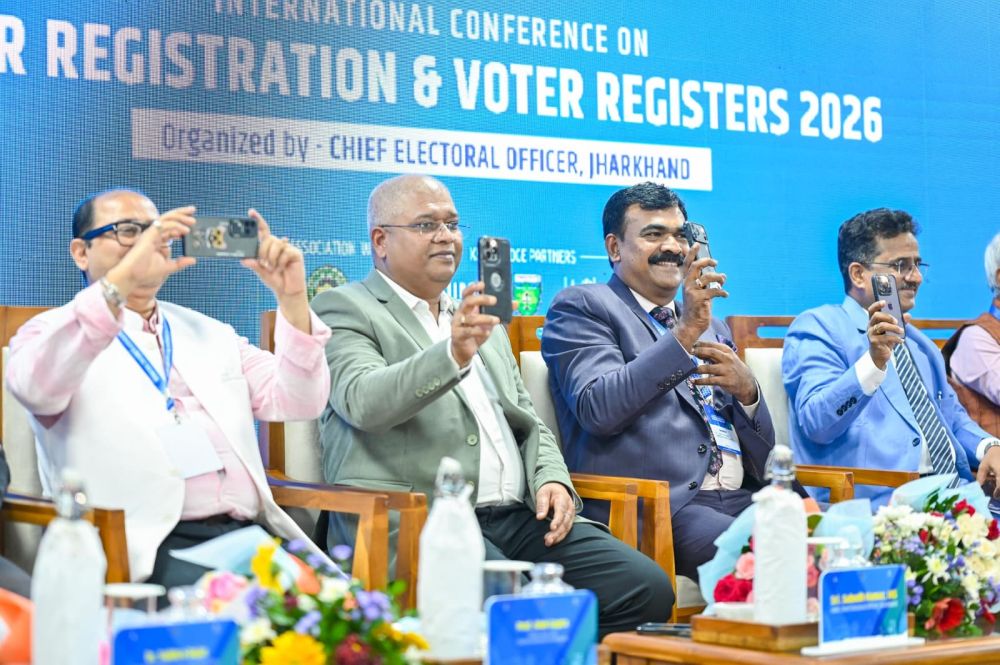
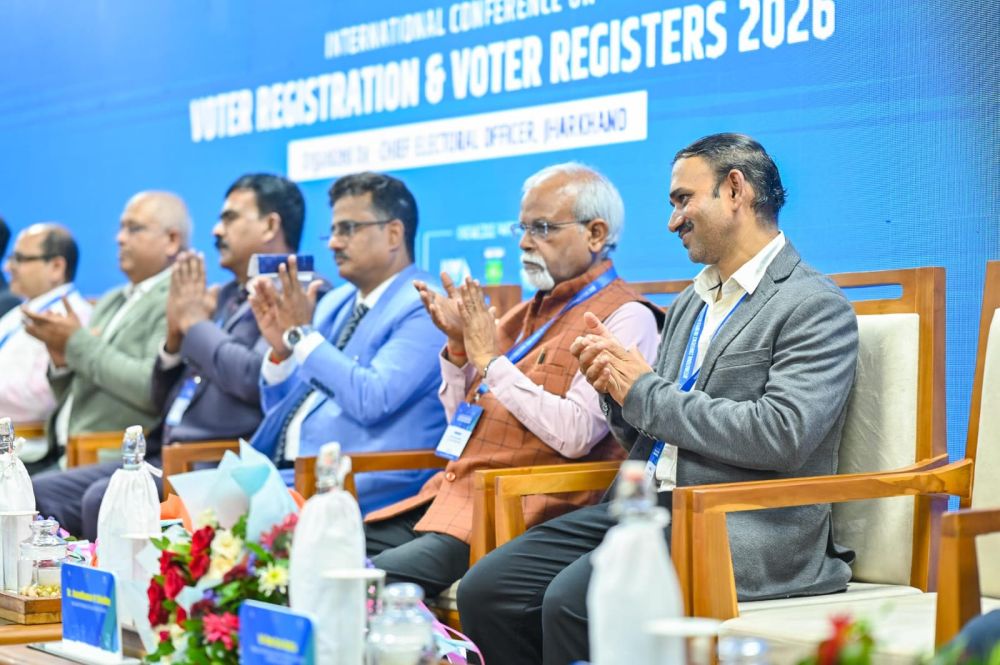
The two-day International Conference on “Voter Registration and Voter Registers 2026”, organised by the Office of the Chief Electoral Officer, Jharkhand, in collaboration with the Central University of Jharkhand, concluded on Thursday, 03 September 2026, at the National University of Study and Research in Law (NUSRL), Ranchi.
IIM Ranchi, NUSRL Ranchi and St. Xavier’s College, Ranchi, were the Knowledge Partners of the conference.
The conference concluded with the valedictory session addressed by Prof. (Dr.) Ashok R. Patil, Vice-Chancellor, National University of Study and Research in Law (NUSRL), Ranchi.
In his valedictory address, Prof. Patil said that voter registration and an accurate electoral roll form the foundation of meaningful democratic participation. An electoral roll, he said, is not merely an administrative document but the gateway through which citizens enter the formal electoral process.
Referring to the wide-ranging deliberations during the conference, Prof. Patil said that electoral integrity and electoral inclusion should not be treated as competing objectives. A credible electoral system must prevent the inclusion of ineligible persons while being equally committed to ensuring that no eligible citizen is inadvertently or unjustly excluded. He stressed that accuracy must be accompanied by accessibility, efficiency by fairness and verification by due process. While technology and digitalisation can improve the accuracy and efficiency of voter registration and electoral-roll management, their use must remain anchored in constitutional values, democratic principles and protection of citizens’ rights.
Describing the valedictory session as a transition “from deliberation to action,” Prof. Patil called upon academics, election practitioners, researchers and other stakeholders to carry forward the outcomes of the conference through further research, evidence-based policy recommendations and sustained institutional collaboration. He emphasised that electoral innovation must remain citizen-centric — technology must empower the voter, law must protect the voter, institutions must serve the voter and electoral administration must strengthen the voter’s voice.
Prof. Patil appreciated Chief Electoral Officer, Jharkhand, Shri K. Ravi Kumar and the organising committee for successfully organising the international conference. He said that the real success of the conference would be reflected in the new research, policy ideas and institutional collaborations emerging from its deliberations and their contribution towards making electoral participation more inclusive, accessible and democratic.
At the closing ceremony, Retired Deputy Chief Electoral Officer-cum-State Training Nodal Officer, Shri Deodas Dutta, delivered the welcome address and welcomed the distinguished delegates, academicians, scholars, students, election officials and other participants. He appreciated their contribution to the two-day deliberations and said that the conference had provided a meaningful platform for sharing research, knowledge, experiences and best practices relating to voter registration and electoral-roll management.
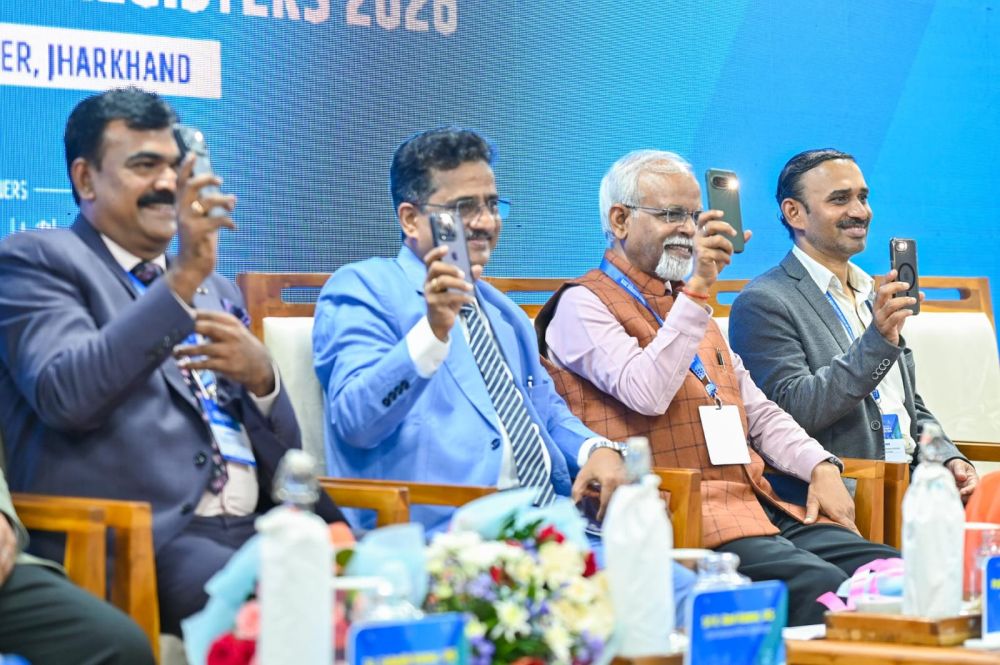
During the programme, Shri Dutta also encouraged delegates, scholars and students to install and use the ECINET application, highlighting its role in providing citizens convenient digital access to electoral services and strengthening their engagement with the electoral process.
Dr. B. K. Sinha of St. Xavier’s College, Ranchi, delivered the vote of thanks. He expressed gratitude to the distinguished guests, delegates, academicians, researchers, election officials, scholars and students for their active participation and valuable contributions. He also thanked the organising institutions and Knowledge Partners for their cooperation and coordinated efforts in making the two-day international conference successful.
*Rapporteur’s Report Highlights Key Outcomes of Conference*
The Rapporteur’s Report of the two-day conference was presented by Ms. Solika Rani and Ms. Rituparna Palei of the Central University of Jharkhand (CUJ). The report provided a comprehensive overview of the inaugural, panel and technical sessions and highlighted the major issues, findings and perspectives that emerged during the conference.
The report noted that the technical sessions extensively examined the Special Intensive Revision (SIR), field-level verification, accuracy and inclusiveness of electoral rolls, migration and mobility, gender and marginalised communities, youth participation and electoral literacy. Particular attention was given to challenges faced by migrant workers, tribal and border populations and other groups vulnerable to exclusion from the electoral process.
International practices and experiences relating to voter registration and voter registers were also discussed, drawing upon electoral systems and practices in countries including Australia, Canada, Estonia, Sweden, Ghana and South Africa. Participants observed that there can be no single universal model of voter registration and that systems must respond to the constitutional, administrative and social circumstances of individual countries.
The deliberations emphasised that voter registration should be viewed as a dynamic and citizen-centric process aimed at facilitating the participation of every eligible citizen while maintaining the accuracy and integrity of electoral rolls.
The growing interface between technology and electoral-roll management was another major area of discussion. Participants examined the potential use of digitalisation, Artificial Intelligence, Machine Learning and automated systems for improving efficiency, identifying anomalies and duplication, and facilitating continuous updating of electoral rolls.
At the same time, the conference underlined the importance of adequate safeguards for data privacy, cybersecurity, transparency, accountability and human oversight. Legal sessions also examined constitutional and statutory provisions, judicial interventions and institutional responsibilities relating to voter registration and electoral-roll management.
Summarising the deliberations, the Rapporteur’s Report noted that accurate, accessible and inclusive voter registers constitute a fundamental pillar of democratic participation and electoral integrity.
The conference emphasised sustained collaboration among election authorities, governments, the judiciary, academia, civil society, technology experts and citizens to develop electoral processes that are inclusive, transparent, participatory, technologically advanced and democratically resilient.
Chief Electoral Officer Shri K. Ravi Kumar, Additional Chief Electoral Officer Shri Subodh Kumar; State Training Nodal Officer Shri Dev Das Dutta; Deputy Electoral Officer Dr. Dhiraj Kumar Thakur; Prof. Alok Kumar Gupta; Dr. Aparna; Dr. Charvak Pati; Dr. Shubhra Rajat; Dr. Anandkumar R. Shinde; Dr. B.K. Sinha; Dr. Ashutosh Kumar Pandey, Shri Sujay Kumar, along with academicians, researchers, students, student volunteers, National-Level Master Trainers of the Election Department, and officers and staff of the Office of the Chief Electoral Officer, Jharkhand, were present on the occasion.
If you value our journalism, consider making a voluntary contribution to help us continue bringing news, stories and information to our readers.
Scan the QR code to contribute

Every contribution, big or small, is appreciated.