
Administrator
24 September 2026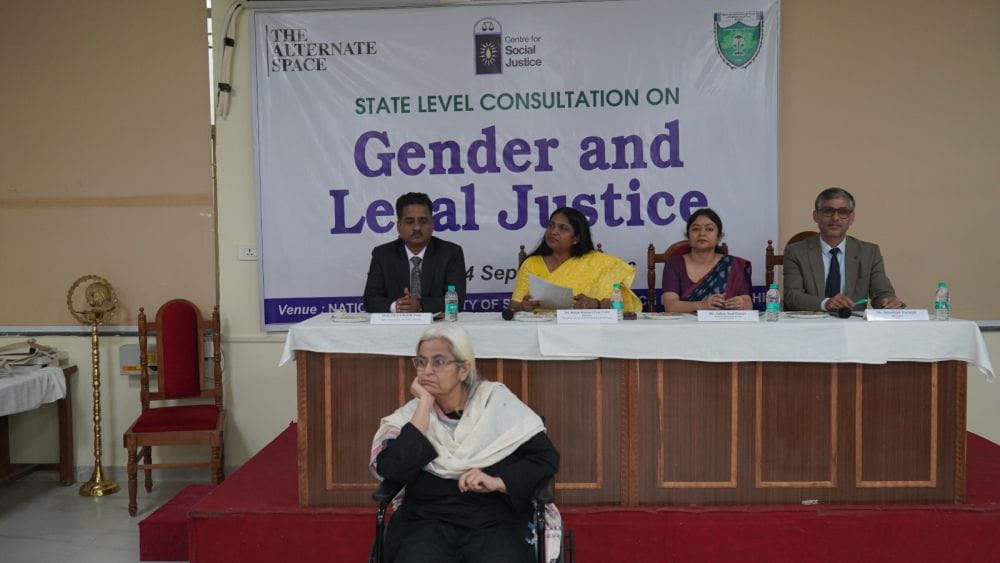
The National University of Study and Research in Law (NUSRL), Ranchi, is hosting a two-day state-level consultation on “Gender and Legal Justice”, organised by the Centre for Social Justice (CSJ), NUSRL, in collaboration with The Alternate Space.
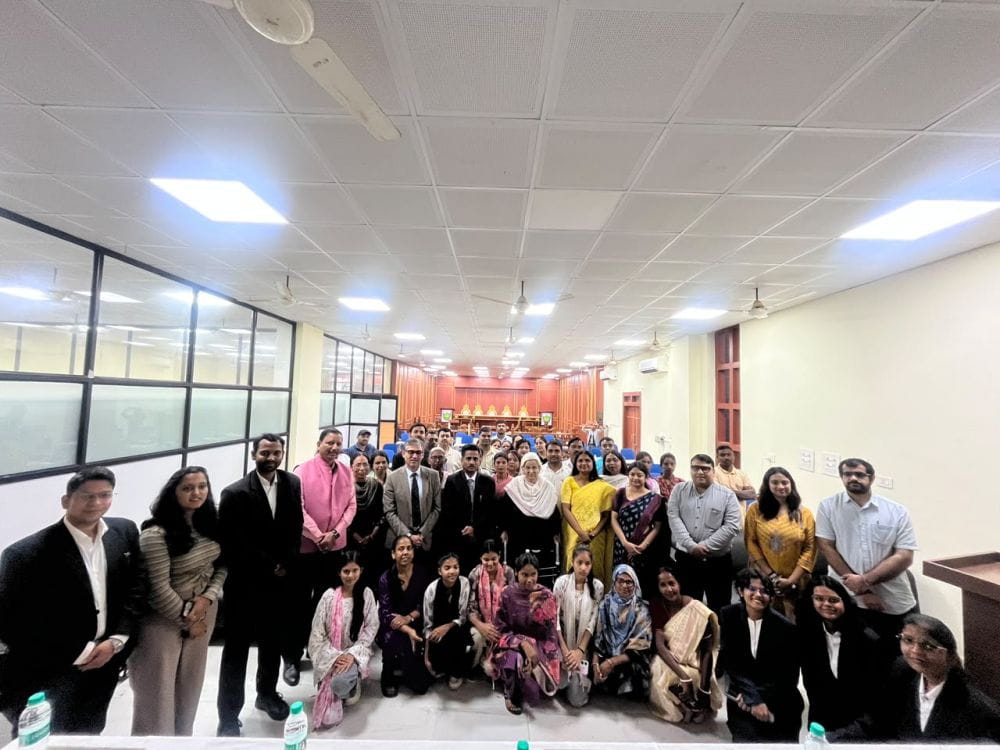
The consultation brings together legal experts, policymakers, academicians, social workers, representatives of non-governmental organisations and members of civil society to deliberate on the challenges surrounding gender justice and access to law.
The inaugural session on Wednesday ( September 23, 2026)was attended by Ms. Kiran Kumari Pasi, IAS, Director, Department of Women, Child Development and Social Security, Government of Jharkhand, as the Chief Guest.
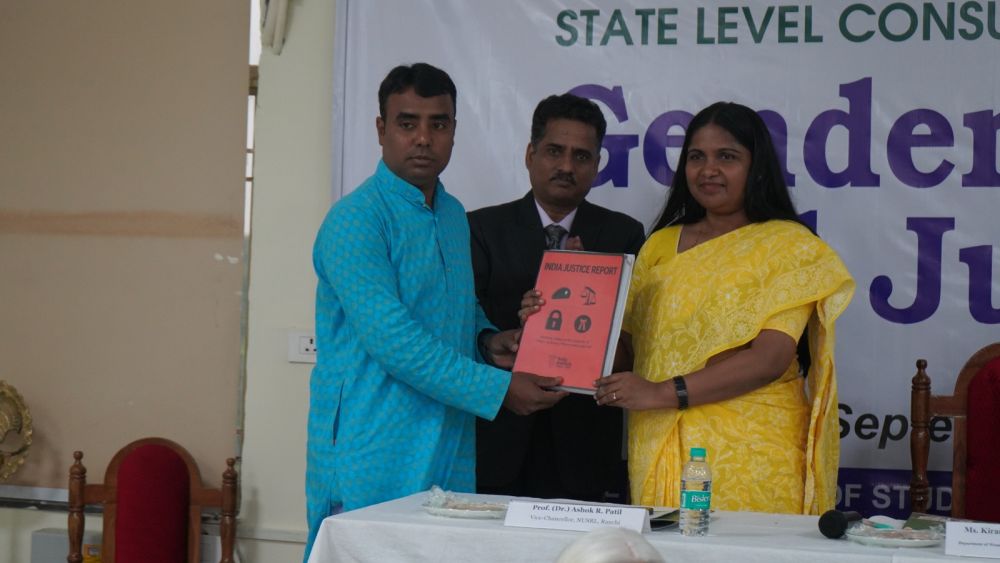
Ms. Khadija Farooqui, Director, The Alternate Space, was the Guest of Honour. Prof. (Dr.) Ashok R. Patil, Vice-Chancellor, NUSRL; Prof. (Dr.) Dharminder Kumar, Registrar, NUSRL; and Dr. Julian Seal Pasari, Assistant Professor, NUSRL and Programme Coordinator, were also present on the dais.
Welcoming the participants, Prof. (Dr.) Ashok R. Patil, Vice-Chancellor, NUSRL, emphasised the University's commitment to creating meaningful spaces where questions of law, society and justice can engage with one another.
He highlighted the efforts being undertaken by various centres and committees of the University to promote legal awareness and contribute to conversations on social justice in Jharkhand.
Delivering the special address, Chief Guest Ms. Kiran Kumari Pasi, IAS, spoke extensively about women's rights, legal empowerment, changing social attitudes and the continuing challenges faced by women. Reflecting on her experiences of working in both urban and rural areas, she noted that despite significant changes in society, women in several parts of the country continue to face insecurity and social, physical and psychological challenges.
“Questions of gender justice cannot remain confined to academic or legal debates; they must ultimately translate into accountable institutions, effective public policy and meaningful access to justice,” Ms. Pasi said. She further stated that the issues emerging from the two-day consultation would be examined with the objective of identifying possible solutions and that the outcomes of the consultation would remain an important point of consideration for stakeholders.
The consultation seeks to bring together jurists, policymakers, academics, civil society representatives and grassroots practitioners to identify the gap between formal legal equality and the lived realities of gender justice.
The discussions are centred on critical questions concerning meaningful access to justice, representation and voice within legal institutions, and the ways in which legal education, public institutions and civil society can work together to bridge the gap between law and social realities.
The two-day consultation is also intended to encourage constructive disagreement, knowledge-sharing and new collaborations among stakeholders working in the field of gender and social justice.
The inaugural session concluded with a vote of thanks delivered by Dr. Soumyajit Mukhopadhyay, Assistant Professor, NUSRL and Programme Associate.
Over the next two days, participants will engage in discussions aimed at deepening their understanding of gender justice and developing perspectives and possible pathways for more accessible and responsive legal and institutional frameworks.
The organisers expressed hope that the consultation would strengthen collective commitment towards a legal system that is not only formally equal, but also accessible, sensitive, dignified and just.
If you value our journalism, consider making a voluntary contribution to help us continue bringing news, stories and information to our readers.
Scan the QR code to contribute

Every contribution, big or small, is appreciated.