Administrator
30 September 2026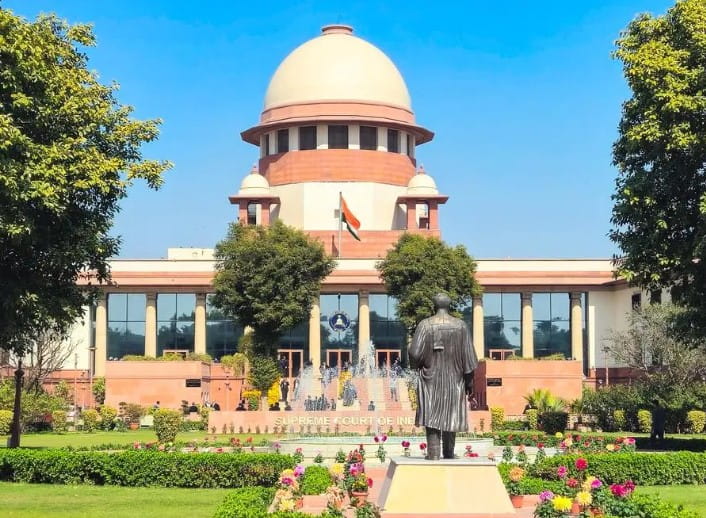
The Supreme Court has directed Bihar and Jharkhand to provide additional relief to workers of five defunct state-owned corporations, bringing fresh legal closure to a dispute rooted in the reorganisation of Bihar and the unresolved liabilities that followed.
A dispute carried across state lines
The case concerns employees and workmen of five corporations of undivided Bihar: the Bihar State Construction Corporation, Bihar State Industrial Development Corporation, Bihar State Electronic Development Corporation, Bihar State Forest Development Corporation and Bihar State Panchayati Raj Financial Corporation. Their dues remained entangled in questions of liability between Bihar and Jharkhand after the Bihar Reorganisation Act, 2000.
Both states subsequently cited the corporations' closure and financial losses while the employees' claims remained unresolved. The Supreme Court has been monitoring the matter through successive orders and a court-appointed committee.
2,274 workers, and years of waiting
According to the latest compliance position, 2,274 employees/workmen had been verified. Of these, 2,074 have already received their principal and statutory dues, while around 200 cases remained pending because some claimants could not be traced or lacked necessary documents.
The Court has now directed the states to pay ₹1 lakh as a one-time additional amount to each concerned daily-wage employee/workman, apart from amounts already determined and paid. It has also ordered 12% simple interest on delayed EPF dues and 6% interest on delayed salary, wages and other monetary dues.
The unfinished chapter
The states have been given one year to comply with the directions. The Court has also provided a framework for addressing remaining claims and tracing eligible employees or their legal heirs.
When an old liability finally finds an answer
The order does more than quantify money owed. It brings a decades-old employment dispute back to its central question: the closure of an institution cannot, by itself, erase obligations already owed to those who worked for it. For thousands of workers and their families, the judgment marks another step towards closing a chapter that began with the creation of a new state—and remained unresolved long after the corporations themselves ceased to exist.
If you value our journalism, consider making a voluntary contribution to help us continue bringing news, stories and information to our readers.
Scan the QR code to contribute

Every contribution, big or small, is appreciated.