Administrator
01 October 2026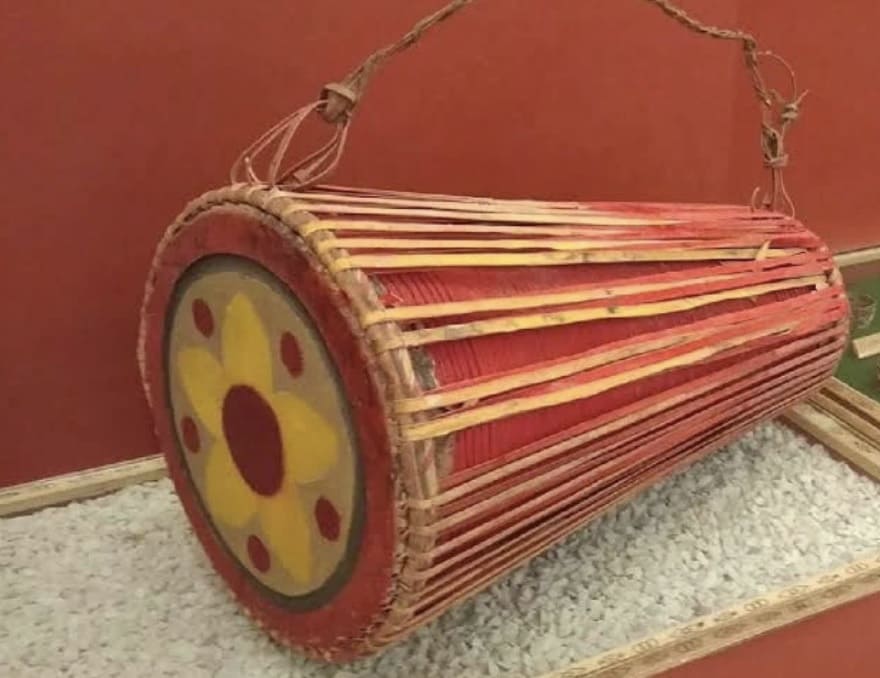
*The traditional musical instrument Mandar, deeply rooted in the folk culture and tribal life of Jharkhand, has received official recognition with a Geographical Indication tag.
For generations, the Mandar has accompanied Jharkhand’s folk dances, community life and cultural traditions. Now, the traditional instrument has received formal Geographical Indication recognition, giving legal identity to a craft whose distinctiveness is rooted in the state’s soil, materials, methods and history.
A craft shaped by the land
The ‘Mandar of Jharkhand’ has been registered by the Geographical Indications Registry in Chennai. Its GI application, filed in September 2021 by Raidih Mandar Producer Company Limited, documented its distinctive construction, use of locally sourced raw materials, traditional manufacturing techniques and characteristic acoustic qualities.
The instrument’s connection with Jharkhand is not merely contemporary. Historical material submitted with the application included references from Sarat Chandra Roy’s 1915 work, the Patna Museum’s 1920 Annual Report, Tarak Chandra Das’s 1931 research and W.G. Archer’s 1940 book The Blue Grove, along with the Government of India’s Folk Dances of India and the Ranchi District Gazetteer.
More than an instrument
Mandar is deeply embedded in the music, dance and social life of indigenous communities, particularly across the Chotanagpur region. Its traditional craftsmanship and cultural association formed an important part of the case for GI recognition.
Intellectual-property expert Dr Satyadeep Singh played a key role in the application, documentation and hearings, including the final hearing in Delhi in January 2025.
When heritage earns legal identity
A GI tag does not simply commemorate tradition; it formally links a product with its geographical origin and distinctive characteristics. For Mandar makers and practitioners, that recognition creates a stronger foundation for protecting the craft and expanding its reach.
A rhythm carried forward
The Mandar’s significance lies in the continuity it represents—knowledge passed through generations, shaped by local materials and sustained through community practice. Its new legal identity places that living tradition on a wider stage, while its future will ultimately depend on keeping the craft, the craftsmen and the music at its centre.
If you value our journalism, consider making a voluntary contribution to help us continue bringing news, stories and information to our readers.
Scan the QR code to contribute

Every contribution, big or small, is appreciated.