Administrator
18 October 2026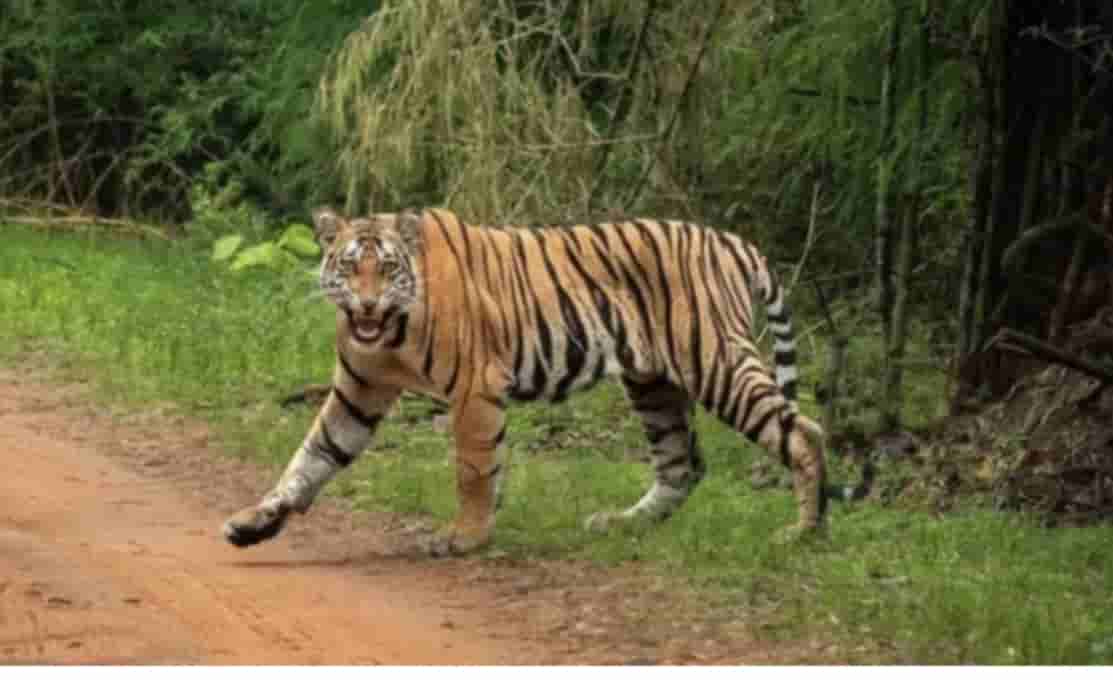
Six male tigers have entered the state’s forests over three years, yet none has established a permanent presence. Their movement points to a deeper conservation challenge: a forest’s ability to sustain wildlife depends not only on habitat, but also on a viable breeding population.
In three years, six new male tigers arrived from another state, stayed for three months to a year, and returned. (Image: Representational)
Visitors, Not Residents
Jharkhand’s forests, including Palamu Tiger Reserve, have received around six male tigers from other forest regions over the past three years. They remained in different parts of the state for periods ranging from three months to nearly a year before leaving. Post-monsoon monitoring reportedly found no evidence of a resident tiger in the state’s forests. Wildlife experts identify the absence of female tigers as a major reason the visiting males have not established territories.
Why the Population Is Not Sustaining Itself
Competition among male tigers in neighbouring states, including Chhattisgarh, may push some animals into new territories. However, without female tigers, Jharkhand cannot establish a self-sustaining breeding population. Experts also point to the need to assess habitat quality, prey availability and human disturbance before drawing conclusions about why individual animals leave. A forest may offer suitable food and shelter, but long-term tiger recovery requires a connected, secure ecosystem.
A Proposed Path to Recovery
Jharkhand is preparing to develop a tiger safari in Latehar, with plans reportedly aimed at completion by next year. One proposal is to maintain tigers in a naturalistic setting and eventually introduce female tigers into the wild, potentially improving the prospects of a resident population. Such measures will require scientific planning, suitable habitat and rigorous wildlife-management safeguards.
The Larger Message: A Forest Must Sustain Life
Tiger conservation is not measured by occasional sightings, but by the ability of animals to survive, breed and establish viable populations in the wild.
Jharkhand’s challenge is to turn forest presence into ecological permanence. That means protecting habitats, securing wildlife corridors, maintaining prey populations and ensuring that any reintroduction follows sound science. The goal must be more than bringing tigers back—it must be creating conditions in which they can thrive.

If you value our journalism, consider making a voluntary contribution to help us continue bringing news, stories and information to our readers.
Scan the QR code to contribute

Every contribution, big or small, is appreciated.