Administrator
03 November 2026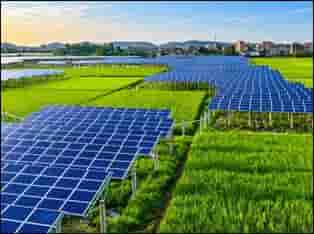
Agriculture plays a vital role in India’s economy, serving as a key source of livelihood for approximately 46.1 per cent of the population. The Gross Value Added (GVA) of the Agriculture and Allied Sector is estimated to reach Rs. 52.08 lakh crore in 2025-26.
Sustaining this vital sector requires reliable and affordable energy for irrigation and other farming operations. Solar power can help farmers in Jharkhand among all states meet these everyday needs while advancing India’s clean energy transition.
Farmers in Jharkhand should take note of the forward movements being followed in Maharashtra and Punjab. In fact, India’s vast agricultural land offers significant prospects to integrate solar energy with farming.
According to Land Use Statistics for 2023-24, the country’s reported area covers 306.96 million hectares, of which approximately 55 per cent is agricultural land. The net sown area stands at 138.99 million hectares, while the gross cropped area covers 217.88 million hectares.
This extensive land base offers opportunities to generate solar electricity alongside agricultural production in Jharkhand.
Elsewhere too farmers can use solar power to operate irrigation pumps, reduce dependence on conventional electricity and potentially supplementary revenue by supplying surplus electricity to the grid. For instance, solar-powered irrigation pumps can provide daytime power for watering crops while reducing reliance on diesel-powered alternatives.
Agrivoltaics takes this integration further by bringing together crop cultivation and solar electricity generation on the same land. Solar panels installed above or between crop rows allow electricity generation alongside continued farming.
Depending on the crop, panel design and local conditions, partial shading may also help reduce soil moisture loss. This approach can improve land-use efficiency, diversify farm earnings and strengthening both food and energy security.
Through research, field demonstrations and policy development, India is exploring ways to adapt agrivoltaics to diverse agricultural conditions. It offers a promising pathway to align farmers’ livelihoods with India’s wider renewable energy ambitions.
|
The Bharat Renewable Energy Summit & Expo (Bharat RE) 2026 is being held from 2–5 November 2026 at Bharat Mandapam, New Delhi, under the theme ‘Invest. Innovate. Inspire.’ The four-day Summit brings together participants from over 130 countries, including more than 40 Ministers, policymakers, investors, financial institutions and industry leaders. Nine Countries- Australia, Denmark, the European Union, France, Germany, the Netherlands, Norway, Sweden and the United Kingdom will participate as Country Partners. 13 Indian States and Union Territories are participating, showcasing renewable energy potential, investment opportunities, and clean manufacturing capabilities. Key focus areas of the summit includes solar and wind energy, green hydrogen, energy storage, grid integration, domestic manufacturing, digitalisation and artificial intelligence applications in the energy sector. The Summit provides a global platform for clean energy investment, technology partnerships and industry collaboration. It features ministerial discussions, CEO roundtables, investor engagements and an exhibition featuring over 400 exhibitors. The event is being held alongside the 9th International Solar Alliance Assembly and the 4th International Conference on Green Hydrogen, strengthening international cooperation across the clean energy sector. Click to Read More: Bharat Renewable Energy Summit & Expo 2026 |
Agrivoltaics: Bridging Agriculture and Renewable Energy
Agrivoltaics, also known as agrisolar or dual-use solar, maximises land-use efficiency, provides shade for crops and creates additional benefits for farmers.
Design and Functioning of Agrivoltaic Systems
An agrivoltaic system integratesagricultural infrastructure with solar installations, adapted to local farming conditions. The technology operates through various key elements:

Agrivoltaics Development in India
As of August 2025, India had 36 operational agrivoltaics projects with an installed capacity of 37.54 megawatts, alongside 10 pilot projects under development. These Projects span diverse agroclimatic regions and include elevated structures, interspace layouts and tracking systems, reflecting India’s evolving approach to integrating solar power generation with agricultural production.
India’s Agrivoltaic Potential
India holds significant potential for agrivoltaics. Estimates place the country’s agrivoltaic potential between 3,000 GW and nearly 14,000 GW, highlighting the scale of opportunity at the intersection of agriculture and renewable energy. Agrivoltaic systems can also create profits diversificationfor farmers. In some cases, annual earnings could rise from around Rs.60,000 per acre to over Rs.1 lakh per acre.

Scope for Agrivoltaics Developments
Government Initiatives in Agrivoltaics Development
The Government of India has undertaken a range of policy, research, technology development, and implementation measures to advance agrivoltaics adoption and expansion across the country.
|
India Agrivoltaics Alliance
The India Agrivoltaics Alliance (IAA), anchored by the National Solar Energy Federation of India (NSEFI), is a multi-stakeholder platform advancing the dual use of land for solar energy generation and agriculture. Launched in 2023, the Alliance has grown to over 40 members and works with government ministries and industry stakeholders to advance agrivoltaics through policy advocacy, research and on-the-ground implementation. It develops knowledge resources, promotes pilot projects and supports scalable business models to improve land productivity, diversify farmer incomes and strengthen rural energy access. |
State-specific Initiatives
Several states are facilitating solar energy in agriculture through region-specific schemes.
The Government of India, alongside state governments, is advancing the use of solar energy in agriculture through policy measures and targeted programmes. These efforts are shaping India’s agrivoltaics landscape by creating opportunities for the co-location of solar power generation and agricultural production.
Powering Prosperity Through the Convergence of Farms and Clean Energy
Agrivoltaics offers India an opportunity to strengthen agricultural livelihoods while advancing environmental sustainability. By combining food production with renewable energy generation, it can offer scope for more efficient land use, conserve water under suitable conditions and create greater financial resilience. The Government of India’s initiatives, including PM-KUSUM and proposed measures to expand agrivoltaics, reflect efforts to connect rural development with clean energy goals. As implementation grows, locally suitable designs, scientific research and farmer participation will be essential to balance agricultural productivity with energy needs. This approach can contribute to a more resilient and sustainable future for India.Greater financial resilience

If you value our journalism, consider making a voluntary contribution to help us continue bringing news, stories and information to our readers.
Scan the QR code to contribute

Every contribution, big or small, is appreciated.