Administrator
15 November 2026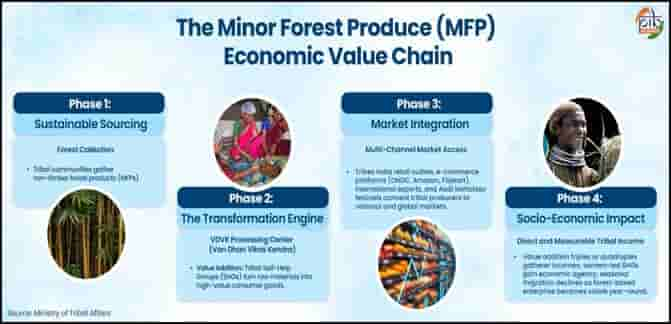
Many of India’s 10.4 crore Scheduled Tribes derive 20–40% of their annual income from Minor Forest Produce (MFP). Historically, tribals sold this produce to middlemen at distress prices, earning below the cost of their own labour. To address this, the government runs the Pradhan Mantri Janjatiya Vikas Mission (PMJVM).
The mission organises tribals into community-owned Van Dhan Vikas Kendras (VDVKs), moving them from raw produce sellers to value-adding entrepreneurs. As of March 2026, 4,172 VDVKs have been sanctioned, covering 12.48 lakh beneficiaries. The government also buys MFP at a pre-determined Minimum Support Price (MSP). PMJVM provides enterprise funding and helps tribals access markets through fairs, e-commerce platforms, and exhibitions.
|
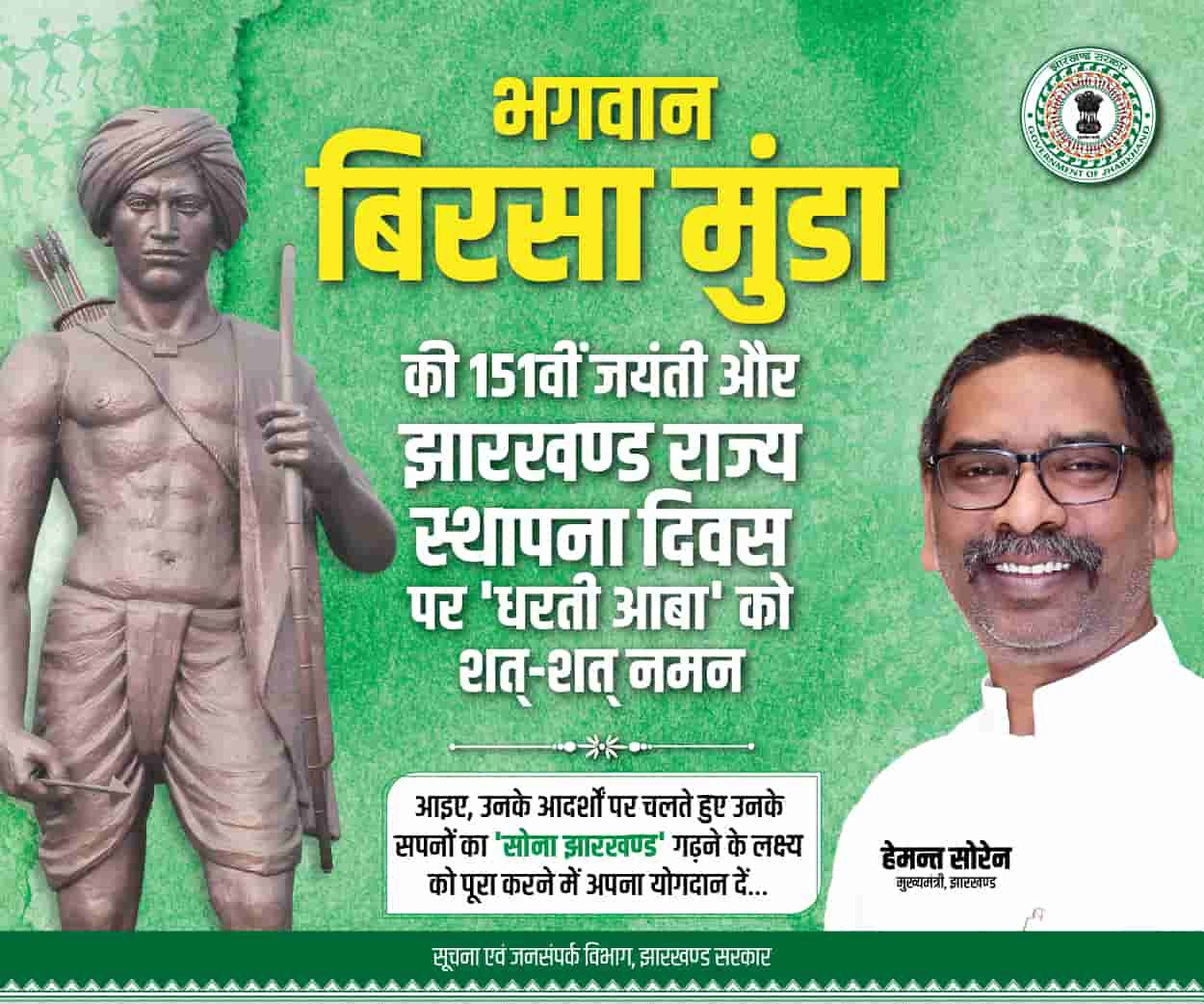
Janjatiya Gaurav Diwas The Ministry of Tribal Affairs is observing Janjatiya Gaurav Pakhwada across the country from 1 to 15 November 2026, culminating in Janjatiya Gaurav Diwas on 15 November, the birth anniversary of Dharti Aaba Bhagwan Birsa Munda. The Government of India designated 15 November as Janjatiya Gaurav Diwas in 2021. The Pakhwada is a focused, time-bound drive to accelerate the Ministry’s flagship programmes and take their benefits to tribal families at the last mile. On Janjatiya Gaurav Diwas, over 300 projects for tribal communities across States will be taken up, with 228 ready for inauguration and 74 for foundation stone laying. Two national digital initiatives, the Jan-HIT Portal and the National FRA Digital Platform, will also be launched. Tribal Research Institutes have planned more than 160 activities in 19 States/UTs. Click to Read More: Janjatiya Gaurav Pakhwada 2026: Nationwide Celebrations to Honour Tribal Heritage, Empower Communities and Accelerate Last-Mile Delivery of Welfare Schemes |
Protecting Tribal Forest Economies
For millions of forest-dwelling tribal families, Minor Forest Produce (MFP)—such as honey, tendu leaves, mahua flowers, tamarind, lac, bamboo and wild herbs—is not merely a forest resource. It is a primary source of livelihood. About 20% to 40% of their annual incomeis from selling MFP. Yet, despite directly procuring and selling MFP, tribals receive only a fraction of its market value. This is because they often sell MFP to intermediaries at low prices.
The Pradhan Mantri Janjatiya Vikas Mission (PMJVM) seeks to change this equation. Launched in 2021-22, the Mission provides a systematic way for them to improve MFP’s value by skilling the tribals in newer technology and practices. The scheme links the communities to the larger national and digital marketsto help them get more exposure and sell more products. It also guarantees Minimum Support Prices (MSP) to tribals by directly procuring the produce from them.
These efforts are helping forest gatherers become owners of their community enterprises while strengthening India’s tribal economy at the grassroots level.
Minor Forest Products & Minimum Support Price
|
While the government manages most of India’s forests to preserve ecology and wildlife, tribals and other traditional forest-dwelling communities are given access to these areas for the preservation of their livelihoods.
How Does PMJVM Support Tribals? Beyond MSP procurement, the PVJM scheme also provides skilling, technological, marketing, and infrastructural support to tribals. Organising Tribals into Van Dhan Vikas Kendras The Mission mobilises tribal gatherers into self-help groups (SHGs). A group of 15 SHGs, comprising about 300 tribals, are clustered together into one Van Dhan Vikas Kendra (VDVK). At least 60% of VDVK members must be from Scheduled Tribe communities. The Van Dhan Yojana, launched on April 14, 2018, is a part of PMJVM. It forms the foundation of the VDVK model and powers its implementation across tribal communities. Skilling, Funding and Technological Support The Government organises skilling and other training programmes for MFP gatherers, including trainings on scientific harvesting practices, at Van Dhan Vikas Kendras (VDVKs). The SHGs are also provided with:
Marketing and Business Support Apart from value addition, VDVKs are also centres for market linkages – both local and distant – for the final products.
Under the PMJVM scheme:
VDVKs Help in Tribal Women Empowerment Most collections and sales are carried out by women, making PMJVM a key instrument of tribal women’s financial empowerment. The Nyigamane, Ho Yorbe, Medumhagdum VDVKin Arunachal Pradesh’s Leparada district was established in October 2021 with 300 women SHG members and farmers. This VDVK converts locally available non-timber forest and agricultural produce into processed, marketable goods. The products created are:
The VDVK has sold Rs. 11 lakh worth of these products from 2022-23 onwards. It has empowered the women, who no longer need to depend on only seasonable agriculture for income throughout the year. The women jointly own the business – they are not mere workers but also have a stake in the brand and the enterprise.
Towards A Sustainable Forest Economy Pradhan Mantri Janjatiya Vikas Mission (PMJVM) provides livelihood opportunities to forest-dwelling tribals, offering a systematic way to produce and market non-timber forest produce. These products are locally sourced and rooted in traditional practices — representing a forest-based economy balancing community ownership with market competitiveness. In a world increasingly driven by mass-manufactured and plastic-packaged goods, they are India’s distinctive offering: natural, community-owned, and forest-born. PMJVM embodies Sabka Saath, Sabka Vikaas- ensuring India’s growth story reaches its most remote forests and the communities who call them home. |
If you value our journalism, consider making a voluntary contribution to help us continue bringing news, stories and information to our readers.
Scan the QR code to contribute

Every contribution, big or small, is appreciated.